Most patients feel the worst discomfort ease within 24 to 48 hours, and many get back to normal activities quickly. Mild sensitivity can still linger for a few days to up to a week, especially when biting down.
If you're reading this in Pico Rivera with a numb cheek, a tender tooth, and a lot of questions, that reaction is completely understandable. Root canals have a scary reputation, but the recovery process is usually much more manageable than people expect when they know what's normal, what to avoid, and when to call for help.
A lot of the confusion comes from one simple issue. Feeling better and being fully protected are not the same thing. You may feel ready to chew normally in a matter of days, but the treated tooth still needs careful follow-up so it doesn't crack or get reinfected.
People searching for a dentist near me, an emergency dentist, or a dentist in Pico Rivera, CA often want one thing above all else. They want pain relief without surprises. That starts with a clear timeline, plain language, and practical steps you can follow at home.
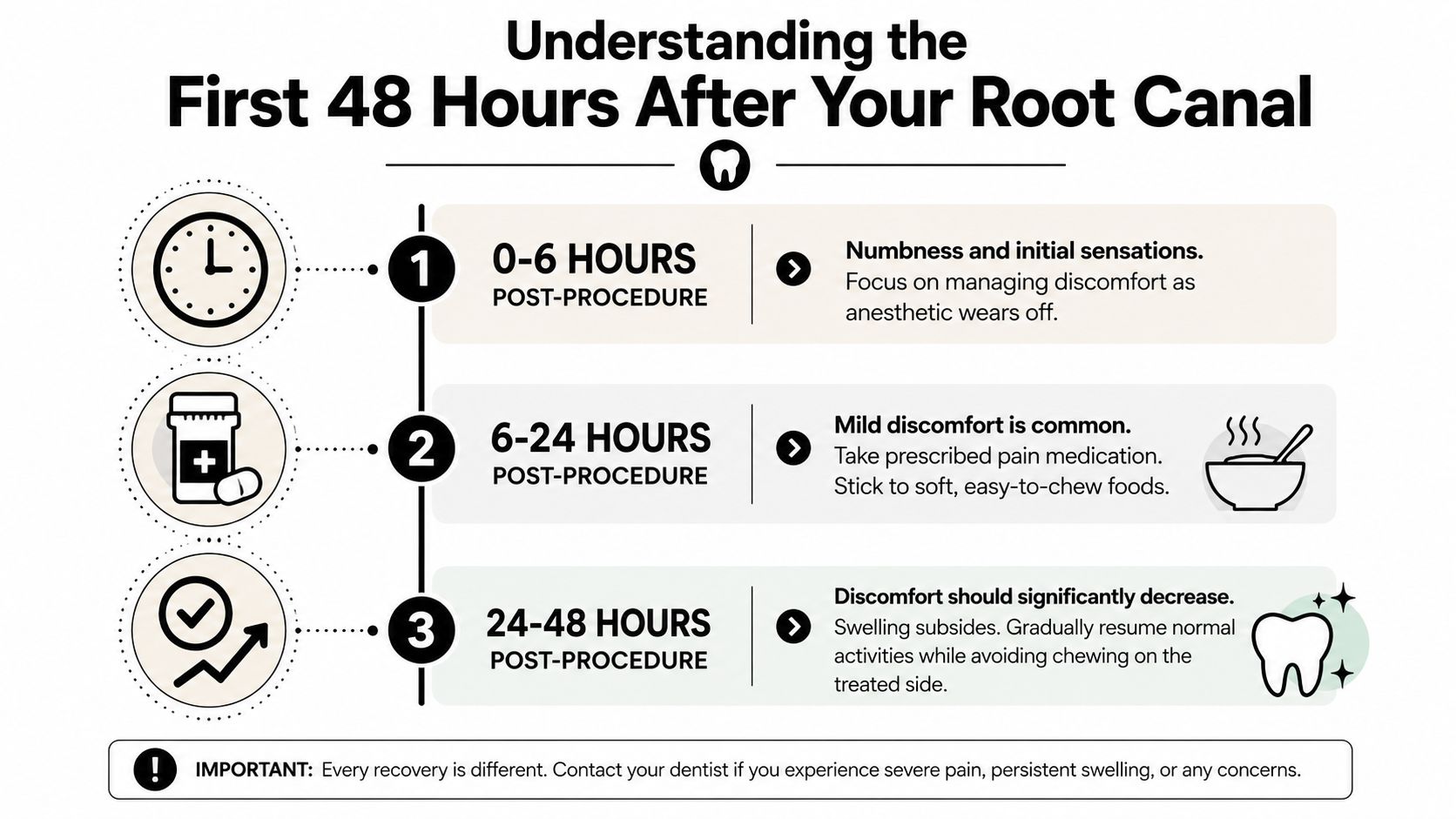
Understanding the First 48 Hours Post-Procedure
A root canal can sound intimidating, but the first 48 hours of recovery are usually more manageable than patients expect once they know the pattern. For many people in Pico Rivera, the hardest part is not the treatment itself. It is sorting out which sensations are normal, which ones mean you should slow down, and why a tooth can feel better before it is ready to do full chewing work again.
The first two days are the body's "settling down" phase. The inside of the tooth has been cleaned and sealed, but the ligament and tissues around the root can still act like a bruised ankle after the problem has been treated. According to this root canal recovery overview, discomfort from a root canal peaks within the first 24 to 48 hours post-procedure and then steadily improves over the first week, with mild tenderness to biting or touch potentially persisting up to a week or slightly longer in some cases. The pattern to watch for is gradual improvement.
What numbness feels like
Right after treatment, numbness often shapes your experience more than soreness does. Your lip, cheek, or tongue may feel thick, heavy, or a little uncoordinated. Some patients also say their bite feels strange at first, because normal sensation has not returned yet.
That is why eating too soon can cause trouble. If the area is still numb, it is easy to bite your cheek or tongue without realizing it. Waiting until feeling returns is one of the simplest ways to avoid an unnecessary setback in the first few hours.
Why soreness often shows up later
A point that surprises many patients is timing. You may leave the office feeling decent, then notice more tenderness later that day or the next morning. That does not automatically mean something is wrong.
The reason is straightforward. The source of infection inside the tooth has been addressed, but the tissues around the root are still reacting to the irritation that was already there and to the treatment itself. The tooth often feels less like a sharp dental pain and more like a bruise you notice when you tap it or bite down.
A good rule is simple. Soreness that rises a bit during the first day, then starts easing, usually fits a normal healing pattern.
What helps during this window
Keep these first 48 hours boring. That is often the smartest recovery strategy.
- Use the pain medicine your dentist recommended. Follow the instructions you were given.
- Wait to chew until the numbness wears off. This protects your cheek, tongue, and lips.
- Choose soft foods. Yogurt, soup, eggs, oatmeal, and mashed foods are easier on the area.
- Chew on the other side if your dentist advised it. Even if the tooth feels better quickly, it may still be structurally vulnerable until the final restoration is placed.
- Brush and floss gently. Clean is good. Rough is not.
That last point matters more than patients often realize. Feeling better in a few days is about inflammation calming down. Being confident that the tooth can handle everyday biting pressure is a longer process, especially if you are waiting for a crown or other final restoration. In other words, pain relief and full protection are not the same stage of recovery.
For many patients, the first 48 hours are more of a cautious adjustment period than a major interruption to daily life. With clear instructions and careful follow-up from a local Pico Rivera dental team, this part of root canal recovery is usually steady, predictable, and easier to handle than its reputation suggests.
Navigating Your First Week of Healing
By day three, many patients in Pico Rivera notice a clear shift. The tooth may still feel tender, but the soreness usually starts acting more like a bruise that is fading instead of an ache that keeps demanding your attention.
That change is reassuring, but it can also be misleading.
A root canal often follows two timelines at once. The first is how quickly you feel better. The second is how long the tooth needs before it is ready to handle normal chewing with confidence, especially if you are still waiting for the final restoration. Those are not the same milestone.
Why one treated tooth may calm down faster than another
Recovery during the first week depends in part on which tooth was treated. A front tooth often settles sooner because it usually has a simpler root structure and does less heavy chewing. A molar has more to manage. It often has multiple roots, more surrounding tissue, and a bigger job every time you bite.
That is why a back tooth can stay sore longer without signaling a problem.
If your molar is still a little tender near the end of the week, especially when you bite or tap on it, that can still fit a normal healing pattern. What matters more is the direction. Day by day, the discomfort should slowly lose intensity.
A simple way to read the first week
| Time in recovery | What many patients notice | What it usually means |
|---|---|---|
| Days 1 to 2 | Soreness, pressure, tenderness to biting | The tissues around the tooth are still irritated from treatment |
| Days 3 to 5 | Less constant discomfort, occasional sensitivity | Inflammation is starting to settle |
| Days 5 to 7 | Mild awareness of the tooth, especially with chewing | Common during healing, especially for molars |
If each day feels a little easier than the one before, you're moving in the right direction.
Where patients get tripped up
The biggest mistake during this stage is assuming less pain means full recovery.
A treated tooth can feel much better within days and still be vulnerable to pressure. It helps to picture a splinted ankle that no longer throbs at rest but still is not ready for a long run. Your tooth works in a similar way. The irritated tissue may be calming down, while the tooth itself still needs protection from heavy chewing until it is fully restored.
That matters even more if you came in with infection, swelling, or significant inflammation before treatment. In those cases, your body has more cleanup work to do. Healing can move at a slower, steady pace without meaning anything has gone wrong.
During this first week, the safest mindset is simple. Feeling better is a good sign. Feeling better does not yet mean the tooth is structurally ready for business as usual.
That distinction helps patients avoid a very common setback. They chew something hard too soon because the pain has faded, then they wonder why the tooth flares up again. Careful habits during this week protect the progress your treatment already made.
Essential Aftercare for a Smooth Root Canal Recovery
Once the numbness starts to fade, many patients in Pico Rivera have the same question. "If it already feels a little better, what do I need to be careful with now?"
The short answer is simple. Treat the tooth like it is healing, even if the sharp discomfort is already settling down. In this stage, good aftercare is less about doing something complicated and more about avoiding small mistakes that can irritate the area or overload a tooth that is not fully protected yet.
What to eat and what to skip
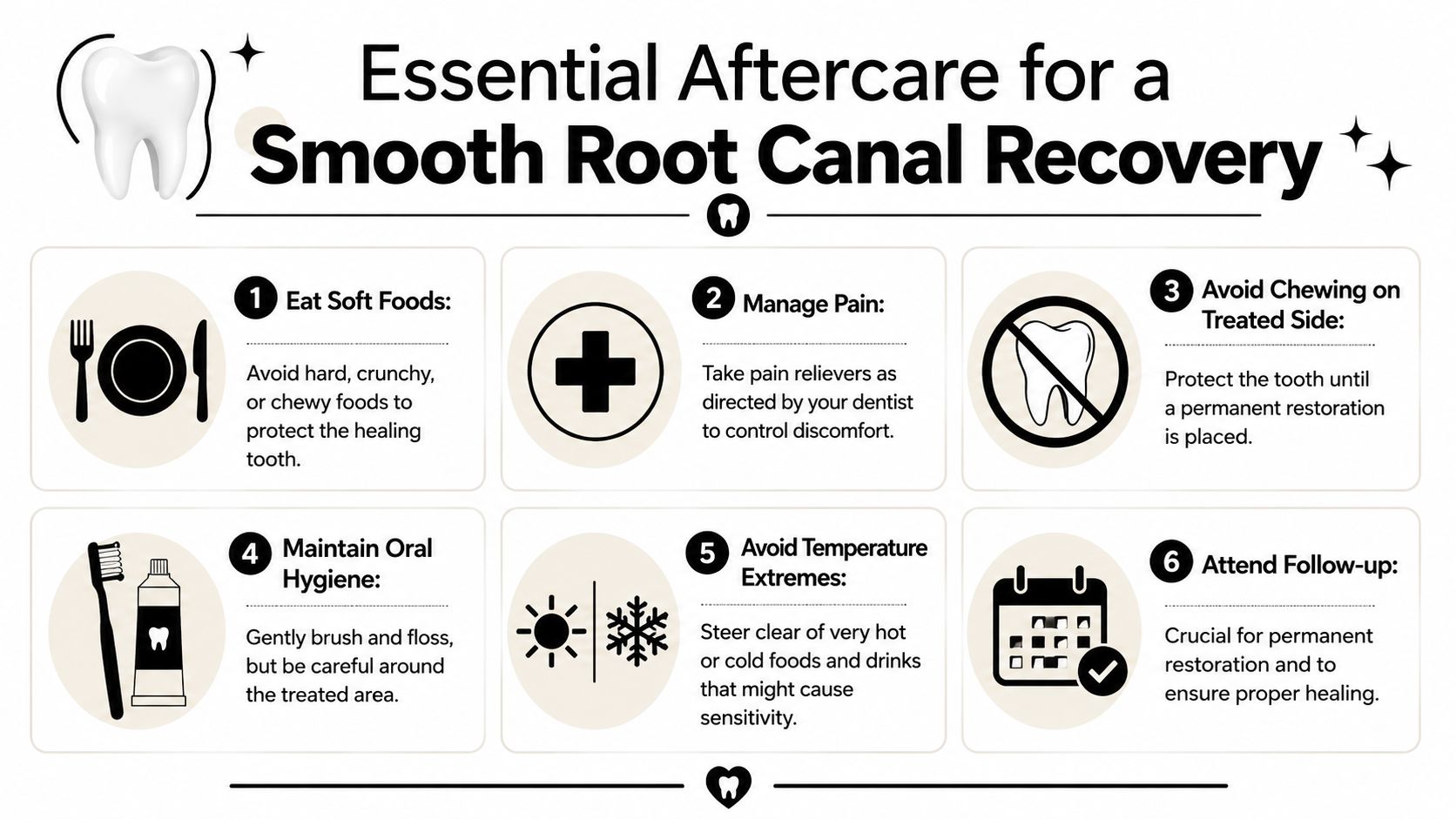
Your first meals should be easy on the tooth and easy on the surrounding tissue. Soft foods are usually the safest place to start, especially after the anesthesia wears off.
- Good early choices: Yogurt, scrambled eggs, oatmeal, soup, mashed potatoes, applesauce, pasta, and similar foods that do not require forceful chewing.
- Foods to avoid for now: Hard chips, nuts, popcorn, crusty bread, chewy bagels, sticky candy, and anything that makes you clamp down hard.
- Watch the temperature: Very hot drinks or foods can bother a tooth that is already sensitive.
A useful rule is this: if a food makes the treated tooth work hard, save it for later.
Keeping the area clean without making it angrier
Healing tissue still needs a clean environment. You do not want plaque collecting around the tooth or gums, but you also do not need to brush the area like you are scrubbing a pan.
- Brush gently: Keep up your normal brushing routine, but use a lighter hand around the treated tooth.
- Floss with care: Slide the floss out carefully instead of snapping it back up against sore tissue.
- Use a rinse if your dentist recommended one: An antibacterial mouthwash or saltwater rinse may help keep the area clean.
Your mouth heals best when it stays clean and calm at the same time.
Daily activity and chewing habits
Many patients feel well enough to get back to normal routines fairly quickly. Desk work, school, driving, and regular errands are often manageable once you feel steady and alert.
The bigger issue is chewing, not your calendar.
Even when the pain is improving, the treated tooth can still be more vulnerable to pressure, especially if it has a temporary filling or has lost a lot of structure. Use the other side of your mouth until your dentist tells you the tooth is ready. If your job involves heavy lifting or physical contact, it is reasonable to take it easier for a short time if the area feels sore or tender afterward.
A simple aftercare checklist
- Take any prescribed or recommended medication exactly as directed.
- Wait until the numbness wears off before eating so you do not bite your cheek, lip, or tongue.
- Start with soft foods and cooler temperatures if the area feels sensitive.
- Chew on the opposite side for now.
- Brush and floss gently to keep the tooth and gums clean.
- Do not skip your follow-up visit, especially if you still need the final restoration.
Patients usually feel encouraged during this phase because the tooth often starts calming down. That is a good sign. It is not the same as the tooth being fully ready for normal biting force, which is why careful aftercare now helps protect the result you just invested in.
Securing Long-Term Success for Your Treated Tooth
A root canal has two finish lines. The first is when the pain calms down. The second is when the tooth is properly restored and protected.
That distinction matters more than most patients realize.
Feeling normal is not the same as being structurally secure
The biggest mistake patients make is assuming that once soreness fades, the job is finished. It often isn't. A treated tooth can feel fine before it is fully reinforced for daily chewing.
This Cleveland Clinic page on root canal treatment is cited in the verified data for an important distinction: many patients have symptomatic recovery in 2 to 5 days of mild soreness, while structural recovery often extends until the final restoration is completed, generally within 2 to 4 weeks. That gap is exactly why biting into hard food too early can create trouble.
A tooth that has had a root canal is often more brittle than before, especially if a lot of tooth structure was already lost from decay or a large filling. Without proper follow-up, that tooth can crack even though it no longer hurts.
Why the final crown or restoration matters
The long-term numbers make this clear. According to this summary of root canal success and tooth preservation data, teeth receiving a root canal plus a subsequent filling and crown last about 20 years, whereas those with only a filling or crown last around 11 years, and those with no restorative work last only about 6.5 years.
That isn't a small difference. It's the difference between giving the tooth a real future and leaving it vulnerable.
A root canal removes infection. The restoration helps the tooth survive everyday life.
For patients comparing treatment options, this is also why restorative dentistry matters so much. Saving the natural tooth is often the best outcome when it can be predictably protected. If a tooth can't be saved, then conversations may shift toward tooth extraction and replacement options like dental implants near me. But when a root canal can preserve the tooth, completing the restoration is what makes that decision pay off.
What that follow-up period looks like
During the time between treatment and final restoration, act like the tooth is on limited duty.
- Chew cautiously: Use the opposite side when possible.
- Don't "test" the tooth: Crunching on it to see if it's okay is a common way to fracture it.
- Show up for the next visit: Delays increase the chance that a temporary solution fails.
This short video helps explain the bigger picture of protecting a treated tooth after the procedure:
The long view
Root canals have strong long-term value when the whole treatment plan is completed. The same data summary above reports a median survival time of approximately 11.1 years for root canal-treated teeth, with 26.1% surviving beyond 20 years, and outcomes are stronger when proper restorative work follows treatment.
If you only remember one point from this article, remember this one. Your tooth may feel better in days, but it isn't fully protected until the final restoration is in place.
When to Contact Your Pico Rivera Emergency Dentist
You get home after your root canal, the numbness starts wearing off, and every new sensation grabs your attention. A little soreness can be part of healing. A pattern that keeps intensifying, spreads, or changes abruptly deserves a call.
The simplest way to judge recovery is to watch its direction. Is the area calming down day by day, or is it becoming harder to ignore? Relief and protection do not happen on the exact same timeline, so it helps to know which changes fit normal healing and which ones need a dentist's attention.
Signs that deserve a call
Contact your dental office promptly if you notice any of the following:
- Pain that is increasing instead of easing: Soreness often peaks early, then starts to settle. Pain that becomes stronger after the first couple of days is a different pattern.
- Visible swelling: Puffiness in the gums, cheek, or jaw can signal inflammation or infection that needs evaluation.
- Trouble with medication: A rash, marked stomach upset, or another reaction to a prescribed medicine should be reported.
- The temporary filling or restoration comes out: The tooth needs coverage. Without it, the inside is more vulnerable.
- Your bite feels sharply off: A treated tooth can feel a little different at first, but a bite that hits too high can keep the area irritated every time you close down.
You do not need to solve the problem at home. You only need to notice when healing stops following the path you were told to expect.
What can be normal, even if it feels unsettling
Some post-treatment symptoms sound more alarming than they are.
- Tenderness when biting lightly: The ligament around the tooth can stay irritated for a short time, much like a bruised ankle that notices pressure before it feels fully normal.
- Mild soreness for several days: This can happen when the tooth and surrounding tissues were inflamed before treatment.
- A "worked on" feeling: Many patients say the tooth feels different before it feels ordinary again.
If you are unsure, call. A quick conversation can save you from spending the evening guessing whether you should wait or come in.
A practical question to ask yourself
Ask this: Is this symptom settling down, or is it escalating?
Healing tissue trends toward improvement. Escalating pain, swelling, bite problems, or medication reactions should be checked by your Pico Rivera dental team.
Your Partner for Dental Health in Pico Rivera
Modern root canal treatment is meant to relieve pain, preserve your natural tooth, and help you get back to daily life without a long interruption. Often, early recovery is shorter and easier than expected. The key is knowing that the process doesn't end the moment the soreness fades.
That broader view matters for every kind of dental care. Whether you need cleaning and exams, dental X-rays, new patient exams, cosmetic dentistry, teeth whitening, crowns, fillings, or urgent treatment from an emergency dentist, the best care is built around clear explanations and smart follow-through.
What patients should expect from a local dental office
Patients in Pico Rivera usually want the same basic things from a dental visit. They want answers they can understand, treatment that doesn't feel rushed, and technology that makes care more comfortable.
That often includes tools such as:
- Digital X-rays: Used to support diagnosis while reducing radiation compared with older systems, according to the practice information provided.
- Intraoral cameras and digital scanners: Helpful for showing patients what's happening and avoiding messy traditional impressions.
- Comfort-focused treatment planning: Especially important when you're already anxious about a root canal, crown, or other restorative visit.
Why continuity of care matters after a root canal
The recovery process is smoother when one office can guide the full sequence. Diagnosis, treatment, follow-up, and final restoration all work better when the patient isn't left wondering who handles what next.
That matters beyond root canals too. If your dental needs include cosmetic dentist near me searches, interest in Invisalign, or questions about dental implants near me, the same principle applies. Strong outcomes come from a team that sees the whole picture, not just the immediate problem.
For patients who are cost-conscious, access also matters. The publisher information for this Pico Rivera practice notes acceptance of Denti-Cal, Medi-Cal, and most PPO plans, along with financing options and a $69 new patient special that includes an exam, digital X-rays, and a routine cleaning.

A calm next step if you're still in pain
If you have ongoing tooth pain, sensitivity that worries you, or you were told you may need a crown after endodontic treatment, getting seen sooner is usually the best move. Delays tend to create bigger problems, not easier ones.
Pico Rivera patients deserve care that feels respectful, local, and straightforward. When you know what root canal recovery time really looks like, the process becomes much less mysterious and much easier to manage with confidence.
If you're dealing with tooth pain, need a follow-up crown after a root canal, or you're searching for a trusted Cali Family Dental team in Pico Rivera, schedule a visit today. Dr. Amirreza Rafaat, DDS and the team provide same-day care, family dentistry, emergency visits, restorative treatment, cosmetic services, and new patient exams with a welcoming, insurance-friendly approach.