A back tooth cracks while you're eating, or an old crown starts feeling loose right before a busy week. You open your phone and search for a dentist near me because you want something that looks natural, feels comfortable, and won't keep sending you back for repeat fixes.
That's where many patients in Pico Rivera, CA start. They're not just looking for any dental care. They want clear answers, modern treatment, and a local dental team that can restore a tooth without making the process feel stressful.
One option you'll hear more about in restorative dentistry and cosmetic dentistry is the zirconia crown. If you've been asking what is Zirconia crown, the short answer is simple. It's a strong, tooth-colored cap that covers and protects a damaged tooth. The better answer takes a little more explanation, especially if you're comparing materials, thinking about cost, or wondering whether same-day digital treatment can make the process easier.
Your Guide to Zirconia Crowns from a Dentist in Pico Rivera
A common story goes like this. Someone has a large filling for years, then one day the tooth starts hurting when they chew. Sometimes the filling breaks. Sometimes a corner of the tooth chips off. Other times an old crown no longer feels secure, and the patient starts worrying that it might come off during lunch or while talking.
In situations like that, a simple filling often isn't enough. When a tooth has lost too much structure, it needs full coverage and support. That's when a crown becomes part of the conversation.
When a crown becomes the right solution
A zirconia crown is often recommended when a tooth needs more than a cosmetic touch-up. It can help restore a tooth that is:
- Cracked or fractured
- Weakened by a large cavity
- Worn down from heavy biting or grinding
- Previously treated with a root canal
- Covered by an older crown that's failing
For many people searching for a dentist in Pico Rivera, CA, the biggest questions are practical ones. Will the crown look natural? Will it hold up when I chew? Will the visit be uncomfortable? Those are reasonable concerns, and they're exactly why zirconia has become such a popular modern option.
Practical rule: If a tooth is too damaged for a filling but still healthy enough to save, a crown can often protect it and help you keep your natural tooth longer.
Why patients ask about zirconia
Patients usually don't ask for scientific details first. They ask whether they'll be able to smile without feeling self-conscious, whether they can eat normally again, and whether the treatment will fit into real life.
That's what makes zirconia worth understanding. It combines strength with a natural tooth-like look, which is why it often comes up in conversations about restorative dental care, cosmetic dentist near me searches, and even treatment planning after tooth extraction or before dental implants near me.
Understanding Zirconia Crowns and How They Restore Your Smile
If you're wondering what is Zirconia crown in plain English, think of it as a custom-made helmet for a damaged tooth. It covers the visible part of the tooth, helps protect what's underneath, and restores the tooth's shape so you can bite and smile more comfortably.
A filling repairs part of a tooth. A crown covers the whole outside portion above the gumline. That full coverage matters when the tooth is too weak, too broken down, or too worn to trust with a smaller repair.

What zirconia is made of
Zirconia crowns are made from zirconium dioxide, a strong ceramic material used in modern dentistry. A clinical guide on zirconia crown material and cementation notes that zirconia reaches 1000 to 1500 MPa flexural strength and resists crack spread through a property called transformational toughening. In everyday terms, that means it's built to handle heavy chewing forces better than many people expect from a tooth-colored crown.
That's especially helpful for molars, people with strong bites, and patients who grind their teeth.
How it helps a damaged tooth
A zirconia crown restores both function and appearance. Once bonded in place, it can:
- Protect a weak tooth so it's less likely to break further
- Rebuild chewing surfaces so food doesn't catch in damaged areas
- Improve appearance when a tooth is misshapen, darkened, or heavily restored
- Support long-term comfort by reducing movement in a cracked or compromised tooth
Some patients get confused about whether a crown “replaces” the tooth. It doesn't. In most cases, the natural root and inner tooth remain in place. The crown covers and reinforces what can still be saved.
A good crown shouldn't just fill space. It should help the tooth function comfortably in your bite and blend into your smile.
Why people choose it for front and back teeth
For back teeth, patients care about durability. For front teeth, they care about looks. Zirconia works well because it addresses both concerns. It's part of the reason many people exploring cleaning and exams, new patient exams, or dental x-rays end up discussing crowns as part of a broader care plan when hidden damage shows up.
Zirconia Compared to Other Dental Crown Materials
Choosing a crown material isn't about picking the “best” material in every situation. It's about matching the material to the tooth, your bite, and what matters most to you. Some patients want the most natural look possible. Others want maximum durability. Many want both.
A useful point of reference comes from a summary of a 2017 randomized controlled trial discussed in Healthline's review of zirconia crowns, which states that monolithic zirconia crowns showed clinical performance over 5 years that was statistically equivalent to traditional metal-based crowns. That's one reason zirconia often enters the conversation when durability matters.
Dental Crown Comparison Zirconia vs Other Materials
| Feature | Zirconia Crown | Porcelain-Fused-to-Metal (PFM) | All-Porcelain/Ceramic |
|---|---|---|---|
| Appearance | Tooth-colored, natural-looking, no metal edge | Can look natural, but may show a dark line near the gum over time | Attractive and lifelike appearance |
| Strength | Very strong for heavy chewing areas | Strong core with porcelain layered over it | Often chosen when aesthetics are the main priority |
| Best use | Back teeth, many front teeth, patients with strong bites | Long-standing option for many types of restorations | Front teeth and cosmetic-focused cases |
| Metal-free | Yes | No | Yes |
| Gum compatibility | Often a good choice for patients wanting a metal-free restoration | May not appeal to patients who want no metal in the mouth | Good option for metal-free care |
| Overall trade-off | Strong balance of function and appearance | Durable, but less ideal if visible metal is a concern | Natural look, but may be less ideal in high-force situations |
Why zirconia often stands out
PFM crowns have helped many patients for years. They can be reliable, but one drawback is the potential for a dark margin to appear near the gumline. If appearance matters, especially in visible areas, that can become frustrating.
All-porcelain crowns can look beautiful. They're often selected when a highly cosmetic result is the top priority. But in heavier biting areas, dentists may steer patients toward stronger materials.
The decision usually comes down to your bite and goals
The right choice depends on several things:
Where the tooth is located
Front teeth and back teeth don't face the same forces.How hard you bite
Patients who clench or grind often need a more durable material.What you want the crown to look like
Some people care most about translucency. Others care most about long-term toughness.Whether you prefer metal-free dentistry
Many patients searching for a cosmetic dentist near me specifically ask for crowns without metal.
Gold crowns are another option some dentists still use in select cases, especially where durability matters more than appearance. But many patients today want a restoration that blends in with their smile, which is why zirconia has become such a common recommendation.
If you want a crown that avoids the dark gumline issue of metal-based restorations while still offering strong daily function, zirconia is often the material patients ask about most.
The Main Benefits of Choosing a Zirconia Crown
Once patients understand the alternatives, the appeal of zirconia becomes easier to see. It answers three concerns at the same time. Strength, appearance, and comfort in the mouth.
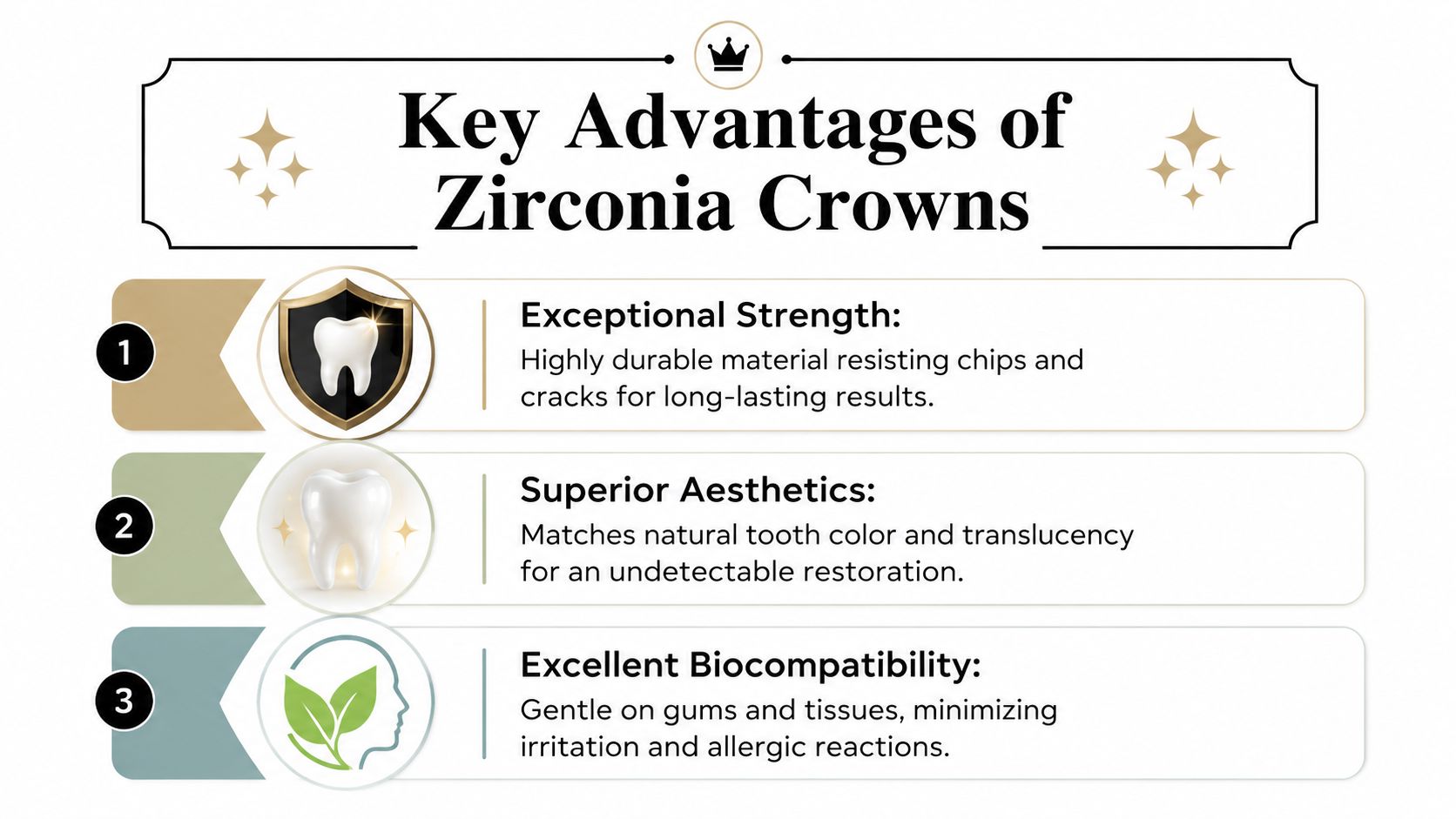
A market overview on U.S. zirconia crown trends reports that over 95% of zirconia crowns remain functional after 10 years of service. That kind of long-term performance is one reason dentists and patients keep returning to this material.
Three advantages patients care about most
Exceptional strength
Daily life puts a lot of pressure on teeth. Chewing meat, crunchy foods, or simply clenching during stress can test any restoration. Zirconia is popular because it's made for those demands. For patients, that often means feeling less anxious about using the tooth normally again.A natural-looking smile
Individuals typically prefer their dental work not to stand out. A zirconia crown is tooth-colored, so it can blend far better than older metal-based options. If the crown is in a visible area, that can make a big difference in how confidently someone smiles, talks, or laughs.Biocompatibility
Patients who want a metal-free option often like zirconia because it's gentle on oral tissues and avoids concerns like metal show-through. That matters if you've been unhappy with the look of a previous crown or if you want a restoration that feels more modern.
What these benefits mean in real life
A crown isn't successful just because it survives. It also has to fit into your day without becoming something you constantly think about.
That's why the main benefit is practical. You want to chew on both sides again. You want your tooth to feel secure. You want your smile to look like your smile, not like obvious dental work.
For patients comparing restorative dentistry, teeth whitening, or other smile improvements, zirconia often stands out because it supports both health and appearance without forcing a trade-off.
Potential Drawbacks and Important Considerations
No crown material is perfect for every person. A trustworthy dental recommendation should include the strengths of zirconia and the details that matter for long-term success.
One practical concern is cost. Zirconia is often priced above some basic alternatives because of the material itself and the technology involved in designing and fabricating it. Many patients still choose it because they want the balance of durability and appearance, but it's reasonable to ask whether the investment fits your goals and budget.
The issue many patients never hear about
A less obvious issue is debonding, which means the crown loosens or comes off. An overview from AZ Dentist on zirconia crowns explains that while zirconia rarely breaks, its primary failure mode can be debonding because the material's smooth surface requires specialized resin-modified cements and precise bonding protocols.
This point confuses patients because zirconia is famous for strength. Strength and bonding are not the same thing. A crown can be very strong as a material and still fail if the cementation process isn't handled properly.
Why technique matters so much
For zirconia, details matter:
- Surface preparation matters because zirconia doesn't bond the same way some other ceramics do.
- The right cement matters because the crown needs a durable seal and secure retention.
- Moisture control matters during placement because contamination can affect bonding.
- Fit matters because a crown that doesn't seat properly can create long-term problems.
A zirconia crown is only as dependable as the planning, fit, and bonding technique behind it.
That's why patients shouldn't think of crowns as interchangeable products. The material is one part of the outcome. The design, preparation, and cementation process are what turn a good material into a restoration that feels secure and functions well.
The Same-Day Zirconia Crown Process at Cali Family Dental
For many people, the old idea of getting a crown is what makes them hesitate. They remember goopy impressions, a temporary crown that felt awkward, and a second visit weeks later for the final placement. Digital dentistry has changed that experience.
The same-day workflow is easier to understand when you see the steps in order.
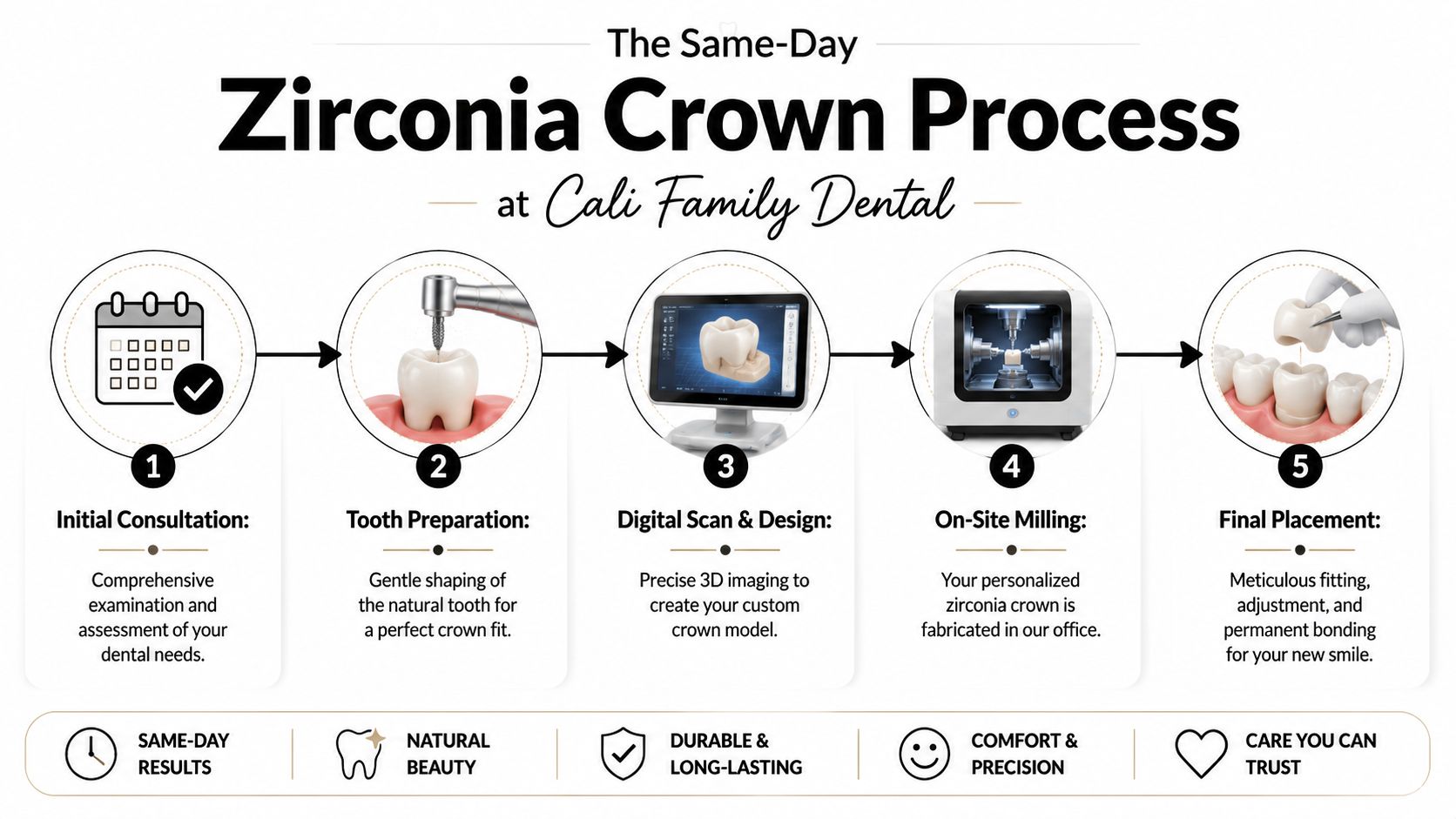
Step 1 and Step 2
First comes the exam and planning. The tooth is evaluated, digital imaging is reviewed, and the dentist checks whether the tooth can be restored with a crown or whether another treatment is needed first, such as a root canal or, in some cases, tooth extraction.
Then the tooth is gently shaped so the crown will fit properly. This step creates space for the new restoration and removes weak or damaged structure.
Step 3 with no messy impression material
Instead of a tray filled with impression material, the dentist uses a digital scanner to capture a 3D image of the tooth. Patients usually appreciate this part right away because there's no goopy taste, no bulky tray pressing in the mouth, and far less discomfort for people with a strong gag reflex.
The digital model also helps the team review fine details of the tooth shape and bite before the crown is made.
The biggest comfort upgrade for many patients isn't the crown itself. It's skipping the old-style impression trays.
A quick visual can help you picture how the process works from start to finish.
Step 4 and Step 5
Once the digital design is approved, the crown is milled in-office. That means the restoration is shaped from a zirconia block using computer-guided technology rather than waiting for an outside lab to fabricate it later.
After milling, the crown is checked, adjusted if needed, and bonded into place. The dentist confirms the fit, bite, and appearance before the appointment ends.
Why patients like the digital approach
The same-day process appeals to busy families and working adults because it can reduce disruption to daily life. It also improves the patient experience in several ways:
- Fewer appointments because the final crown may be completed in one visit
- No temporary crown worries such as loosening or breaking between visits
- Better comfort from digital scanning instead of traditional impressions
- Precise design from computer-aided planning
- Faster return to normal with a finished restoration sooner
For patients looking for an emergency dentist, same-day care can be especially helpful when a damaged tooth needs prompt protection. It also fits naturally into a modern office that uses digital x-rays, intraoral imaging, and other tools to make treatment more accurate and easier to understand.
Cost Insurance and Making Your Crown Affordable in Pico Rivera
Cost matters. For many patients, it's the reason they delay treatment even when they know a tooth needs help. The problem is that waiting often turns a manageable issue into a more complex one.
A consumer guide on zirconia crown cost and expectations states that the average cost of a zirconia crown in the United States ranges from $1,000 to $2,500 per tooth and notes that its longevity can provide strong long-term value.
What affects the final price
The fee can vary based on factors such as:
- The tooth being treated
- Whether additional treatment is needed first
- The complexity of the restoration
- Insurance coverage
- Whether the crown is made in-office or through a lab
A crown may also be part of a larger treatment plan. For example, a patient might need a buildup, treatment for decay, or planning connected to future dental implants near me searches if a tooth can't be saved.
Ways patients manage the cost
For families in Pico Rivera, affordability often comes down to using available benefits well. Many patients look specifically for a dentist near me who accepts insurance and offers payment flexibility.
Common ways dental offices help include:
- Insurance coordination so patients understand what their plan may cover
- Acceptance of Denti-Cal, Medi-Cal, and most PPO plans for qualifying care
- Financing options that spread treatment costs into manageable payments
- Treatment planning by priority so urgent needs are handled first
The right question isn't only “What does a crown cost?” It's also “What happens if I keep putting this off?” If the tooth worsens, treatment may become more involved and more expensive than restoring it now.
Answering Your Top Questions About Zirconia Crowns
Patients usually feel more confident once they've asked the practical questions. Here are some of the most common ones.
Is a zirconia crown safe for my body
Yes, zirconia is widely used as a metal-free dental material. Many patients like it because it's biocompatible and doesn't have the metal look some older restorations can show at the gumline.
Will my zirconia crown look fake
A well-made zirconia crown should blend with your smile. The dentist matches the restoration to the surrounding teeth as closely as possible, while also shaping it so it looks natural in your bite and facial expression.
How do I clean a zirconia crown
Brush and floss it the same way you care for natural teeth. Regular cleaning and exams remain important because the crown covers the tooth, but the gum around it and the rest of your mouth still need healthy daily care.
Can a zirconia crown stain
It's generally very resistant to staining in daily life. Still, your overall smile can change color over time, so it's smart to discuss teeth whitening plans before getting a crown if shade matching is a major concern.
Does getting a zirconia crown hurt
Most patients do well with local anesthetic and feel pressure more than pain during treatment. Some soreness afterward is normal, especially if the tooth was already irritated, but it usually settles as the area heals.
How long will I need to get used to it
Adjustment is typically quick. The crown may feel slightly different at first because the damaged tooth has been restored to its proper shape. If your bite feels off, your dentist can make small adjustments.
Can zirconia be used with implants
Yes, zirconia is commonly used for implant restorations in appropriate cases. If a tooth can't be saved and replacement becomes necessary, it may be part of a broader restorative dentistry plan that includes an implant-supported crown.
If you're dealing with a cracked tooth, a worn filling, or a crown that no longer feels dependable, Cali Family Dental offers modern, patient-focused care in Pico Rivera with same-day dentistry, digital scanners that replace messy impressions, and a full range of treatment from exams to crowns, cosmetic dentistry, emergency visits, and dental implants. Dr. Amirreza Rafaat and his team work with Denti-Cal, Medi-Cal, and most PPO plans, and they offer financing options to help make care more manageable. If you've been searching for a dentist in Pico Rivera, CA who can explain your options clearly and help you restore your smile comfortably, schedule a visit and get answers specific to your tooth, your bite, and your budget.