The search for the best toothbrush for gums suggests there's a good chance something has already started to bother you. Maybe you've noticed pink in the sink when you spit. Maybe cold water hits one tooth and the gumline feels tender. Or maybe your mouth feels clean right after brushing, but your gums still look puffy by the end of the day.
That's usually the moment people start comparing brush heads, bristle types, and electric models online. It's a smart first step. The toothbrush you use every day can either calm irritated gums or keep them inflamed.
For families looking for a dentist near me in Pico Rivera, CA, this question matters for more than shopping. It's part of protecting your smile long term. The right brush helps with daily plaque control, supports healthy tissue around the teeth, and can make a big difference if you're also dealing with sensitivity, gingivitis, bad breath, or early recession.
Early on, it helps to keep the comparison simple:
| Toothbrush type | Best fit | Main trade-off | Gum health takeaway |
|---|---|---|---|
| Manual soft-bristle brush | People with excellent technique and a light touch | Results depend heavily on user pressure and consistency | Can work well, but it's easier to brush too hard |
| Sonic electric brush | People who want gentle powered cleaning | Some users need time to adjust to the sensation | Often a comfortable option for sensitive gums |
| Oscillating-rotating electric brush | People actively trying to improve gum health and plaque control | Higher cost and a different brushing feel | Strong clinical support for gingivitis improvement |
Your Local Guide to Choosing a Toothbrush for Healthy Gums
A lot of people don't worry about their gums until they see bleeding once, then twice, then every morning for a week. They switch toothpaste, brush harder because they think their teeth aren't clean enough, and accidentally make the irritation worse.
That cycle is common. Sensitive gums often push people toward the wrong solution first. They assume they need a firmer brush, more scrubbing, or a whitening product that makes the mouth feel “extra clean.” In practice, healthier gums usually come from doing the opposite. Use a gentler tool, better technique, and a routine that reaches the places a brush misses.
When looking for a dentist in Pico Rivera, CA or trying to decide whether a new toothbrush will solve the problem, the honest answer is this: the brush matters, but the right brush works best as part of a complete gum-care plan.
What patients usually notice first
Most gum problems start insidiously. Patients often describe one or more of these early signs:
- Bleeding while brushing that keeps happening even with daily brushing
- Tenderness near the gumline when eating, flossing, or drinking something cold
- Puffiness or redness around certain teeth instead of a firm pink appearance
- Bad breath that returns quickly even after brushing
- A “longer tooth” look that can mean the gumline is starting to pull back
Healthy gums don't usually bleed from gentle brushing. If they do, that's a sign to pay attention, not a sign to brush harder.
The best toothbrush for gums should lower irritation, improve plaque removal, and make it easier to brush gently every day. It shouldn't leave you guessing whether you're helping or harming your mouth.
What matters more than brand hype
Marketing often focuses on sleek handles and app features. Those can be nice extras, but the bigger questions are simple:
- Are the bristles soft enough?
- Does the brush help you avoid excess pressure?
- Can you clean along the gumline comfortably?
- Will you use it consistently?
People searching for cleaning and exams, new patient exams, or even an emergency dentist often start with a home-care question like this one. That makes sense. Daily brushing is where gum care begins. It just shouldn't be where professional guidance ends.
Why Your Toothbrush Choice Is Crucial for Gum Health
Your gums sit at the border between the visible part of the tooth and the supporting structures underneath. That area collects plaque easily. If plaque stays there, the tissue can become inflamed. Once gums are inflamed, brushing may feel uncomfortable, and many people respond by either avoiding the sore area or scrubbing it too aggressively.
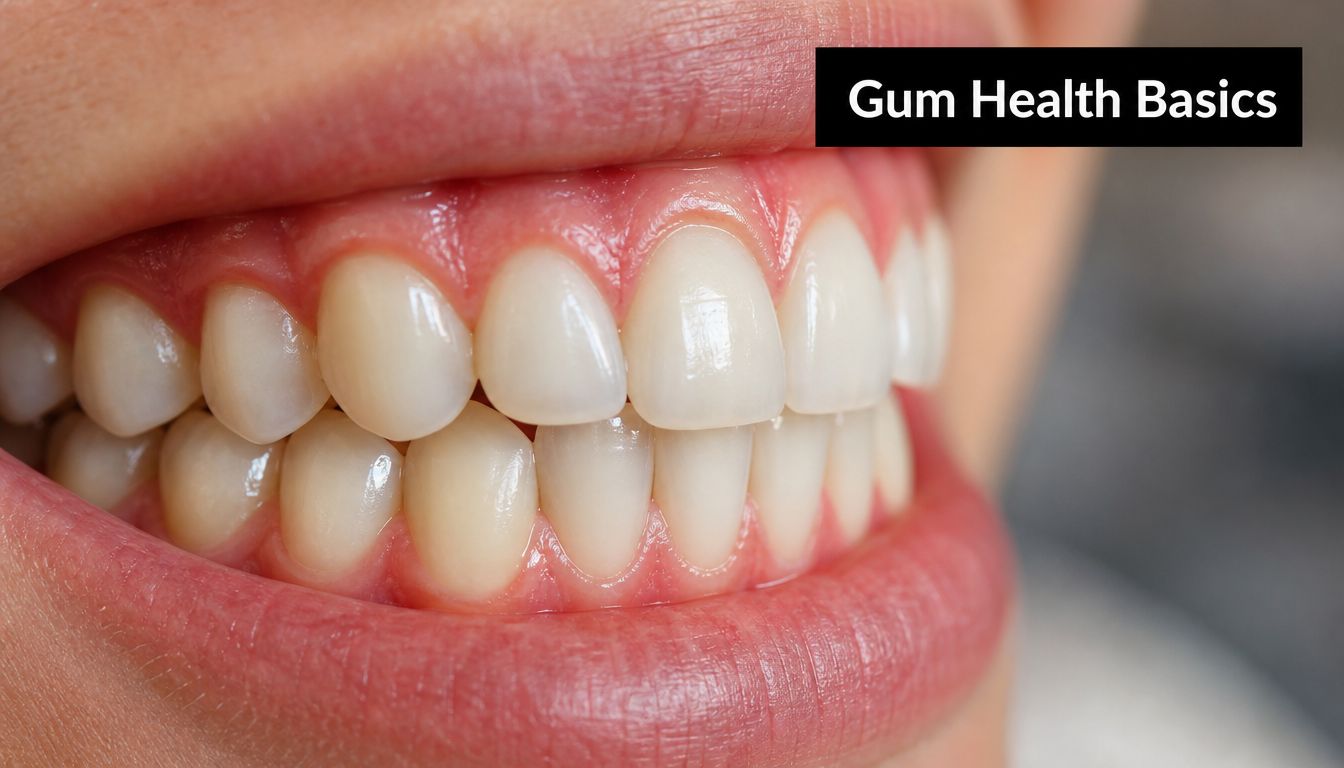
Both reactions work against healing. Skipping the area leaves plaque behind. Scrubbing can irritate the tissue more and wear at exposed root surfaces.
The wrong brush can create the wrong habit
A toothbrush doesn't just clean. It shapes how you brush. A head that feels harsh often leads to shorter, less effective brushing. A brush that encourages heavy hand pressure can irritate already sensitive gums.
Dental professionals recommend soft or extra-soft bristles, and firm or medium bristles can damage both gums and enamel. The American Dental Association also verifies that safe bristles should be free of sharp or jagged edges, as noted in this guidance on toothbrush bristles and gum safety.
That's why “cleaner” doesn't mean “harder.” A brush should remove plaque without asking your gum tissue to absorb excess force.
What gum irritation usually means
If your gums feel sore, bleed easily, or look swollen, it often means there's inflammation at the gumline. If the gumline starts to pull away from the teeth, you may also notice sensitivity, especially near the roots. Once recession is present, the goal is to stop making it worse while controlling plaque more effectively.
A good brush helps in three ways:
- It lets you clean the gumline thoroughly.
- It reduces the chance of overbrushing.
- It supports consistency by making brushing feel comfortable enough to do properly.
Practical rule: If a toothbrush leaves your gums feeling scraped, you don't need more force. You need a better setup.
Why this affects more than comfort
Gum health changes how your whole mouth feels. Inflamed tissue can make teeth seem more sensitive, affect breath, and make routine eating or brushing unpleasant. It also complicates other care. Patients considering cosmetic dentist near me, teeth whitening, restorative dentistry, or dental implants near me do better when the gums are stable first.
That's one reason dentists look closely at the gumline during routine care, not just at cavities or visible tooth damage. A toothbrush is your first line of defense at home, but only if it fits the condition of your gums and the way you brush.
Comparing Toothbrush Technology for Sensitive Gums
Patients with sore or bleeding gums often assume they need the softest brush on the shelf. In practice, the better question is how the brush moves, how easy it is to control, and whether it helps clean the gumline without encouraging heavy pressure.
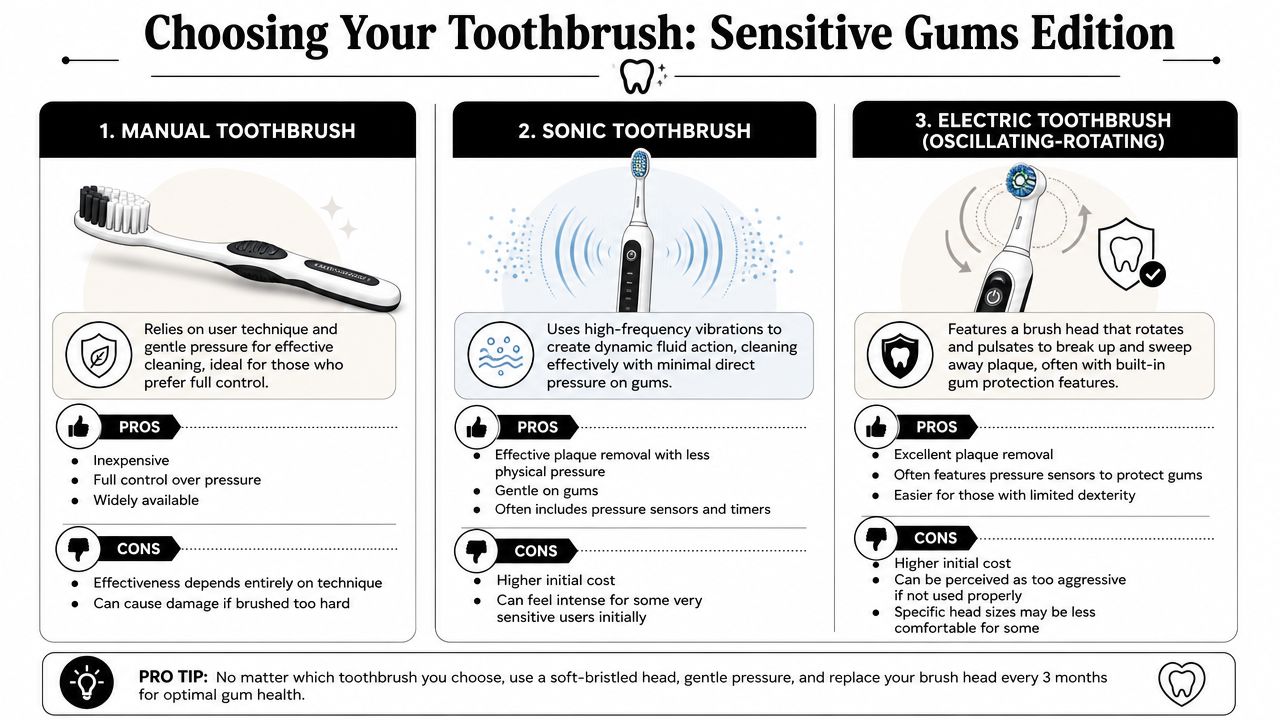
A toothbrush is not a stand-alone fix for gum problems. It is one part of a home-care plan that works best when your dentist is also checking for plaque buildup, recession, bleeding patterns, and early periodontal changes. At Cali Family Dental, that is usually where I start. The right brush helps, but it works best when it matches the condition of your gums.
Side by side comparison
| Technology | How it works | Strengths for gum care | Limits to consider |
|---|---|---|---|
| Manual | You create all movement and pressure | Affordable, familiar, easy to find in soft bristles | Results depend heavily on technique, pressure, and brushing time |
| Sonic | High-frequency vibration with less scrubbing motion | Often feels gentle along the gumline and can improve coverage | The sensation can feel intense at first, especially in tender areas |
| Oscillating-rotating | Small round head rotates and oscillates to disrupt plaque | Strong plaque removal and helpful for patients who miss areas with a manual brush | Higher cost and a different feel than a standard brush |
Manual brushes can be enough for some patients
A soft manual brush can work well if your technique is already controlled. That usually means light pressure, good coverage along the gumline, and enough patience to clean every area instead of rushing through the front teeth.
That is the trade-off. Manual brushing gives you simplicity and lower cost, but it puts all the work on your hands. If you tend to scrub, brush quickly, or miss the back teeth, a manual brush will not correct those habits for you.
Sonic brushes are often comfortable for tender gums
Sonic brushes use rapid vibration, so many patients describe them as gentler than the heavy back-and-forth motion they used with a manual brush. That can make them a good fit for someone who wants powered help but is sensitive to pressure or has mild gum tenderness.
Comfort matters because patients are more likely to brush thoroughly when the experience does not feel harsh. Still, comfort alone is not the goal. The brush also needs to remove plaque effectively in the spots where inflammation keeps returning.
Oscillating-rotating brushes have the strongest support for gingivitis improvement
A meta-analysis of 46 randomized controlled trials found that 72% of oscillating-rotating users reached healthy gums, compared with 21% of manual users and 54% of sonic users, according to this meta-analysis on toothbrush efficacy in gingival health.
For patients with bleeding at the gumline, that matters. In my office, these are often the patients who need a brush that does more of the cleaning work for them, especially if home care has been inconsistent or technique has been too aggressive.
A separate review also described this brushing action as highly effective for plaque removal and gingivitis reduction in this analysis of oscillating-rotating brushing action.
How this applies in real life
The best choice depends on what your gums are dealing with right now.
- Choose manual if your gums are stable, your brushing technique is already gentle, and you want a low-cost option.
- Choose sonic if you want a powered brush that often feels gentler during use.
- Choose oscillating-rotating if you are trying to improve bleeding, plaque control, or early gingivitis and want the strongest clinical support.
If your gums stay irritated no matter which brush you use, the issue may not be the toothbrush alone. Hardened tartar, recession, bite problems, dry mouth, or early gum disease can all keep inflammation going. That is where a professional exam becomes part of the plan, not a separate issue.
Brushing Techniques That Protect Your Gums
A patient will often tell me, "I brush twice a day, so why are my gums still sore?" In many cases, the problem is not effort. It is pressure, angle, and the spots a toothbrush cannot reach.
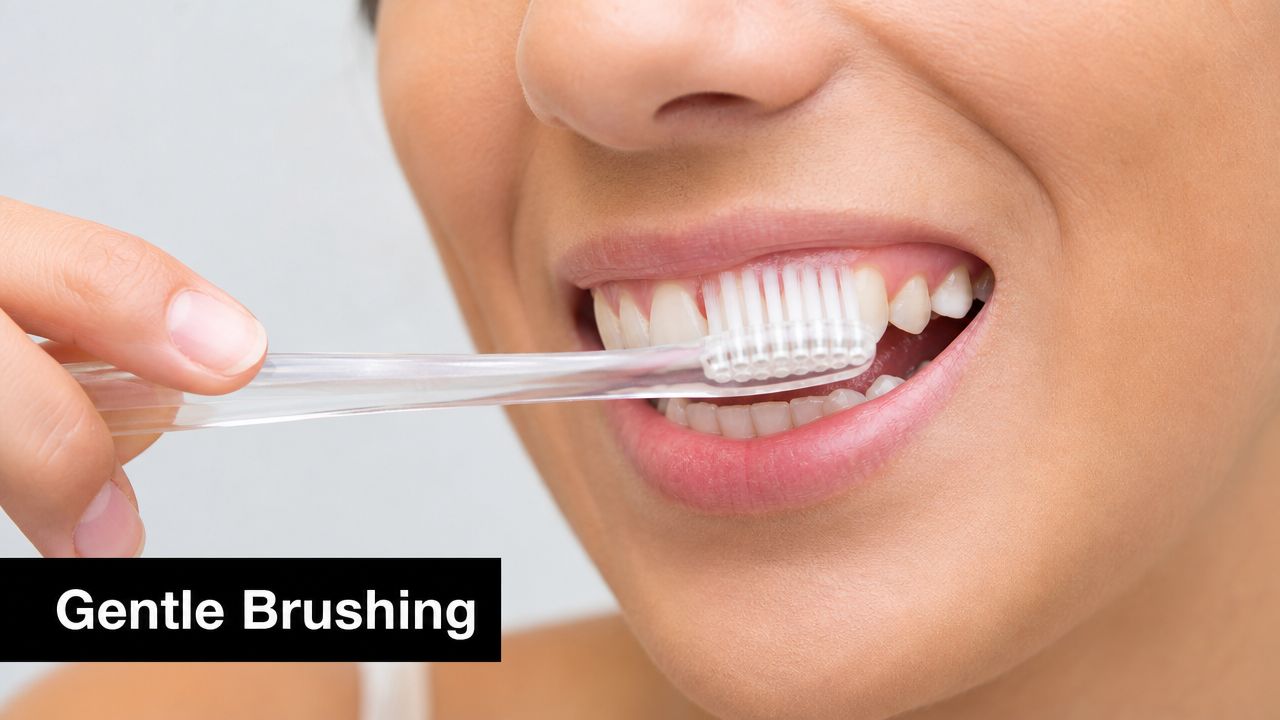
A good brush helps. Good technique keeps that brush from irritating the gumline.
Use a light angle and controlled motion
Place the bristles at about a 45-degree angle where the tooth meets the gum. That lets the tips of the bristles clean along the edge of the gums instead of scraping across them.
With a manual brush, use short, gentle strokes and move tooth by tooth. With a powered brush, rest the head on each tooth and guide it slowly. Let the brush do the work. Pushing harder usually spreads the bristles flat, reduces cleaning at the gumline, and can leave tender tissue more inflamed.
I tell patients to watch for one simple sign. If the bristles are bending over during brushing, the pressure is too high.
A steady routine works well:
- Start on the outer surfaces and move in order so you do not miss areas.
- Keep the bristles angled at the gumline instead of brushing across the middle of the tooth.
- Use light pressure so the bristle tips stay pointed into the area you are trying to clean.
- Brush the inner and chewing surfaces with the same slow pace.
- Clean tender areas gently and thoroughly instead of avoiding them.
Areas your toothbrush will miss
Even excellent brushing does not clean between teeth well enough on its own. Plaque and food debris collect in those tight spaces, and that is where I often see bleeding first.
Daily interdental cleaning matters. Floss, floss picks, interdental brushes, or a water flosser can all help, depending on your spacing, dexterity, and gum condition. The dental guidelines on interdental cleaning emphasize that cleaning between the teeth needs to be part of routine home care.
That point matters because the right toothbrush is only one part of gum care. If bleeding keeps showing up between the teeth or along one area of the mouth, the issue may be buildup under the gumline, early gum disease, or a technique problem that needs to be corrected in person.
Small habits that protect the gumline
- Replace worn brushes or brush heads once the bristles start to splay
- Choose soft bristles if your gums are sensitive or receding
- Spend extra time at the gumline instead of focusing only on the front of the teeth
- Use an interdental cleaner every day because brushing alone leaves plaque behind between teeth
For a quick demonstration of gentle gum-focused brushing, this short video is useful:
Aim for clean teeth and calm gums
A lot of patients judge brushing by how smooth their teeth feel afterward. Gum health gives you a better standard. Teeth should feel clean, and the gums should not feel scraped up afterward.
If your mouth feels polished but your gums still sting, bleed, or look puffy, it is time to adjust more than the toothbrush. In my office at Cali Family Dental, small changes in pressure, angle, brush head size, or interdental cleaning often make a bigger difference than switching brands over and over. If home care still is not settling the gums down, a professional exam can show whether the problem is technique, tartar buildup, recession, or early periodontal disease.
How to Choose the Right Toothbrush for Your Specific Needs
Choosing the best toothbrush for gums gets easier when you stop asking for a universal winner and start asking what your mouth needs right now. A teenager with mild sensitivity, an adult with bleeding gums, and someone with visible recession don't all need the same setup.
If your gums are mildly sensitive
If the issue is occasional tenderness but no regular bleeding, start simple. A soft manual brush can be enough if you already have a gentle technique. A basic sonic brush can also be a comfortable upgrade if you want powered cleaning without a heavy brushing feel.
In this situation, the deciding factors are comfort and consistency. If a brush feels so harsh that you avoid certain teeth, it's the wrong brush even if it has impressive features.
If your gums bleed when you brush or floss
Bleeding changes the picture. At that point, plaque control matters more than personal preference alone. If someone is actively dealing with gingivitis or repeated bleeding at the gumline, a powered brush often makes more sense because it reduces the amount of brushing skill required every day.
That doesn't mean you can ignore technique. It means the tool can support better outcomes instead of relying on perfect manual control.
A brush should make good habits easier, not ask you to be flawless twice a day.
If you have receding gums
Many people still assume electric toothbrushes are too harsh for recession. That idea sounds reasonable, but it often leads people back to aggressive manual brushing, which is exactly what many receding gums don't tolerate well.
A better approach is a power brush with a pressure sensor, because it helps stop the user-driven force that contributes to gum damage. The American Dental Association has confirmed that pressure-sensor-equipped electric brushes can help prevent this problem, as discussed in this review on electric toothbrushes and receding gums.
Features worth prioritizing
Don't get distracted by cosmetic extras before the basics are covered. For most patients with gum concerns, I'd prioritize:
- Soft or extra-soft bristles first
- A small head that reaches the gumline easily
- A pressure sensor if you tend to brush hard
- A timer if you rush
- A brushing action you'll tolerate daily
My practical recommendation pattern
If I were guiding this decision chairside, I'd usually break it down like this:
| Situation | Most practical starting point |
|---|---|
| Healthy gums, good technique | Soft manual brush or powered brush based on preference |
| Mild sensitivity | Soft sonic or gentle oscillating-rotating model |
| Frequent bleeding or plaque buildup | Oscillating-rotating brush with soft head |
| Receding gums and heavy hand pressure | Electric brush with pressure sensor and soft bristles |
| Limited dexterity | Powered brush with a smaller head and simple controls |
The ideal toothbrush doesn't just clean well in theory. It needs to fit your habits, reduce the chance of overbrushing, and feel manageable enough that you'll keep using it.
When to See Your Pico Rivera Dentist About Gum Health
You switch to a softer brush, slow down, and try to be gentler, but the gums still bleed in the same spot every morning. That pattern matters. A toothbrush can improve home care, but it cannot tell you whether the problem is early gum disease, tartar below the gumline, grinding, a failing filling, or recession that needs treatment.
If your gums are not improving after a few weeks of better brushing, get them checked.

Signs you shouldn't ignore
Make an appointment if you notice:
- Bleeding that keeps happening after you have corrected your brushing routine
- Bad breath that returns quickly even after brushing and flossing
- Tender or swollen gums in the same area
- A receding gumline or teeth that look longer than before
- Loose teeth or a bite that feels different
- Pain when chewing or sensitivity around exposed roots
These are common signs that the issue has moved beyond brush selection. In my office, I often find buildup under the gums, early bone loss, clenching, or rough dental work that keeps trapping plaque. None of those problems are fixed by buying another toothbrush.
What professional care adds
At a visit, the goal is simple. Find the cause, measure the damage if there is any, and give you a plan that matches what your gums need.
That may include:
- Cleaning and exams to remove buildup you cannot reach at home
- Dental X-rays if we need to check bone levels or hidden problems
- New patient exams to look for gum disease, recession, decay, or bite-related wear
- Restorative dentistry when damaged teeth or margins are collecting plaque
- Tooth extraction if a failing tooth is affecting the surrounding gum tissue
- Cosmetic dentistry and teeth whitening after the gums are healthy and stable
- Dental implants near me planning when missing teeth need replacement and gum support matters
- Emergency dentist care for sudden swelling, pain, or active bleeding
Some patients with recession need more than a cleaning and a softer brush. Selected cases may benefit from advanced gum treatment, including the Pinhole Surgical Technique, but that decision starts with an exam and a clear diagnosis.
Better gum results come from home care and dental care together
The right toothbrush helps control plaque and reduce irritation. Professional care deals with what the brush cannot reach or identify. That combination is what usually changes the course of gum problems.
I tell patients this often. If your gums bleed every day, treat that as a warning sign, not a normal part of brushing.
For people searching dentist near me in Pico Rivera, the practical next step is straightforward. Use a soft brush that fits your needs, keep your technique gentle, and book an exam before mild inflammation turns into gum loss or bone loss.
If you're ready for personalized guidance on gum health, schedule a visit with Cali Family Dental. Dr. Rafaat and the team provide patient-focused care in Pico Rivera, including exams, digital X-rays, routine cleanings, deep cleanings, restorative treatment, cosmetic dentistry, emergency dental care, and advanced support for gum recession. New patients can also take advantage of the $69 special that includes an exam, digital X-rays, and a routine cleaning.