If you're looking into a dental implant, you're probably trying to answer two very practical questions. How long will this take, and how bad will recovery be? For patients in Pico Rivera, those concerns often matter more than the technical details. You want to know when you'll be comfortable again, when you can eat normally, and when the tooth will feel finished.
That uncertainty is normal. A missing tooth, a failing tooth, or an upcoming tooth extraction can make everyday things feel stressful. Chewing becomes awkward, smiling can feel self-conscious, and the idea of oral surgery may sound bigger than it really is.
The good news is that the dental implant healing timeline is usually very manageable when you know what to expect. The process has clear stages. Some parts heal quickly and feel better early. Other parts stay active under the surface long after symptoms calm down. That difference matters because feeling normal isn't the same thing as being fully healed.
Considering Dental Implants in Pico Rivera
A patient often comes in after breaking a tooth or losing one and asks the same question first. "How long until this feels normal again?" That is a fair concern, and it matters just as much as the treatment itself.
A dental implant replaces the part you see above the gumline and the support below it. For many patients, that makes it a strong option when the alternative is living with a gap, wearing something removable, or preparing the neighboring teeth for a bridge. The trade-off is time. An implant usually asks for more healing and follow-up than other tooth replacement options, but in return it can give you a more stable, natural-feeling result.
The part that causes stress is rarely the implant alone. It is the uncertainty around recovery, soreness, eating, and whether healing is on track. Patients want to know when they can chew comfortably, when the area will stop feeling tender, and when the implant is ready for the final crown.
That last point causes a lot of confusion. Feeling better is not the same as being fully healed. Your gums may look settled well before the bone has finished bonding to the implant, and that deeper healing is what supports long-term success.
Why implants can feel intimidating
From the patient's side, the early stage is the one you notice most. You may have tenderness, swelling, and a sense that you need to protect the area. From the biological side, the longer and quieter phase happens under the surface as the bone heals around the implant.
I make that distinction clear because it helps patients avoid two common mistakes. One is worrying that normal early soreness means something is wrong. The other is assuming that because the area feels fine, it is ready for full pressure.
Good implant care should remove that guesswork. You should know what sensations are expected, what changes deserve a call, and why the final steps of treatment happen only after the implant has enough support.
A local option when you want clear guidance
Choosing a dentist in Pico Rivera involves more than finding someone who can place an implant. You need a dental team that explains each stage clearly, keeps you comfortable during treatment, and checks healing carefully instead of rushing to the finish.
At Cali Family Dental, Dr. Rafaat approaches implants with that mindset. The focus is steady planning, careful placement, and close follow-up so the implant has the best chance to heal well and serve you for years.
A well-managed implant process usually feels more calm and organized than patients expect. You know what is happening, what you may feel next, and why patience during healing protects the final result.
The Four Stages of Your Dental Implant Healing Timeline
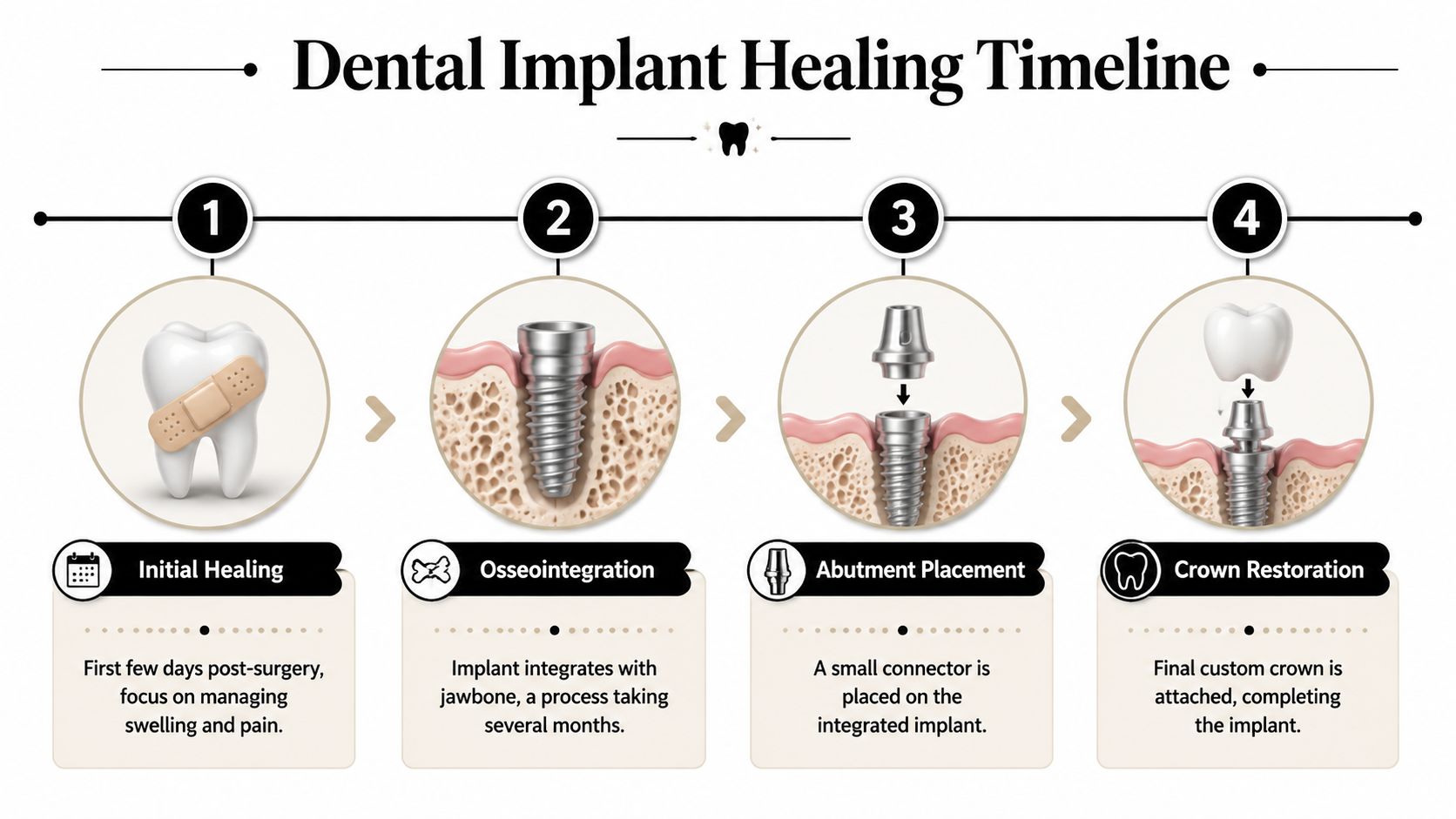
The easiest way to understand the dental implant healing timeline is to divide it into what you feel and what's happening biologically. The gums usually settle much sooner than the bone does. According to Modern Haus Dental's explanation of implant healing, the core healing timeline is usually split into soft-tissue healing in about 1 to 2 weeks and osseointegration in about 3 to 6 months. That longer phase is when bone integrates with the titanium fixture and determines long-term stability.
A visual timeline can make that easier to picture.
The day of surgery
On surgery day, the implant is placed into the jawbone. From the patient's point of view, this is the start of recovery. From the body's point of view, this is the start of repair and stabilization.
You can expect numbness at first, then tenderness as that wears off. The bite may feel different for a bit, and you'll need to protect the site. This is not the day to test it with crunchy food or chewing on that side.
What works well at this stage is keeping things simple:
- Rest and protect the area so the site isn't irritated.
- Stick with the instructions you were given about cleaning, eating, and medications.
- Choose soft foods that don't put pressure on the new implant.
- Pay attention to the surgical side instead of assuming you'll be able to use it normally right away.
What doesn't work is treating the implant like a finished tooth just because it's in place.
The first two weeks
This is the soft-tissue stage. The gums are closing and calming down. Patients typically find that each day is easier than the one before. The site usually looks less dramatic than patients fear it will.
During this stretch, the focus is comfort and cleanliness. Gentle home care matters. So does avoiding habits that can disturb the area. You may feel much better before the tissue is fully settled, which can create a false sense that healing is complete.
Practical rule: Early comfort is encouraging, but it isn't your green light to chew hard foods on the implant side.
This is also when many patients start feeling more confident because the recovery becomes less noticeable in daily life.
Later in the process, after symptoms have improved, many people find it helpful to hear a straightforward walk-through like this:
Months two through six
This is the part patients often don't realize is still happening. Osseointegration means the bone is bonding with the implant surface. You typically don't feel this process, but it's the phase that determines whether the implant will be strong enough for long-term use.
That creates one of the biggest points of confusion in implant treatment. Your mouth may feel mostly normal while the bone is still remodeling and stabilizing. If patients assume less pain means full healing, they can put the implant under unnecessary pressure too soon.
A simple comparison helps:
| What you notice | What may still be happening |
|---|---|
| Less soreness | Bone is still integrating with the implant |
| Normal routine returning | The implant may still need protection |
| Eating feels easier | Full load-bearing readiness may not be confirmed yet |
| Gum looks healed | Internal healing can still be ongoing |
Final abutment and crown placement
Once the implant is stable enough, the restorative phase begins. The abutment connects the implant to the final crown, and the custom crown restores the visible tooth.
This is the point patients have been waiting for, but it should happen at the right time, not the earliest possible time. A crown placed on an implant that hasn't healed properly creates avoidable risk. A crown placed after proper healing supports comfort, function, and long-term confidence.
When patients understand these four stages, recovery feels much less mysterious. The process isn't just one long block of healing. It's a sequence, and each stage has its own purpose.
What to Expect at Your Implant Appointments in Pico Rivera
For many patients, the office schedule feels more stressful than the surgery itself because they don't know how many visits are involved or what happens at each one. In reality, the appointments usually follow a very logical path.
Your consultation and planning visit
The first appointment is about whether an implant is the right fit for your mouth, your goals, and your timeline. For this, digital X-rays and scans are essential. They help the dentist evaluate bone support, spacing, bite, and whether anything else needs to happen first, such as a tooth extraction or other restorative treatment.
Practical questions also get answered during this visit. If you're comparing implants with a bridge, if you're worried about healing, or if you're trying to coordinate treatment around work and family responsibilities, the plan starts becoming real at this stage instead of abstract.

The placement appointment and follow-up checks
The surgery visit is focused and purposeful. The implant is placed, the area is protected, and you go home with aftercare instructions. Most patients do best when they plan for a quiet day and avoid treating the appointment like a routine errand squeezed between other obligations.
Follow-up visits are where implant care becomes personalized. The dentist checks how the tissue looks, whether the site is staying clean, and whether healing appears to be moving in the right direction. If something needs adjustment, it's much better to catch it early than to wait.
A typical sequence may include:
- A planning visit with digital imaging and treatment discussion
- The implant placement appointment for the surgical phase
- Healing checks to monitor tissue response and overall progress
- A restorative visit for the abutment and final crown when the implant is ready
The final restoration visit
When the implant is stable, the final stage feels much more like restorative dentistry than surgery. The abutment is connected, the custom crown is fitted, and the bite is checked so the tooth looks natural and functions comfortably.
Patients often appreciate that digital scanners can replace traditional messy impressions in many cases. That makes the restorative phase cleaner, more precise, and easier to tolerate, especially if dental visits already make you nervous.
The entire sequence works best when each visit has a purpose and the timing matches your biology, not just your calendar.
Factors That Influence Your Healing Speed
Healing speed is rarely identical from one patient to the next. Two people can leave the office after a very similar implant procedure and still recover on different timelines because their bone quality, gum health, medical history, and daily habits are different.
That difference matters for one reason patients often ask about. Feeling better and being ready for a crown are not the same thing. Soreness may settle down fairly early, while the deeper bond between the implant and your jawbone continues developing for months.
Factors that help healing move smoothly
The best healing conditions are fairly straightforward. The area stays clean, the implant is protected from too much force, and the patient follows instructions closely during the first weeks.
Good home care helps because healing tissue does not do well in a mouth where plaque is allowed to collect. That does not mean brushing harder or rinsing aggressively. It means gentle, consistent cleaning exactly as instructed, along with the patience to let the site mature.
Sleep, hydration, and steady nutrition also make a real difference. I often tell patients that implant healing is biologic work, not just symptom management. Your body needs energy and a healthy environment to build stable support around that implant.

Factors that can slow healing
Some delays come from habits. Others come from health conditions or from the amount of treatment needed before the implant can fully integrate.
According to Aspen Dental's overview of implant recovery and healing, patients often get back to normal-feeling daily activities by about week 6, while complete bone fusion still takes 3 to 6 months. That gap is where confusion happens. The site may feel calm, but the implant may still need more protected healing time before it can safely support full chewing pressure.
A few common factors can extend the timeline:
- Smoking reduces the quality of the healing environment and can interfere with tissue and bone recovery.
- Diabetes and other medical conditions may require closer monitoring and better control during treatment.
- Oral hygiene problems can inflame the gum tissue around the implant.
- Heavy biting pressure too soon can stress the implant before it has firm support.
- Bone grafting or additional procedures usually mean a longer overall process because more healing has to occur first.
Some of these factors are manageable. Some mean the treatment plan needs more time. Neither situation means implants are off the table. It means the timeline should match your biology instead of forcing your body to match a calendar.
Why individualized planning matters
Personalized planning is what keeps small issues from becoming larger ones. One patient may move through healing with very few concerns. Another may need longer healing intervals, more follow-up checks, or coordination with a physician to keep a medical condition stable during treatment.
When you want a treatment plan that reflects your actual health history, that is the right instinct. At Cali Family Dental, implant care is planned around the patient in the chair, not around a one-size-fits-all schedule.
Recovery Tips for a Smooth Healing Process
A smooth implant recovery usually comes down to protecting the area while your body does its part. Patients are often relieved to hear that the early phase is less about doing more and more about avoiding the habits that interfere with healing.
As noted earlier, many patients feel noticeably better within the first couple of weeks. That symptom relief matters for comfort, but it is not the same as full healing. The gums may look calmer and the soreness may fade well before the bone has matured enough for normal biting force or the next restorative step.
What helps in the early days
Keep your routine simple and gentle. Good healing usually follows steady habits, not aggressive cleaning or testing the area to see what it can handle.
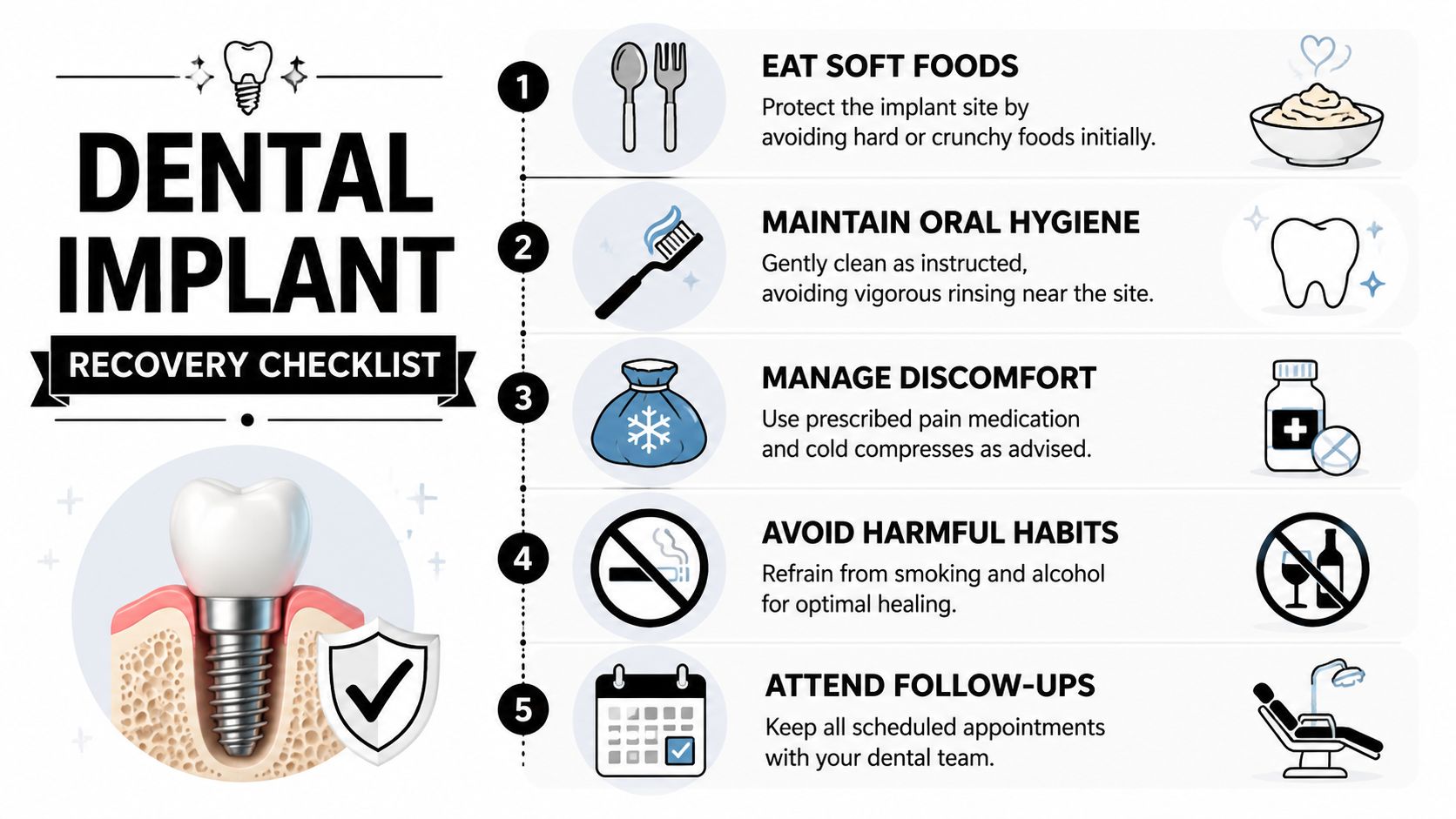
These steps make the biggest difference:
- Choose soft foods and chew away from the implant site when possible.
- Keep the area clean exactly the way your dentist recommends, even if you feel hesitant at first.
- Take medications on schedule so discomfort stays controlled instead of building.
- Avoid smoking and alcohol because both can slow tissue recovery and irritate the site.
- Show up for follow-up visits so healing is checked directly, not guessed at from symptoms alone.
For patients needing implant care, restorative work, or related services, the key is continuity. The same office that plans treatment can also monitor the site, answer questions early, and decide when it is ready for the next step.
What usually feels normal
Some tenderness, mild swelling, and a temporary change in how you eat are common early on. The area often feels delicate before it feels dependable.
Patients sometimes mistake comfort for readiness. If the site feels less sore, that is a good sign. If swelling is settling, that is also encouraging. Neither one proves the implant is ready for full chewing pressure or a final crown.
When to call the office
I tell patients to pay attention to the trend. Healing should gradually settle down. If symptoms are intensifying, the site needs a closer look.
Call your dental office if you notice:
- Pain that is getting worse instead of better
- Swelling that increases after the first few days
- A bad taste, drainage, or an odor that seems unusual
- A loose or shifting feeling near the implant area
- Any concern that makes you feel the site is not healing normally
If you are unsure, call anyway. Early questions are easier to handle than delayed problems.
Access to an emergency dentist also matters during recovery. Complications are uncommon, but prompt evaluation is the right response when pain, swelling, or function changes in a way that does not fit the normal pattern.
How Dental Implants Restore Your Lasting Smile
An implant isn't just about filling a gap. It's about restoring how your mouth works as a whole. When a tooth is missing, people often start chewing differently, avoiding one side, or putting more stress on nearby teeth. Over time, that can affect comfort, bite, and confidence.
A well-healed implant supports a custom crown that looks natural and stays fixed in place. That means you can smile without thinking about a removable appliance shifting, and you can speak and chew with more confidence. For many patients, the biggest benefit is that the tooth stops feeling like a problem they have to work around every day.
Why the healing process is worth it
The timeline can feel long when you're waiting for the final crown, but the purpose of that wait is stability. The healing phase protects the long-term result.
Implants also fit naturally into broader restorative and cosmetic treatment plans. A patient may replace one missing tooth with an implant, restore worn teeth with crowns, and later explore cosmetic dentistry options like teeth whitening to brighten the overall smile. In that way, implants don't just repair damage. They can become part of a healthier, more complete smile plan.
For patients searching for cosmetic dentist near me, dental implants near me, or restorative dental care in Pico Rivera, the key value is durability, function, and a result that looks like it belongs in your smile.
Begin Your Smile Restoration at Cali Family Dental
If you're dealing with a missing tooth, a tooth that can't be saved, or questions about what comes after an extraction, the next step doesn't have to feel overwhelming. The right implant plan should make the process feel clear. You should know what the timeline looks like, what healing requires, and how your dentist will decide when it's time for the final crown.
Dr. Rafaat brings more than 24 years of experience to patient care, and that kind of background matters when treatment needs to be customized rather than rushed. Some patients need straightforward implant planning. Others need a more careful sequence because of medical history, anxiety, or other restorative needs. A calm, well-explained plan usually makes the whole experience easier.
Patients in Pico Rivera and nearby communities also benefit from practical access to care. The office offers a full range of dental services, same-day attention for urgent needs, advanced technology such as digital X-rays and digital scanners, and an insurance-friendly approach that includes Denti-Cal, Medi-Cal, and most PPO plans. New patients can also ask about the $69 special that includes an exam, digital X-rays, and a routine cleaning.
If you're looking for a dentist near me who can evaluate a missing tooth, explain whether an implant makes sense, and help you move forward without pressure, scheduling a consultation is the right place to start.
If you're ready to talk through your options for dental implants, tooth extraction, restorative dentistry, or emergency dental care, contact Cali Family Dental to request an appointment. Dr. Rafaat and the team serve Pico Rivera with clear guidance, modern technology, and patient-focused care designed to make your next step feel manageable.