A toothache rarely starts at a convenient time. It shows up during dinner, wakes you up after midnight, or hits while you're trying to get through work and ignore the pulsing on one side of your jaw. When you're looking for a dentist near me in Pico Rivera, CA because your tooth suddenly hurts, you're probably not looking for theory. You want the pain to settle down, and you want to know what to do next.
That urgency makes people second-guess themselves. Is this something you can calm down at home for a few hours, or do you need an emergency dentist right away? The answer depends on the kind of pain, whether swelling is involved, and whether the problem is dental or part of a larger medical emergency. In most cases, the fastest path to real relief is prompt dental care, not waiting and hoping it fades.
Dr. Rafaat and the team focus on the practical side of urgent care. When a patient calls with a severe toothache, the first priority is simple. Lower the pain safely, identify the likely cause, and get the patient into the office for definitive treatment. That may mean a filling, a root canal, a tooth extraction, or another restorative step that solves the problem instead of only masking it for a few hours.
Navigating a Sudden Toothache in Pico Rivera
A sudden toothache can feel bigger than it sounds. One moment you're fine. The next, cold water stings, chewing is impossible, and the pain starts traveling toward your ear or temple. Parents see it in children who stop eating on one side. Adults feel it when a cracked filling, deep cavity, or inflamed nerve finally reaches the point where it can't be ignored.
Some toothaches are sharp and triggered by temperature. Others throb constantly and keep you from sleeping. A few come with pressure when you bite down, which can point to a cracked tooth, infection, or inflammation around the root. The exact cause matters, because emergency toothache relief at home only buys time. It doesn't remove decay, drain an infection, or repair a damaged tooth.
What a toothache often means
A painful tooth can involve several layers of the mouth:
- The enamel and dentin can be affected by a cavity or fracture, exposing the tooth to heat, cold, and pressure.
- The pulp inside the tooth can become inflamed, causing deep, lingering pain that often gets worse at night.
- The gums and surrounding bone can react to infection, trapped debris, or trauma, leading to swelling and tenderness.
A toothache is a symptom, not a final diagnosis. The pain tells you something is wrong, but the solution depends on what's causing it.
Local access matters. If you're looking for a dentist in Pico Rivera, CA because the pain came on fast, same-day dental evaluation usually gives you a clearer answer than waiting at home or trying random remedies from the internet.
What dental treatment changes
When a dentist examines an emergency toothache, the goal is to stop guessing. A focused exam and dental X-rays can show decay, a cracked tooth, an abscess, or changes around the root that aren't visible in the mirror. From there, treatment becomes specific. A cavity may need a filling. An infected nerve may need root canal treatment. A broken tooth that can't be saved may require extraction, with future options such as dental implants near me discussed after the emergency is under control.
That direct path is usually what patients need most. Less uncertainty. Less pain. A real plan.
First Steps for Temporary Toothache Pain Relief
The first rule is to think of home care as a bridge. It can reduce pain and swelling for a short time, but it won't cure the underlying problem. If you're trying to make it through the next few hours before being seen, use simple measures that are low-risk and purposeful.
Start with rinsing and gentle cleaning
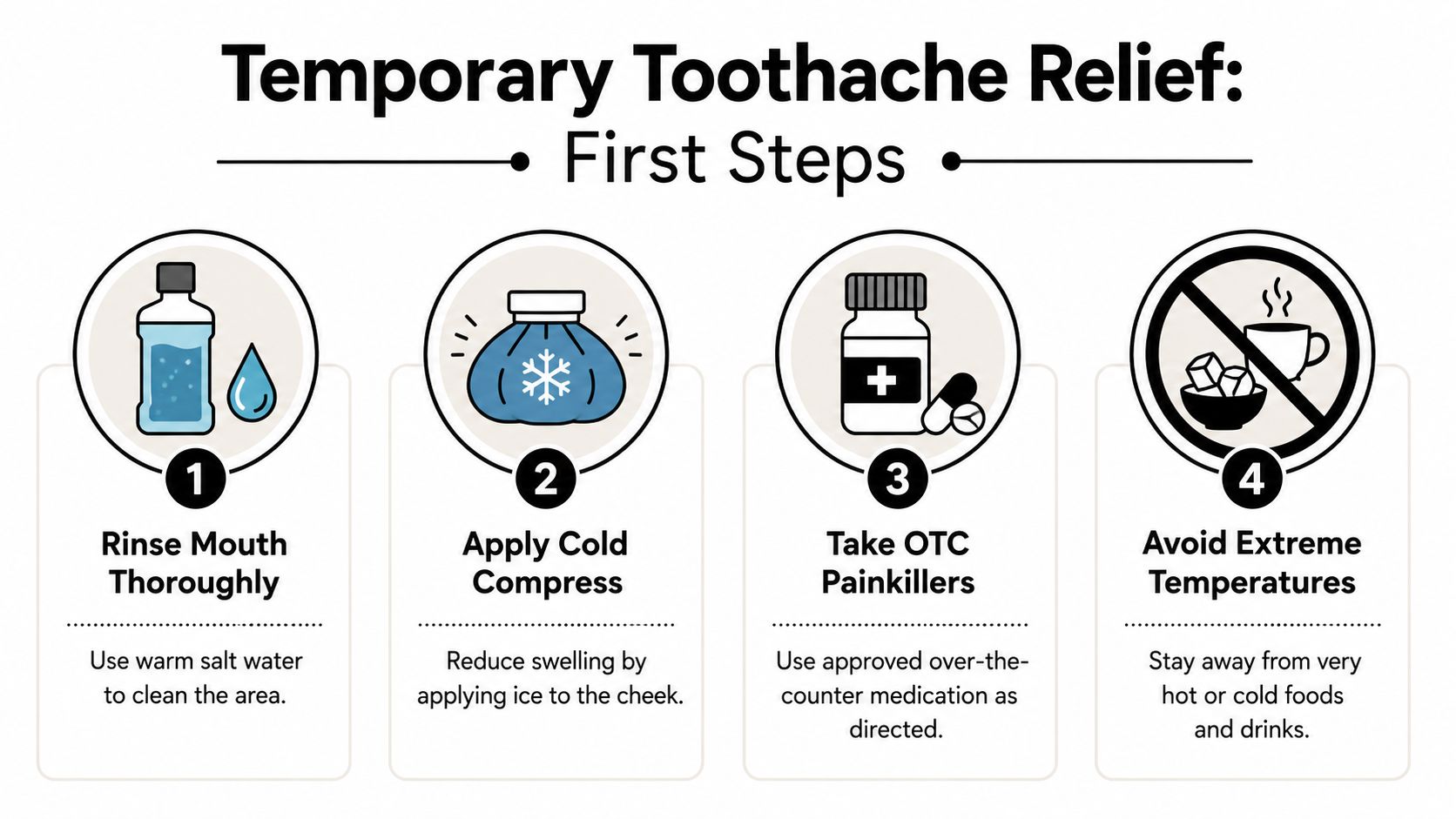
A warm salt water rinse is one of the safest first steps. For immediate relief, dissolve half a teaspoon of salt into eight ounces of warm water and swish for exactly 30 seconds before spitting it out, repeating every couple of hours as needed, according to this salt water rinse guidance for toothache relief.
If food is trapped between teeth, floss gently. Don't snap the floss into sore gums. Slide it down carefully and curve it around each tooth. Sometimes pressure from trapped debris creates the entire problem, especially around a back molar.
Reduce swelling from the outside
If the area feels puffy or your jaw is aching, use cold on the outside of the face, not inside the mouth. Apply a cold compress or ice pack wrapped in a thin cloth to the cheek or jaw for 15 to 20 minutes at a time, then remove it before repeating later, as described in this cold compress advice for severe tooth pain and swelling.
A few practical details matter:
- Keep the ice outside. Don't place ice directly on the tooth or gums.
- Use a cloth barrier. Direct skin contact can irritate the skin.
- Repeat in cycles. Short sessions work better than leaving cold on too long.
Practical rule: If cold on the outside helps, that points to inflammation or swelling. It still doesn't tell you why it's happening.
What to avoid while you're waiting
Patients often make the pain worse without realizing it. Small changes can help you protect the tooth until you're seen.
- Skip extreme temperatures. Very hot coffee and ice-cold drinks can trigger exposed dentin or an inflamed nerve.
- Chew on the other side. Pressure can aggravate a cracked tooth or inflamed ligament.
- Don't put aspirin on the gum. It won't fix the tooth and can irritate soft tissue.
- Don't rely on clove oil or alcohol-based home tricks if the area is already irritated. These can sting and distract from getting proper treatment.
A soft diet can help for the rest of the day. Think yogurt, eggs, smoothies that aren't very cold, soup that's warm rather than hot, and anything that doesn't require heavy chewing. If you're also due for routine cleaning and exams or a new patient exam, that can be addressed after the urgent issue is stabilized. During an active toothache, pain control and diagnosis come first.
Using OTC Pain Relievers Safely and Effectively
Over-the-counter pain medicine can reduce a toothache enough to get you through the next few hours and into the dental chair. That is the goal. The medicine should buy time, not replace diagnosis and treatment.
For many adults, the most effective short-term option is to use ibuprofen and acetaminophen together, if your medical history allows it. The American Dental Association explains that oral analgesics such as NSAIDs are commonly recommended for temporary dental pain relief, and that combining ibuprofen with acetaminophen can be more effective than opioid medication for dental pain. Ibuprofen lowers inflammation. Acetaminophen helps with pain through a different mechanism, so the two can complement each other.
I tell patients the same thing I would tell a family member on the phone. Follow the package directions unless a dentist or physician has told you otherwise. Do not stack products casually. A cold and flu medicine, nighttime pain reliever, or prescription combination product may already contain acetaminophen, and that is where people get into trouble.
Before you take anything, pause and check for common reasons to avoid or limit a medication:
| Medication question | Why it matters |
|---|---|
| Are you already taking a cold, flu, or sleep medicine? | Many of these products contain acetaminophen. |
| Do you have ulcers, reflux irritation, kidney disease, or a history of stomach bleeding? | Ibuprofen and similar NSAIDs may not be a safe choice. |
| Do you have liver disease or regular heavy alcohol use? | Acetaminophen may need to be avoided or kept very limited. |
| Are you pregnant, on blood thinners, or taking other prescription medicines? | You may need advice from a dentist, physician, or pharmacist before using OTC pain relievers. |
One practical warning matters here. More pills do not mean more dental treatment. If the pain keeps breaking through the correct dose, that often points to a pressure problem, infection, cracked tooth, or inflamed nerve that needs same-day dental care. An ER visit usually means a bill for evaluation and temporary medication. A dental office can usually identify the tooth and start the actual fix.
Children need a different plan. Use only age- and weight-based dosing on the product label, and do not guess. Aspirin is not appropriate for children and teenagers in this setting. If a child has significant tooth pain, call for dental guidance the same day.
Red Flags That Require an Emergency Dentist
Some toothaches can wait a few hours. Others shouldn't. The hard part for patients is knowing the difference. If the pain has moved beyond sensitivity and into swelling, fever, bleeding, or trauma, home care has reached its limit.
Signs you shouldn't ignore
According to the NHS guidance on when a toothache needs urgent professional care, if a toothache persists for more than 2 days, or if it doesn't go away after taking painkillers, immediate professional dental evaluation is required. The same guidance says children under 16 must strictly avoid taking aspirin for tooth pain.
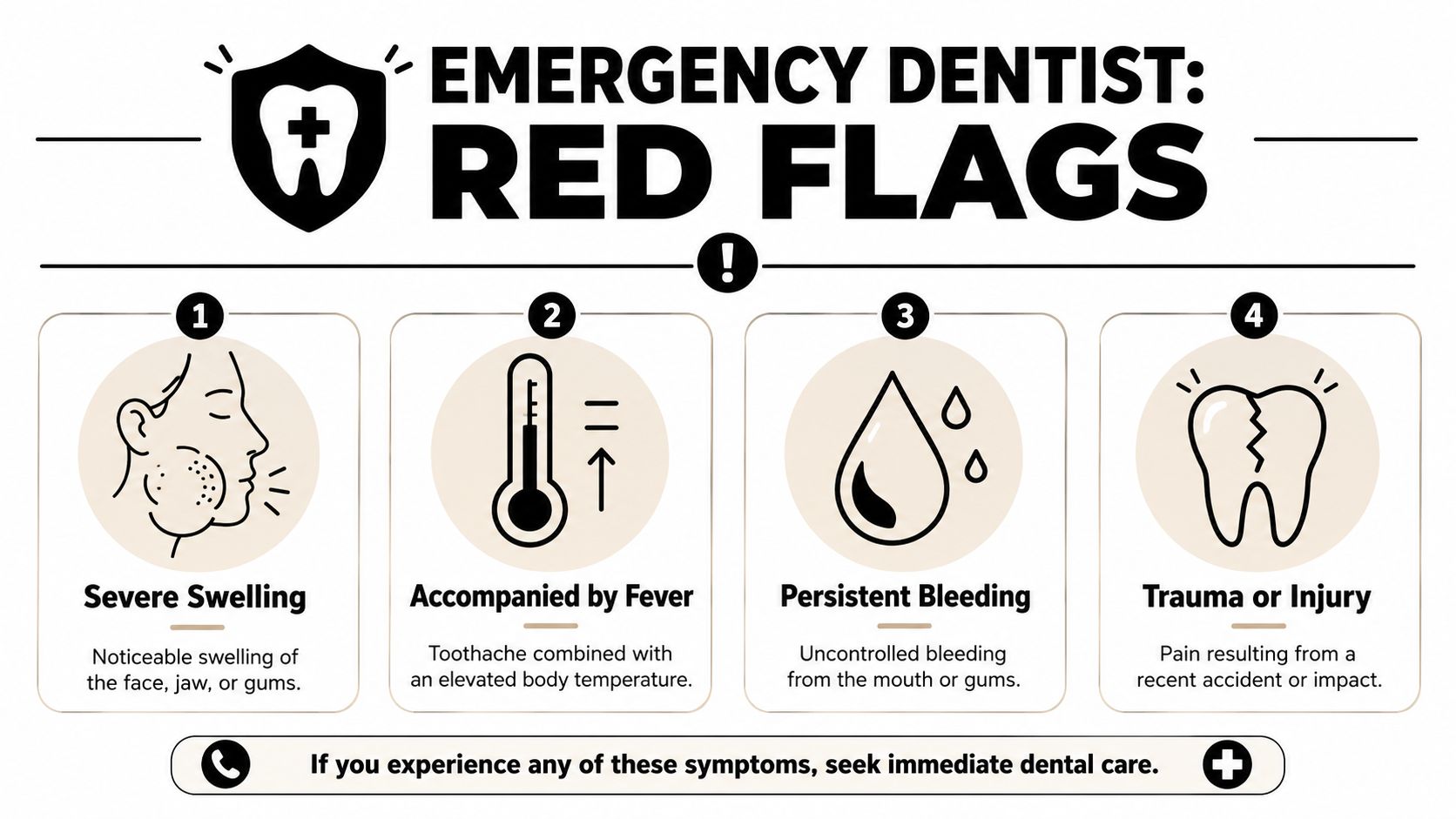
Here are the red flags that push a toothache into emergency territory:
- Swelling of the face, jaw, or gums that seems to spread or makes the area feel tight
- Fever with tooth pain, which can suggest infection beyond the tooth itself
- Persistent bleeding after trauma or from the gums that doesn't settle
- A cracked, broken, or knocked-out tooth after an accident or sudden bite injury
Timing matters with dental injuries
A knocked-out permanent tooth is one of the clearest dental emergencies. In guidance on what to do for an avulsed tooth and why reinsertion time matters, reinserting the tooth within 30 minutes is identified as the critical success window, with a 95% one-year retention rate when the tooth is stored in milk or saliva before replantation. Waiting beyond 60 minutes drops survival to 20 to 30%.
If that happens, hold the tooth by the crown, not the root. Don't scrub it. Don't let it dry out.
Trouble breathing, neck swelling, or rapidly increasing facial swelling needs immediate medical attention. That's no longer a routine dental problem.
This is the point where an emergency dentist stops being optional.
Choosing Same-Day Dental Care Over the ER
If you call with a bad toothache at 8 p.m., one of the first questions I want to answer is where you should go. For an isolated tooth problem, the ER often feels like the safest choice, but it usually adds cost without fixing the source of the pain.
The reason is simple. Hospital emergency departments are built to stabilize medical emergencies. Dental offices are built to diagnose and treat teeth. Guidance from the American Dental Association on finding urgent dental care and using the ER for severe swelling, trauma, or trouble breathing reflects that difference. For a routine toothache, the ER may control symptoms for the night. It usually does not remove decay, treat an infected nerve, repair a fracture, or replace a lost restoration.
What the ER usually does for tooth pain
For dental pain, an emergency room commonly provides:
- pain relief
- antibiotics if a spreading infection is suspected
- medical evaluation when swelling, fever, dehydration, or other whole-body concerns are involved
That can help in the short term.
But patients are often surprised by the trade-off. You may leave with medication and instructions to see a dentist anyway, which means paying for one visit that eases symptoms and another that treats the tooth. From both a clinical and financial standpoint, same-day dental care is often the more efficient first stop.
Why same-day dental care is often the smarter choice
A same-day dental visit can move straight from diagnosis to treatment. If the problem is a cavity, exposed nerve, cracked tooth, lost filling, or painful crown, the team can identify the cause and, in many cases, start treatment that day. That is the part the ER cannot usually provide.
At Cali Family Dental in Pico Rivera, urgent visits are set up around that practical goal. Find the source of the pain, reduce it as quickly as possible, and decide what can be treated immediately versus what needs a scheduled follow-up. Patients usually do better when they skip the extra stop and get into a dental chair first.
The ER still has an important role. Go there if swelling is affecting breathing or swallowing, if facial trauma extends beyond the teeth, or if you have signs of a broader medical emergency. For most toothaches, though, a same-day dentist is the faster path to relief and the more direct path to solving the problem.
Your Same-Day Appointment at Cali Family Dental
Once you decide to get seen, it helps to know what the visit will feel like. Anxiety drops when the process is clear. If you're coming in for urgent dental pain in Pico Rivera, expect a focused exam built around one question. What is causing this, and what can be done today to relieve it?
Bring a photo ID, your insurance information if you have it, and a list of medications you take regularly. If a crown, filling, or piece of tooth broke off, bring that too if you can find it safely. Patients using Denti-Cal, Medi-Cal, or PPO insurance often want to ask what treatment is covered, and that's a smart question to raise early.
What happens during the visit
A same-day emergency exam usually starts with a conversation about the pain pattern. Is it triggered by cold, pressure, or sweets? Did it begin after biting something hard? Is there swelling or a bad taste in the mouth? Those details matter because they narrow the likely cause before imaging and testing even begin.
From there, the dental team may recommend:
- Digital X-rays to look for decay, infection, bone changes, or a fracture
- Restorative dentistry such as a filling or crown plan if the tooth can be repaired
- Root canal treatment if the nerve is inflamed or infected
- Tooth extraction if the damage is too extensive to save the tooth
- Future replacement planning if needed, including options for dental implants near me
- Cosmetic follow-up such as teeth whitening or cosmetic dentistry later, once health and comfort are restored
A survey discussed in this ADA-based overview of where patients seek toothache relief found that 20.1% of patients contact physicians for temporary toothache relief, while over 80% ultimately contact a dentist for definitive resolution. That's the pattern seen in real practice as well. The pain may start the search, but the solution usually happens in the dental chair.
If you'd like a quick look at the office environment before calling, this short video helps set expectations.
If you're also looking for a cosmetic dentist near me or need ongoing family dental care after the emergency is handled, that conversation can happen once the urgent problem is under control. The first appointment is about comfort, clarity, and a plan that makes sense.
If you're dealing with sudden dental pain, don't wait for it to get worse. Cali Family Dental provides same-day emergency appointments in Pico Rivera, CA, with care focused on finding the cause of the pain and treating it directly. Call the office to request urgent help, ask about insurance or financing, and get the relief you need as soon as possible.