Your Local Guide to a Healthier, Brighter Smile in Pico Rivera
Maintaining a healthy smile can feel overwhelming, especially when you're dealing with bleeding gums, morning sensitivity, a child who hates brushing, or a tooth that suddenly starts to ache right before work or school. Many people searching for a dentist near me or a dentist in Pico Rivera, CA don't need more generic advice. They need practical guidance they can use at home, and they need to know when home care should lead to professional treatment.
At Cali Family Dental, we see this every day in Pico Rivera. Some patients are trying to avoid a painful tooth extraction. Others want a cleaner, brighter smile before asking about teeth whitening or cosmetic dentistry. Some are overdue for cleaning and exams, and some are looking for an emergency dentist because a small problem has turned into real pain. In almost every case, the starting point is the same. Better daily habits.
That's why oral hygiene best practices matter. They lower the chance that plaque, inflammation, and decay turn into bigger problems that require restorative dentistry, urgent treatment, or more complex care such as dental implants. This guide focuses on what works, what people often get wrong, and how Cali Family Dental helps patients in Pico Rivera build routines that are simple, realistic, and effective.
1. Brush Twice Daily with Proper Technique for Two Minutes
The rushed morning brush is one of the most common problems we see in Pico Rivera. A patient feels like they brush every day, but plaque still builds up along the gums, the back molars stay rough, and sensitivity starts to creep in. In many cases, the issue is not whether they brush. It is how long they brush and how they move the bristles.
The American Dental Association recommends brushing twice a day for two minutes with a soft-bristled toothbrush, as outlined in the ADA's brushing guidance. That sounds simple, but the full two minutes matters because plaque does not collect evenly. It tends to linger at the gumline, around crowded teeth, and on the chewing surfaces of the molars.
What proper brushing looks like
Angle the brush about 45 degrees toward the gumline. Use small, gentle circles. Clean the outer surfaces, inner surfaces, and chewing surfaces, then brush the tongue lightly to reduce odor-causing bacteria.
A helpful method is to divide the mouth into four sections and spend about 30 seconds on each. That gives the front teeth, the back teeth, and the hard-to-reach areas equal attention. Patients who switch to this approach usually describe the same result. Their mouth feels cleaner because they are finally cleaning the areas they used to rush through.
Practical rule: Soft bristles, light pressure, full two minutes.
Pressure is a real trade-off. People often assume harder brushing removes more buildup, but I regularly see the opposite. Heavy scrubbing can irritate the gums and wear down enamel near the gumline, while a gentler technique does a better job of removing plaque without causing extra damage.
At Cali Family Dental, we often review brushing technique during cleanings because small corrections can prevent bigger problems. If your gums are sore, you see notches near the gumline, or one area always bleeds when you brush, technique may be part of the problem. A visit in our Pico Rivera office can help confirm whether you are dealing with brushing trauma, plaque buildup, early gum inflammation, or a combination of the three. Digital X-rays also help us spot decay between teeth or around older dental work when brushing alone is not enough to keep an area healthy.
Replace your toothbrush every three to four months, or sooner if the bristles start to splay. The Cleveland Clinic's toothbrush care guidance explains why worn bristles clean less effectively and can make good technique harder to maintain. If you use a manual brush, set a phone timer. If consistency is the challenge, an electric brush with a built-in timer often makes the routine easier to follow.
2. Floss Daily Between All Teeth and Below the Gum Line
A common Pico Rivera routine looks like this. You brush carefully, your teeth feel clean, and a few months later we still find plaque between back teeth or bleeding along the gumline. That gap usually comes down to one thing. Brushing cleans the front, back, and chewing surfaces well, but it does not clean the tight spaces where neighboring teeth touch.
Daily flossing removes plaque from those missed areas before it hardens and before the gums stay irritated long enough to become a bigger problem. The Centers for Disease Control and Prevention explains that cleaning between teeth helps remove plaque and food particles your toothbrush cannot reach, which is why interdental cleaning remains a standard part of home care guidance in CDC oral health hygiene recommendations.
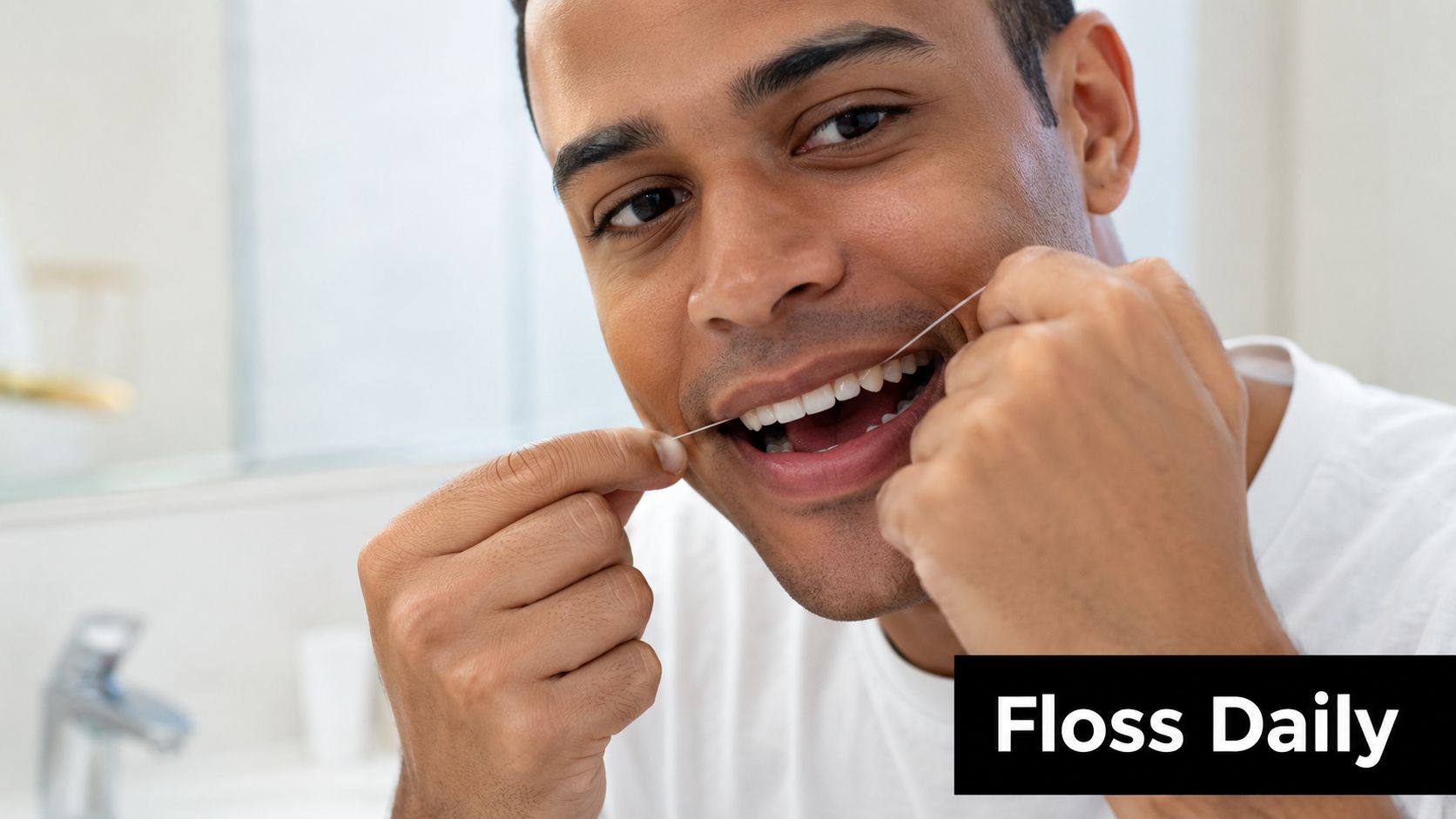
Here's a simple visual refresher for technique:
What works better than forcing floss
Guide the floss gently between the teeth with a light back-and-forth motion. Wrap it into a C-shape against one tooth, slide slightly under the gumline, and wipe the surface as you move up and down. Then repeat on the neighboring tooth. The goal is contact with the tooth surface, not speed.
Technique matters. So does tool choice.
Many patients tell us they dislike flossing, but the problem is often the method, not the habit itself. If string floss feels awkward, floss picks can make nightly use more realistic. If you have braces, bridges, or limited hand dexterity, a water flosser may be easier to use consistently. If there are wider spaces from gum recession, interdental brushes often clean better than floss in those areas. Public Health England's prevention toolkit notes that interdental brushes are more effective than dental floss or tape for plaque removal in suitable spaces.
At Cali Family Dental, this is one of the most practical conversations we have during preventive visits. We do not push one tool for everyone because mouths are different. A teenager with braces, an adult with crowns, and an older patient with gum recession usually need different recommendations. In our Pico Rivera office, we can show you which option fits your teeth, check whether bleeding is coming from plaque buildup or early gum disease, and use digital X-rays to see areas between teeth that are hard to monitor at home.
A few practical starting points help:
- If traditional floss feels clumsy: Use floss picks first and focus on building a daily routine.
- If you wear braces or clear aligners: A water flosser can make between-tooth cleaning easier to keep up with.
- If your gums bleed: Floss gently and stay consistent. Persistent bleeding deserves an exam because it can signal inflammation that needs professional care.
A quick demonstration helps many patients fix the technique immediately:
3. Use Fluoride Toothpaste and Mouthwash to Strengthen Enamel
A common Pico Rivera routine goes like this. Someone brushes every morning and night, still hears at a checkup that a few spots are starting to weaken, and wonders what they missed. In many cases, the issue is not effort. It is fluoride use, product choice, and how long fluoride stays on the teeth after brushing.
Fluoride helps repair early enamel damage and lowers the risk that weak areas turn into cavities. The American Dental Association's guidance on fluoride toothpaste supports daily use of fluoride toothpaste, and standard over-the-counter products commonly fall in the 1000 to 1500 ppm range used for cavity prevention.
For home care, the routine should stay simple. Brush twice a day with fluoride toothpaste, spit out the excess, and avoid rinsing with water right away. The Scottish Dental Clinical Effectiveness Programme guidance summarized for patients advises spitting out after brushing and not rinsing, so fluoride has more time to work on the tooth surface.
When a rinse helps most
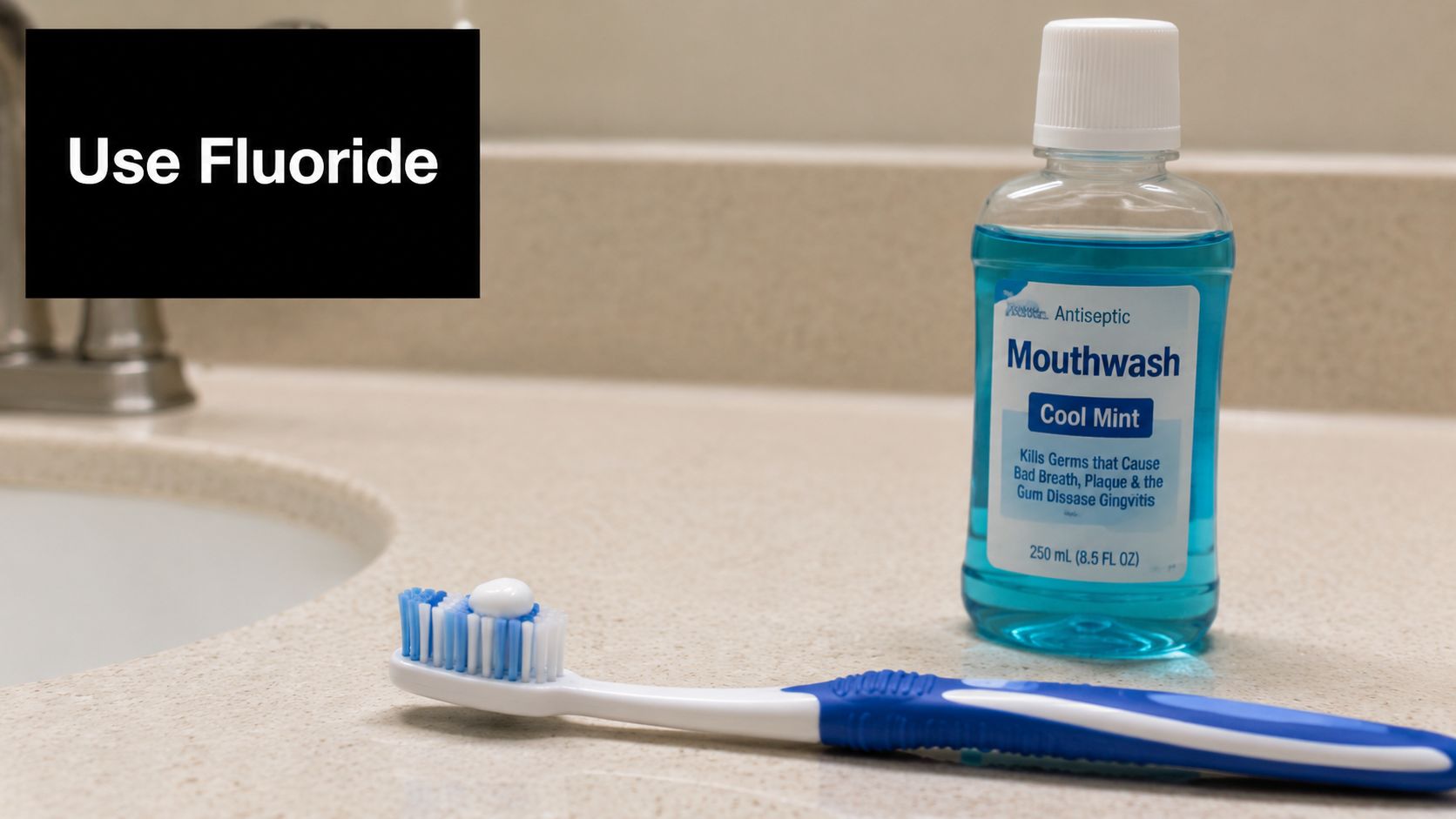
Fluoride mouthwash can help patients who get cavities often, have dry mouth, wear aligners, or have exposed roots from gum recession. It is not the right next step for every patient, and stronger is not always better. A child with low cavity risk, an adult who snacks often at work, and an older patient taking medications that reduce saliva may need different fluoride products and different timing.
One practical point matters here. Mouthwash should support toothpaste, not replace it.
Spit after brushing, do not rinse with water, and let the fluoride stay on your teeth longer.
At Cali Family Dental, we tailor this advice during preventive visits based on what we observe in your mouth. Digital X-rays can reveal early changes between teeth that are easy to miss at home, and that gives us a chance to recommend a better fluoride routine before those areas need a filling or crown. For Pico Rivera families, that often means small changes now, fewer dental problems later, and more confidence that their home care is doing its job.
4. Limit Sugary Foods and Acidic Beverages to Protect Teeth
A common Pico Rivera routine looks harmless on the surface. Coffee with flavored creamer on the commute, a sports drink during a long shift, soda with lunch, then a sweet snack in the afternoon. Teeth do not experience that as one treat. They experience repeated acid exposure all day.
Sugar feeds the bacteria that help cavities develop. Acidic drinks, including soda, citrus drinks, energy drinks, and many flavored beverages, can also soften enamel directly. The Centers for Disease Control and Prevention explains how sugar contributes to tooth decay, which is why brushing alone does not fully offset frequent sipping and snacking.
Smarter choices that reduce damage
The pattern matters as much as the item itself. A dessert with dinner usually causes less trouble than small sugary snacks stretched across the day. During meals, saliva flow increases and helps clear sugars and acids more efficiently.
Water is still the best default between meals.
After something sugary or acidic, rinse with plain water. If the drink was especially acidic, wait a bit before brushing so you do not scrub enamel while it is still softened. A straw can help reduce contact with front teeth, but it does not make acidic drinks harmless.
At Cali Family Dental, I often see patients who brush consistently yet still develop sensitivity or cavities near the gumline because they sip sweet drinks for hours at work or rely on energy drinks to get through the day. Once that pattern changes, we often see fewer new problem areas at recall visits. If we suspect enamel wear or decay between teeth, digital X-rays help us catch those changes early, before they turn into a larger repair.
A few choices make a real difference:
- Choose water first: It helps clear residue and does not feed cavity-causing bacteria.
- Keep sweets with meals: Fewer exposures usually means less enamel stress.
- Watch hidden sugars: Sweet coffee drinks, flavored waters, juice blends, and snack bars are frequent trouble spots.
- Pay attention to symptoms: Lingering sensitivity, visible wear, or new staining can signal that diet is affecting your teeth.
If cold drinks sting or certain teeth feel rough along the edges, schedule an exam at our Pico Rivera office. What feels minor at home can be early enamel erosion, a cavity, or wear that is much easier to manage when we find it early.
5. Stay Hydrated and Maintain Adequate Saliva Production
Saliva doesn't get much attention, but it does a lot of defensive work. It helps rinse away food particles, neutralize acids, and support the natural repair process on tooth surfaces. When your mouth stays dry for long periods, plaque sticks more easily and teeth lose some of their natural protection.
This is especially important for adults taking multiple medications, older patients, and anyone who wakes up with a dry mouth. People in Pico Rivera who work long shifts, talk all day, exercise outdoors, or rely on coffee and energy drinks often notice dry-mouth symptoms without realizing how much that affects their teeth and gums.
Signs dry mouth is becoming a problem
You might notice sticky cheeks, bad breath that keeps returning, difficulty swallowing dry foods, or a burning feeling in the mouth. Some patients also report more sensitivity and a sudden increase in cavities.
Drinking water throughout the day is the simplest starting point. Sugar-free gum can also help stimulate saliva after meals. If you're getting dry mouth often, bring it up during your checkup. At Cali Family Dental, we look at medication history, cavity pattern, gum condition, and fluoride needs together because dry mouth often changes the right prevention plan.
A mouth that feels dry all day usually needs more than lip balm and a bottle of water. It needs a prevention plan.
For some patients, that means adding fluoride support. For others, it means adjusting habits like frequent caffeine use or mouth breathing at night. This is also one reason regular cleaning and exams matter. Dry mouth can raise cavity risk in places patients don't expect, including around older fillings, near crowns, and along exposed roots.
6. Schedule Regular Dental Cleanings and Exams Every Six Months
A common Pico Rivera scenario is this: your teeth feel fine, nothing hurts, and brushing seems to be going well. Then a routine exam finds tartar along the gumline, a small cavity between back teeth, or wear around an older filling that you could not have seen at home. Catching those problems early usually means simpler treatment, lower cost, and less chance of losing healthy tooth structure.
Regular cleanings matter because plaque hardens into tartar, and tartar has to be removed with professional instruments. Exams matter for a different reason. They help identify changes before they turn into pain, swelling, or a larger repair. The American Dental Association explains what happens during a dental checkup, including cleaning, evaluation, and X-rays when they are needed.
What to expect at Cali Family Dental in Pico Rivera
At Cali Family Dental, a routine visit typically includes a professional cleaning, a careful exam, and digital X-rays when the clinical picture calls for them. Digital imaging helps us spot decay between teeth, changes under existing crowns or fillings, and bone concerns that do not show up clearly in a visual exam alone. For patients in Pico Rivera who have older dental work, dry mouth, or a history of delayed checkups, that extra detail often changes the prevention plan in a useful way.
New patients often worry that a checkup will turn into pressure or a long list of unexpected treatment. Our approach is more practical than that. We explain what looks healthy, what needs attention soon, and what can be monitored safely.
- Share health changes: Medications, diabetes, reflux, and other conditions can affect gum health and cavity risk.
- Point out recurring trouble spots: Food traps, bleeding, sensitivity, or one tooth that always feels different are worth mentioning.
- Ask what is urgent and what is not: Good care includes clear priorities, not guesswork.
Cali Family Dental also offers a $69 New Patient Special that includes an exam, digital X-rays, and a professional cleaning, which makes it easier to get established with a trusted local dentist in Pico Rivera.
7. Use an Electric Toothbrush with Oscillating or Sonic Technology
For many patients, an electric toothbrush makes good technique easier to repeat. It doesn't replace brushing fundamentals, but it often improves consistency, especially for people who rush, press too hard, or struggle to clean evenly.
Clinical guidance summarized in a Business Research Insights report on the oral hygiene market notes that powered toothbrushes outperform manual brushes in plaque and gingivitis reduction, even though evidence on cavity prevention remains inconclusive between brush types. That distinction matters. An electric brush isn't magic. It's a useful tool for plaque control and gum health when used properly.
Who benefits most from switching
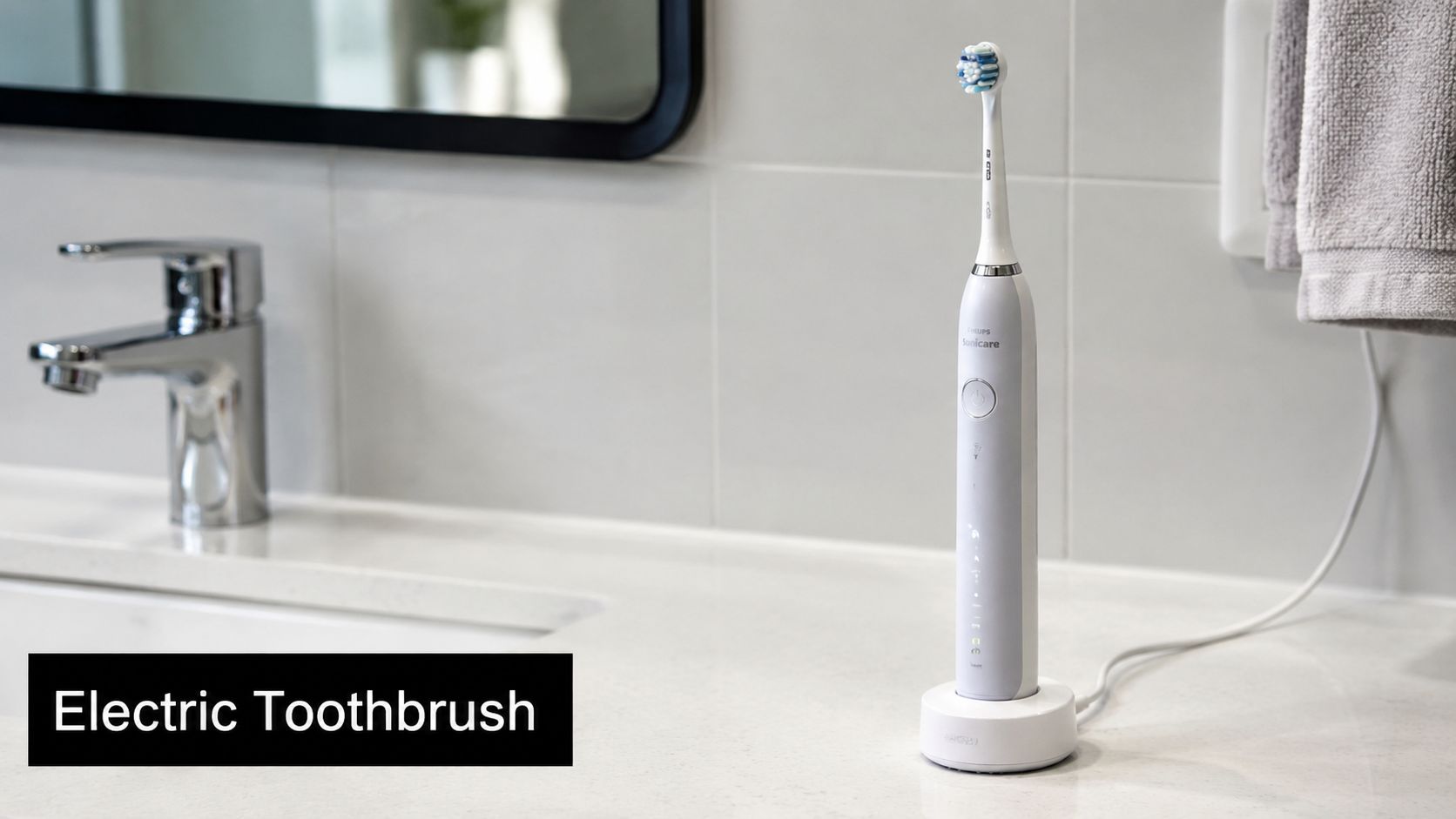
Patients with arthritis or limited hand control often do better with a powered brush because it reduces the fine motor work. Teenagers sometimes benefit because built-in timers keep them from quitting early. Adults with gum recession may benefit from pressure sensors that help stop overbrushing.
Brands like Oral-B and Philips Sonicare are common examples patients ask about. The best choice usually comes down to comfort, brush head size, and whether you'll use it consistently.
A few practical points make a difference:
- Let the brush do the work: Guide it slowly. Don't scrub.
- Keep the gumline in view: Electric bristles still need the right angle.
- Replace brush heads on schedule: Worn bristles clean less effectively.
At Cali Family Dental, this recommendation comes up often during preventive visits. If someone keeps missing the same areas or is brushing too aggressively, an electric brush can be a very practical fix.
8. Wear a Nightguard if You Grind Your Teeth or Have Sleep Apnea
Some oral health problems don't start with sugar or poor brushing. They start with pressure. Grinding and clenching can flatten teeth, chip edges, strain jaw muscles, and make existing dental work fail sooner.
Patients often describe the pattern the same way. They wake up with a sore jaw, tension headaches, or teeth that feel tender in the morning. Others notice that a tooth suddenly cracks even though they haven't had an injury. In those cases, oral hygiene alone won't solve the problem because the issue is force, not plaque.
Why a custom guard matters
A custom nightguard creates a protective barrier between the teeth and helps reduce the damage from grinding. Over-the-counter versions may feel convenient, but they're usually bulkier and less precise. A professionally fitted guard is generally more comfortable and more predictable.
This is also one area where people delay care too long. They assume grinding is harmless because it happens during sleep. It isn't. Repeated pressure can worsen sensitivity, speed up wear, and contribute to fractures that later require crowns, root canal treatment, or tooth extraction.
At Cali Family Dental, signs of grinding often show up during routine exams before patients fully connect the symptoms. If you're already looking for a cosmetic dentist near me because your teeth look shorter or chipped, it's worth asking whether clenching is part of the cause. Protecting the teeth first makes cosmetic or restorative work more durable.
If your teeth hurt most in the morning, don't assume it's only a cavity. Nighttime grinding is often part of the story.
For patients with sleep-related breathing concerns, oral appliances may also play a role in care. The right next step starts with an exam and a clear diagnosis.
9. Rinse Your Mouth with Water and Chew Sugar-Free Gum After Meals
Not every helpful habit has to happen in front of the bathroom sink. One of the easiest ways to protect your teeth during the day is to manage what happens right after meals and snacks.
Brushing teeth for at least two minutes removes substantially more plaque than shorter brushing periods, and brushing twice daily reduces the risk of cavities and gum disease compared to less frequent brushing, as noted in Permadent patient education on oral hygiene best practices. But you won't always be in a position to brush after lunch, coffee, or an afternoon snack. That's where rinsing with water can help.
A realistic midday habit
Swishing with water after eating helps clear loose food debris and dilute acids. If you're out at work, at school, or in the car, it's simple and worth doing. Sugar-free gum can also help by stimulating saliva, which supports the mouth's natural defenses.
This habit is especially useful for people who sip coffee for hours, snack between errands, or wear aligners and need a quick cleanup before putting trays back in. It's not a substitute for brushing and flossing, but it's a smart layer of protection between morning and bedtime.
A practical routine might look like this:
- After lunch: Rinse with water before heading back to work.
- After coffee or a sweet drink: Drink water right away instead of letting residue sit.
- If you can't brush yet: Use sugar-free gum for a short period after meals.
At Cali Family Dental, we like this advice because it's realistic. Good oral hygiene best practices only work if they fit daily life. For busy families in Pico Rivera, a few small habits done consistently often make a bigger difference than a perfect routine done once in a while.
9-Point Oral Hygiene Comparison
| Item | Implementation Complexity 🔄 | Resource Requirements ⚡ | Expected Outcomes 📊 | Ideal Use Cases 💡 | Key Advantages ⭐ |
|---|---|---|---|---|---|
| Brush Twice Daily with Proper Technique for Two Minutes | Low, simple routine but requires technique training | Minimal, toothbrush, toothpaste, 2 minutes | Consistent plaque removal; reduced cavities and gum disease | Universal daily preventive care for all ages | Highly effective, low cost, foundational to oral health |
| Floss Daily Between All Teeth and Below the Gum Line | Moderate, requires dexterity and C‑shape technique | Low, floss, picks, or water flosser (optional) | Reduces interproximal cavities and gum inflammation | Tight contacts, braces, patients prone to gum disease | Reaches areas toothbrushes miss; prevents interdental decay |
| Use Fluoride Toothpaste and Mouthwash to Strengthen Enamel | Low, easy to add to routine; must be consistent | Low, OTC fluoride toothpaste/mouthwash; Rx if needed | Enamel remineralization; lower cavity incidence (~25%) | Patients with prior cavities, sensitivity, or high risk | Clinically proven cavity prevention and enamel strengthening |
| Limit Sugary Foods and Acidic Beverages to Protect Teeth | Moderate–High, requires behavioral and dietary change | Minimal, no equipment, may need substitutes | Substantial cavity risk reduction (up to ~50%+) and less erosion | High sugar consumers, children, frequent snackers | Most impactful preventive measure; supports systemic health |
| Stay Hydrated and Maintain Adequate Saliva Production | Low, habit-based; may need medical follow‑up if severe | Minimal, water, sugar‑free gum, humidifier if needed | Improved natural acid neutralization and remineralization | Patients with dry mouth, medication‑induced hyposalivation, athletes | Non‑invasive, immediate benefits for oral defenses |
| Schedule Regular Dental Cleanings and Exams Every Six Months | Low–Moderate, requires scheduling and attendance | Moderate, time and possible cost/insurance coverage | Early detection; removal of tartar; fewer advanced treatments | Everyone; especially high‑risk or history of dental disease | Professional diagnostics and preventive treatments not available at home |
| Use an Electric Toothbrush with Oscillating or Sonic Technology | Low, simple to use after initial setup | Moderate, purchase and replacement heads, charging | Greater plaque reduction and less gum inflammation vs manual | Patients with poor manual technique or limited dexterity | Consistent, efficient cleaning with built‑in timers and sensors |
| Wear a Nightguard if You Grind Your Teeth or Have Sleep Apnea | Moderate, requires dental evaluation and custom fit | Higher, custom fabrication and periodic replacements | Prevents enamel wear, fractures, and reduces jaw pain | Bruxism sufferers, those with morning jaw pain or sleep apnea | Custom protection for teeth and restorations; reduces long‑term costs |
| Rinse Your Mouth with Water and Chew Sugar‑Free Gum After Meals | Low, quick post‑meal habit | Minimal, water and sugar‑free/xylitol gum | Neutralizes acids; stimulates saliva; reduces between‑meal cavities (~25–30% with xylitol) | On‑the‑go, workplace or school when brushing isn't possible | Convenient, portable, immediate acid control and breath freshening |
Partner with Pico Rivera's Trusted Dentist for Lifelong Health
A common pattern in Pico Rivera is easy to recognize. Someone stays consistent with brushing, but bleeding gums, sensitivity, dry mouth, or morning jaw tension keep showing up. Good habits at home matter, but they do not answer every question. A dental exam can show whether the issue is plaque buildup along the gum line, enamel wear from grinding, a cavity forming between teeth, or a bite problem that needs attention.
That is where local care becomes useful in a practical way. At Cali Family Dental, we help patients turn general oral hygiene advice into a plan that fits their routine, budget, and health goals. For one patient, that may mean a better brushing angle and a fluoride rinse. For another, it may mean treating early decay before it becomes tooth pain, or checking jaw soreness and worn enamel that point to bruxism.
We also use technology that makes preventive care more precise and easier to understand. Digital X-rays help us spot problems earlier while reducing radiation exposure. Intraoral cameras let patients see what we see, which makes treatment decisions clearer. Digital scanners can replace traditional impressions in many cases, and lasers may improve comfort for selected procedures.
The goal is simple. Catch problems early, explain them clearly, and treat them before they become more expensive or more painful.
If you have been delaying care, watch for signs that should not be ignored. Bleeding when you brush or floss, ongoing bad breath, tooth sensitivity, dry mouth, jaw soreness, and visible staining all deserve a closer look. Early treatment is usually easier and less costly than waiting until a tooth breaks, an infection starts, or pain disrupts work, school, or sleep.
Dr. Rafaat and the team at Cali Family Dental care for children, adults, and seniors throughout Pico Rivera. We provide preventive visits, new patient exams, digital X-rays, cosmetic services, restorative treatment, emergency appointments, and tooth replacement options, including dental implants. New patients can also ask about the $69 New Patient Special, which includes an exam, digital X-rays, and a professional cleaning.
If you want clear guidance and modern dental care close to home, contact Cali Family Dental. Whether you need a routine checkup, relief from tooth pain, or a plan to restore your smile, our team is here to help you take the next step with confidence.