You're probably here because your child is due for a checkup, has a tooth that's bothering them, or you've been putting off that first appointment and want to make the right choice. That search for a local dentist can feel heavier when it's your child. Parents aren't just looking for a cleaning. They're looking for someone nearby who will be gentle, explain things clearly, and make the visit feel manageable.
Families in Pico Rivera often want the same practical answers. Can this office see kids comfortably? Will they explain what's happening without making my child nervous? Will they work with my insurance, and can they get us in soon if something hurts? Those are the questions that matter when you search for pediatric dentistry near me, and they should be answered plainly.
Your Trusted Local Partner for Pediatric Dentistry in Pico Rivera
It often starts on an ordinary afternoon. Your child mentions that a tooth hurts when they chew, or you realize a school break is the first opening you have had to schedule a visit. In that moment, parents usually want the same things. A nearby office, a team that is calm with children, clear answers about cost, and an appointment that does not feel weeks away.
For Pico Rivera families, trust is built through practical details. They want to know whether the office sees children regularly, whether Denti-Cal or Medi-Cal will be accepted, whether a nervous child will be handled gently, and whether same-day care is possible if something suddenly hurts. Those questions matter more than polished promises.
At Cali Family Dental, the goal is to give families a consistent place to bring their children as needs change over time. That may mean a first visit for a toddler, a routine cleaning for a grade-school student, or a quick evaluation after a chipped tooth at practice. It also means explaining what we see in plain language, so parents can make decisions without feeling rushed or confused.
Trust starts before any treatment.
Children respond differently to the dental office, and a good visit respects that. Some want to talk and ask questions. Some need a slower start, a simple explanation, or a parent close by while they settle in. In practice, that flexibility makes a real difference because a child who feels safe is easier to examine, easier to teach, and less likely to dread the next visit.
Local care also helps families keep dentistry manageable. A nearby office makes it easier to stay on schedule for checkups, fit visits around school and work, and come in quickly when a problem cannot wait. For many parents, affordability is part of that trust as well. Clear information about insurance, including Denti-Cal and Medi-Cal, and a low-cost starting point like the $69 special can remove the delay that often turns a small issue into a bigger one.
Parents searching for dentist near me in Pico Rivera, CA are usually looking for more than distance. They are looking for a dental office that is dependable, straightforward about cost, and prepared to care for their child with patience and skill.
What Is Pediatric Dentistry and Why It Matters
Pediatric dentistry is more than general dentistry for smaller teeth. It focuses on how children grow, how dental habits form, and how care needs to change from infancy through the teen years. That includes the teeth themselves, but it also includes behavior, comfort, communication, and prevention.
Children don't experience the dental office the same way adults do. A toddler may need a quick, simple introduction. A school-age child may need coaching on brushing and snacks. A teenager may need guidance on sports guards, orthodontic concerns, or why skipping flossing catches up with them. The dental approach has to match the child's stage of development.
What makes pediatric care different
A child-centered approach usually includes:
- Growth-focused exams that look at how teeth are coming in, how the bite is developing, and whether habits like thumb sucking are affecting the mouth
- Prevention first with cleanings, fluoride, home-care coaching, and monitoring for early signs of decay
- Behavior guidance that helps children understand what's happening in simple language instead of feeling overwhelmed
- Parent communication that explains what needs treatment now, what can be watched, and how to support better habits at home
That mix matters because baby teeth still do important work. They help with chewing, speech development, and spacing for the permanent teeth that follow.
Why early attention changes the experience
Early visits tend to be easier visits. When a child first comes in for prevention instead of pain, the office becomes familiar before there's a problem to fix. That's a better starting point for long-term oral health and for a calmer relationship with dental care.
Practical rule: Don't wait for discomfort to introduce your child to the dentist. First visits are usually smoother when they happen before there's pain, swelling, or fear attached to the appointment.
Parents also benefit from getting clear advice early. Questions about pacifiers, brushing struggles, mouth habits, or whether a dark spot is serious are easier to handle before they turn into urgent treatment decisions.
Your Child's Dental Journey From Infancy to Teens
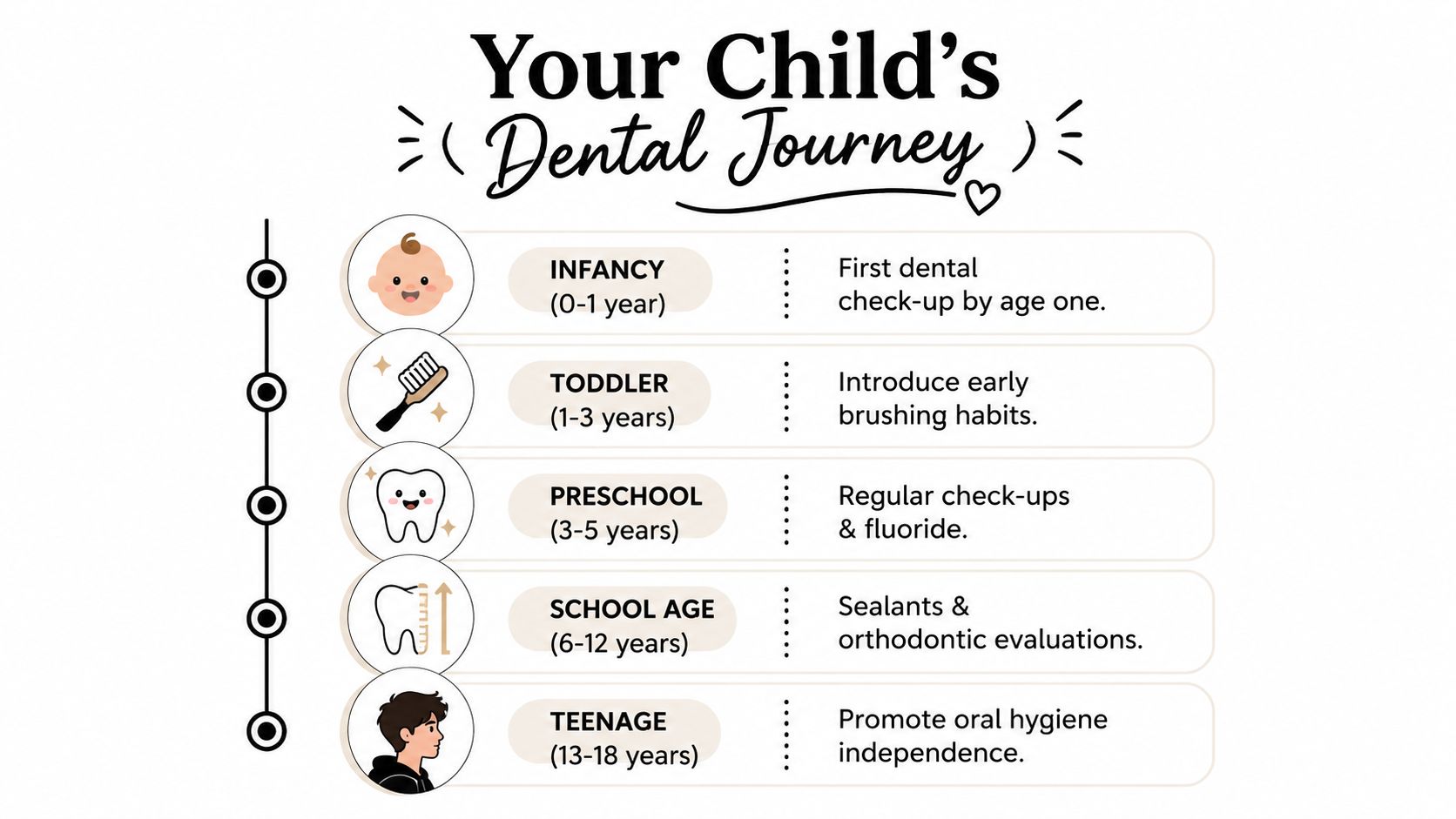
A common pattern in family practice goes like this. A parent brings in a toddler for an early check, then a few years later we are talking about snacks and sealants, and by the teen years the conversation has shifted to braces, sports injuries, and whether wisdom teeth need to be watched. Children change quickly, and dental care needs to keep up with those changes.
Parents in Pico Rivera often want a clear timeline. They also want practical details. How early should a child be seen, what problems are common at each age, and what can be handled before it turns into an urgent visit? A good dental home answers those questions early and keeps care predictable.
Infancy and toddler years
The first stage is usually simple and parent-focused. The main goals are to check how the teeth and jaws are developing, look for early signs of decay, and answer the questions that come up fast once teeth start coming in. Teething, bedtime bottles, brushing struggles, pacifier use, and thumb sucking all belong in that conversation.
Small habits matter at this age. A child who gets used to having the mouth checked, hearing calm explanations, and following a brushing routine at home usually has an easier time later.
Preschool and school-age years
This is the stretch where cavity risk often becomes more real. Children want to do more on their own, but they usually still miss spots, especially along the back teeth and between teeth. Parents often assume brushing is going well until we find plaque buildup or a small cavity that was not visible at home.
At this stage, care becomes more preventive and more specific to the child. Some children need extra fluoride support. Some benefit from sealants on the molars. Some need closer monitoring because of crowding, frequent snacking, or a history of early decay. The trade-off is straightforward. Waiting can mean a bigger filling or a more difficult visit later, while catching a problem early usually gives us simpler options.
Common concerns at this age include:
- Cavities between teeth that are easy to miss without an exam
- Brushing that looks independent but is still incomplete
- Falls, playground injuries, and sports-related chips
- Bite changes that need monitoring as adult teeth come in
Temperament matters too. One child is comfortable with a full cleaning and exam right away. Another does better when the visit is broken into smaller steps with short explanations and a slower pace.
Teen years
Teenagers bring a different set of issues. They often want privacy and independence, but they still need direct, honest guidance. Braces or clear aligners can make home care harder. Sports increase the risk of dental injuries. Energy drinks, soda, and inconsistent brushing show up quickly in the mouth.
Teens also start paying more attention to appearance. They may ask about alignment, discoloration, chipped front teeth, or old fillings that show when they smile. Those concerns are real, and they should be handled with good judgment. Some issues call for monitoring, some need treatment, and some are better addressed after growth is further along.
For families trying to stay on schedule, access matters. A practice that sees children and teens under one roof, offers same-day availability when a problem comes up, and explains costs clearly can make long-term care much easier to keep up with.
| Age range | Main dental focus | What parents should watch |
|---|---|---|
| Infancy to toddler | Early development, feeding habits, home care | Bedtime bottles, brushing routine, white or dark spots on teeth |
| Preschool to school age | Cavity prevention, eruption changes, bite monitoring | Missed brushing, frequent snacks, crowding, chipped teeth |
| Teen years | Hygiene independence, orthodontic support, injury prevention | Braces care, sports injuries, sugary drinks, wisdom tooth symptoms |
What to Expect at Your Child's Visit to Cali Family Dental
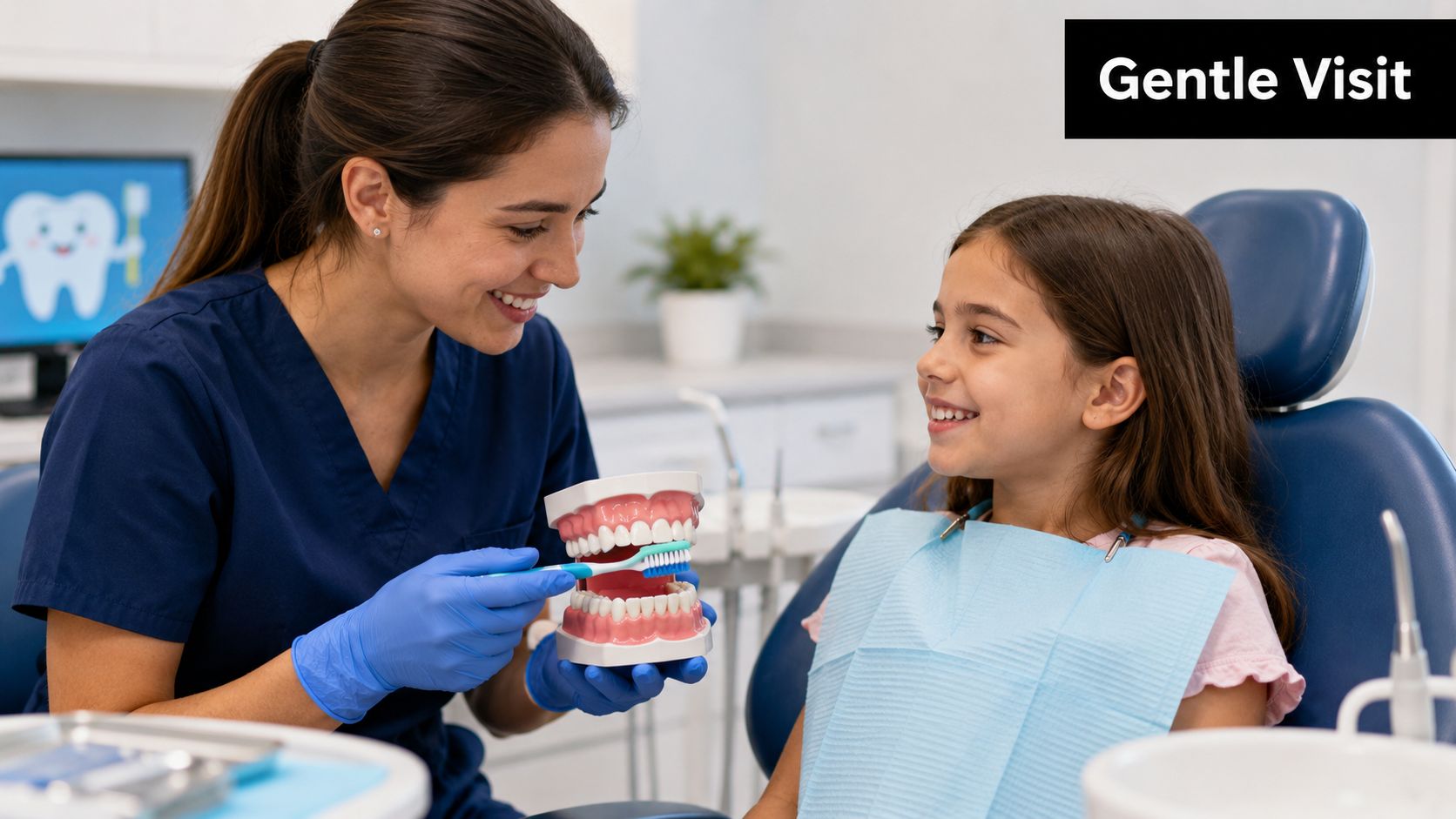
Most parents want to know what the appointment will feel like. That's a fair question, especially if your child is nervous or has never had a dental visit before. A well-run pediatric visit should feel calm, organized, and easy to follow.
The first few minutes matter
Children form impressions quickly. If the pace is rushed, they notice. If the team takes a moment to greet them, explain what's happening, and let them settle in, that often changes the whole visit.
For a first appointment, the early goal is usually comfort and information. The dentist looks at the teeth and gums, checks development, and talks with the parent about habits, symptoms, or concerns. If a child is hesitant, the visit may start with something simple like counting teeth, using the mirror, or showing how the chair moves.
Routine care and common treatments
As visits become familiar, children usually move into a more standard rhythm of cleanings, exams, and preventive treatments. Fluoride and sealants are common tools in pediatric care because they help protect vulnerable teeth. If the dentist finds a concern, the conversation should be direct and easy to understand.
Parents should expect clear explanations about:
- What the dentist sees today
- Whether treatment is needed now or can be monitored
- What the child may feel during the visit and after it
- How home care should change before the next appointment
Some offices also use visuals to make this easier. Intraoral cameras let parents and older children see what the dentist sees instead of trying to interpret a verbal description alone.
That technology also supports earlier diagnosis. A pediatric-focused office may use digital imaging because it helps catch problems that are hard to detect with a visual exam alone.
Some of the cavities parents are most surprised by are the ones between the teeth. Those often don't announce themselves until they're larger.
A practical example of this approach is the use of modern imaging tools. As noted by South Bay Pediatric Dentists on digital X-rays and intraoral cameras, digital X-rays can reduce radiation exposure compared with traditional film while improving diagnostic accuracy and communication with parents.
A closer look at how child-friendly dental visits work can help parents feel more prepared before booking:
When treatment is needed
Not every child with a cavity needs the same solution. Some children can tolerate a straightforward filling visit. Others need a more gradual approach based on age, anxiety, or the size of the problem. The right plan depends on the child, not just the tooth.
That's why parents should expect a discussion, not a one-line recommendation. Good pediatric care explains the options and the trade-offs.
Our Commitment to Gentle High-Tech Care
A child who walks into the office nervous does not need a sales pitch about equipment. That child needs a team that knows how to keep the visit calm, explain what is happening in simple language, and adjust the pace if things start to feel like too much.
Dr. Amirreza Rafaat brings more than 24 years of experience to family dental care, and that experience shows up in practical decisions parents notice right away. He knows when a child is ready for a straightforward visit, when it makes sense to pause and regroup, and when a smaller first step leads to a better outcome than forcing too much treatment into one appointment.
What high-tech care should actually improve
Parents in Pico Rivera usually ask a fair question. If an office uses newer technology, what changes for my child?
The answer should be specific. Good tools can reduce discomfort, shorten parts of the visit, and make treatment decisions easier to understand.
- Digital scanners can replace traditional impressions in cases where records are needed. That helps children who gag easily or dislike trays and impression material.
- Intraoral cameras let parents see problem areas on a screen instead of trying to guess what the dentist means.
- Lasers can be useful for selected soft-tissue procedures because they may improve comfort and visibility during treatment.
- Digital X-rays help the dentist check areas between teeth and follow development with fast, clear images.
The trade-off is simple. Technology helps only when the team uses it with good judgment. A scanner does not calm an anxious child by itself. A camera does not build trust unless the dentist takes time to explain what parents are seeing.
The difference between careful care and rushed care
Children usually do better when the plan fits both the dental problem and the child's emotional capacity that day. A small cavity in a cooperative older child is different from the same cavity in a very anxious preschooler. The tooth matters, but the child in the chair matters just as much.
What tends to help:
- Simple explanations before each step
- Short, well-paced visits for children with limited attention spans
- Visual guidance so parents understand the reason for treatment
- Flexibility if a child needs breaks or a different approach
What creates problems:
- Rushing through fear
- Using language that sounds threatening
- Treating every finding with the same level of urgency
- Leaving parents unclear about the options and trade-offs
That approach also matters for busy families who want care in one place. Cali Family Dental provides pediatric care along with restorative, cosmetic, emergency, and teen orthodontic services, which can make scheduling easier as children grow and their needs change.
Making Quality Pediatric Care Affordable and Accessible
Parents don't delay dental visits only because they're busy. Many delay because they're trying to figure out cost, insurance, timing, and whether the visit will turn into a larger expense than expected. Clear answers remove a lot of that hesitation.
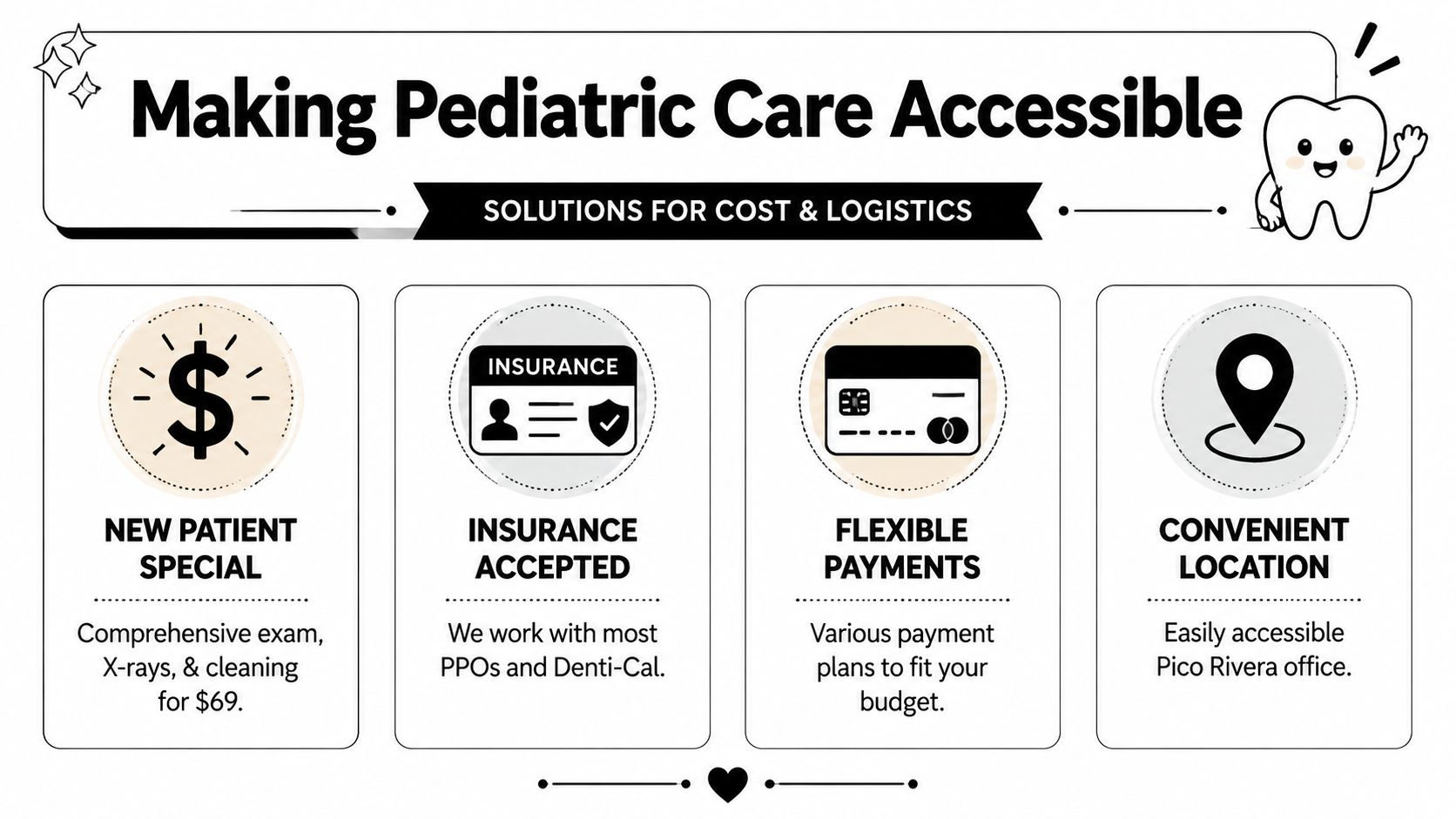
One practical starting point is the $69 new patient special, which includes an exam, digital X-rays, and a routine cleaning. For families who want a straightforward first step, that creates a low-pressure way to get answers before deciding on any additional care.
Insurance and payment questions parents usually ask
Coverage matters, especially for households balancing care for more than one child. A practice that accepts Denti-Cal, Medi-Cal, and most PPO plans opens the door for many families who might otherwise postpone care. Financing options also help when treatment goes beyond a routine visit.
That matters in real life because children don't always need care on a perfect schedule. A toothache before school, a chipped tooth after practice, or a cavity that can't wait until next month all create pressure fast.
Access is more than cost
Accessibility also means being able to get in when your child needs help. Same-day availability can make a big difference for urgent concerns, especially when a child is uncomfortable and a parent is trying to avoid an unnecessary trip to emergency care.
A practical checklist for parents includes:
- Accepted coverage so there's less guesswork before the appointment
- Transparent entry point like the new patient special
- Same-day scheduling for pain, swelling, or accidents
- Financing options if treatment is recommended
- A nearby office that's realistic for school and work schedules
If getting care feels logistically impossible, families often wait. When scheduling and payment are simpler, preventive care is easier to keep on track.
This is one reason local search terms matter. A parent looking for dentist near me, emergency dentist, or tooth extraction isn't usually browsing casually. They're trying to solve a problem quickly and responsibly. The easier a practice makes that next step, the more likely care happens before the issue gets worse.
Frequently Asked Questions About Pediatric Dentistry
When should my child first see a dentist
A common Pico Rivera question is simple: should I bring my baby in now, or wait until there is a problem? In practice, earlier is easier. The first dental visit should happen by your child's first birthday.
That visit is usually brief and low pressure. It gives parents clear guidance on brushing, teething, feeding habits, fluoride, and the early signs of decay, before small issues turn into painful ones.
Do baby teeth really need treatment if they're going to fall out
Yes. Baby teeth help with chewing, speech, comfort, and holding space for adult teeth.
I often explain it this way to parents: a tooth that will fall out later can still cause pain, swelling, poor sleep, trouble eating, and missed school now. Waiting can also limit the treatment choices. A small cavity may be manageable early, while a deeper one can require more involved care.
Some baby teeth can be watched closely for a period of time. Others need treatment sooner. The right choice depends on the child's age, the size and location of the cavity, symptoms, and how quickly the area is likely to worsen.
Are digital X-rays safe for children
This is a reasonable question, and parents should ask it.
Digital X-rays are widely used in pediatric dental care because they reduce radiation exposure compared with traditional film and help us find problems we cannot see during a visual exam alone. They are especially useful for cavities between teeth, infections, and developing permanent teeth below the gums.
X-rays should have a purpose. If they are recommended, the office should be able to explain exactly what they are looking for and how the images will affect treatment.
What if my child is scared of the dentist
Dental fear is common, especially after a painful toothache or a difficult medical experience. The goal is to help a child feel safe enough to get care, one visit at a time.
What usually helps:
- Simple, calm language that does not make the visit sound threatening
- A slower first appointment when a child needs time to adjust
- Shorter visits when attention span or anxiety is a factor
- Honest preparation at home without promising that everything will feel completely normal
- Regular follow-up visits so the office becomes familiar
Children usually cope better when they meet the dentist before they are in pain. If your child already has discomfort, same-day evaluation matters because comfort comes before confidence.
Can a dental office help children with special healthcare needs
Yes, but families should ask specific questions before booking. Some children need sensory accommodations, more time, modified communication, or coordination with their medical team.
The Children's Hospital of Philadelphia Division of Dentistry overview explains that some children need pediatric dental expertise or higher-acuity support beyond a standard family-dentistry setup. For parents, the practical questions are straightforward. Can the office adjust the pace? Do they have experience with sensory sensitivities, autism, anxiety, or developmental differences? What is the plan if your child needs a level of care the office does not provide in-house?
Clear answers matter.
How do dentists decide between watching a cavity and treating it
This decision is rarely one-size-fits-all. A dentist looks at the depth of the cavity, the tooth involved, your child's age, pain, cavity risk, home care, and whether the child can comfortably complete treatment.
Some offices may discuss more than a standard filling. Kids Choice Dental's overview of pediatric treatment options describes options such as silver diamine fluoride, stainless steel crowns, pulp therapy, and sedation, depending on the child and the tooth. Each option has trade-offs. A less invasive approach may buy time in the right case, but it does not fit every cavity. A stronger restoration may last better, but it also may require more cooperation from the child.
Parents deserve a clear explanation of why one option is being recommended over another.
What if my child suddenly has pain or swelling
Call right away. Pain, facial swelling, dental injuries, and broken teeth should not wait for a routine opening.
In children, these problems can change quickly. A same-day exam helps determine whether the cause is decay, infection, trauma, or something less serious, and it gives you a treatment plan instead of guesswork. For families using Denti-Cal or Medi-Cal, or trying to keep costs predictable, it also helps to ask about coverage and the office's lowest-cost starting point before the visit so there are fewer surprises.
Cali Family Dental keeps this process practical for local families with same-day availability when possible, insurance-friendly scheduling, and a $69 new-patient entry point for eligible visits.