You walk out of the dental office, run your tongue over the new crown, and immediately notice it feels different. That's normal. Most patients aren't worried about the final crown. They're worried about the days in between. Can you chew on it? Can you floss? What if it feels loose tonight?
That short window matters. A temporary crown protects the prepared tooth while your permanent crown is being made, and good temporary crown care helps everything stay on track. If you've recently had restorative dentistry in Pico Rivera and you want clear instructions instead of vague warnings, this guide gives you the practical version.
Your Guide to Temporary Crown Care in Pico Rivera
A temporary crown is a short-term protective cover. It isn't built to be as strong or as tightly bonded as the final restoration. It's there to shield the tooth, help with comfort, and maintain the right space while the lab work is completed.
According to Medical News Today's overview of temporary crowns, a temporary crown is typically worn for 2 to 3 weeks while the permanent crown is fabricated. During that time, the main goal is to preserve the seal around the tooth and avoid dislodging the crown with hard, sticky, or high-pressure foods.
Why this stage matters more than patients expect
The temporary phase may feel like a small step, but it affects the next one. If the crown comes off, the tooth can become more sensitive. The gum can get irritated. In some cases, the fit of the final crown can become more complicated if the area isn't protected well.
Practical rule: Treat your temporary crown like a placeholder that needs protection, not like a fully finished tooth.
Patients often tell me the hardest part isn't pain. It's uncertainty. They don't want to damage something they just paid to fix. That's why the best approach is simple. Eat carefully, clean gently, and call promptly if anything shifts.
What patients in Pico Rivera usually notice first
Many individuals notice one of three things during the first day or two:
- A different bite feel because the crown is new and your mouth is adjusting
- Mild sensitivity when drinking something hot or cold
- A slightly rougher feel than a permanent crown
That doesn't automatically mean anything is wrong. Temporary materials are more basic by design. They're useful, but they're not meant to feel identical to the final version.
If your crown was part of broader restorative dentistry, cosmetic dentistry, or treatment planning around a damaged tooth, this phase is still part of the success of the whole case. Good temporary crown care is what keeps a small issue from turning into an urgent problem.
Daily Brushing and Flossing With a Temporary Crown
Clean the area. Just clean it differently.
A temporary crown still needs daily plaque control. Skipping brushing because you're afraid to touch it usually creates a different problem, especially around the gumline. The key is technique, not avoidance.
How to brush without loosening the crown
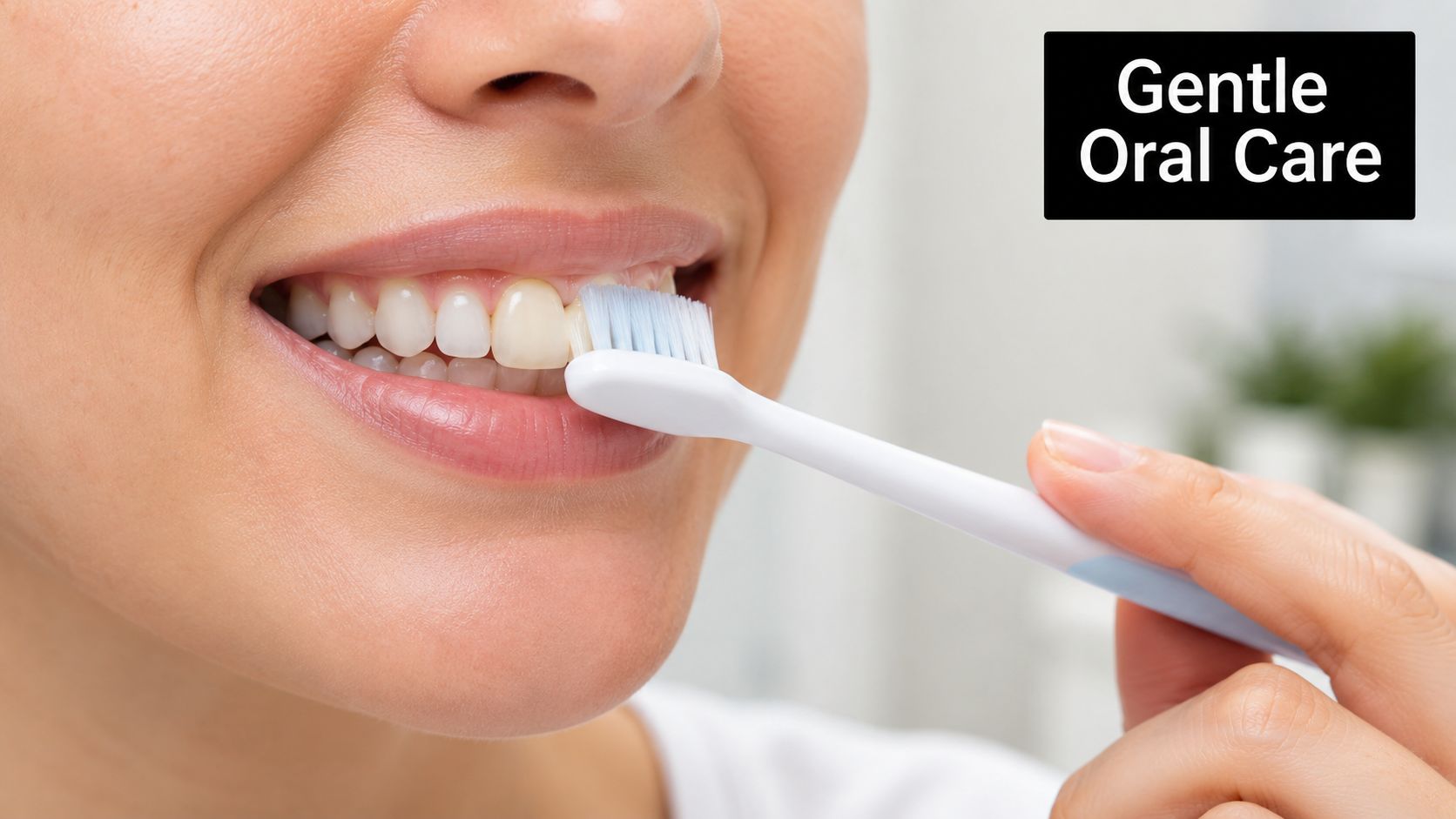
Use a soft-bristled toothbrush and lighten your pressure around the temporary crown. Small circular motions work better than scrubbing back and forth. The goal is to remove plaque without catching an edge of the crown or irritating the gum tissue.
When patients brush too aggressively, the problem usually isn't one dramatic moment. It's repeated pressure on a crown that's held in place with temporary cement.
A good routine looks like this:
- Angle the bristles gently toward the gumline.
- Brush the crowned tooth softly on the front, back, and chewing surface.
- Don't scrub hard at the margins where the crown meets the tooth.
- Keep the rest of your mouth clean so bacteria don't build up around the area.
The flossing change that matters most
The most important habit change is floss removal. As noted by Brooklyn Heights Dental's temporary crown care guidance, brushing should be gentle around the temporary crown, and floss should be removed with a sliding motion rather than an up-and-down tug.
That means you can guide floss between the teeth carefully, but instead of pulling it back up, you slide it out through the side. Pulling straight up can catch the temporary crown and lift it.
If you remember only one hygiene instruction, remember this one. Slide floss out sideways.
What works and what doesn't
| Habit | Better choice | What to avoid |
|---|---|---|
| Brushing | Soft brush, light pressure | Hard scrubbing |
| Flossing | Slide floss out sideways | Snapping floss upward |
| Cleaning frequency | Consistent daily cleaning | Skipping the area entirely |
Patients searching for a dentist near me or an emergency dentist often call after a crown loosens during flossing. In many cases, the issue isn't that they flossed. It's how they removed it.
Foods and Habits to Avoid for a Secure Crown
The fastest way to lose a temporary crown is to test it like a permanent one.
Temporary crowns are useful, but they're attached with weaker cement and they don't tolerate the same stress as the final restoration. Food choice matters more than patients think during this short period.
The no-go list
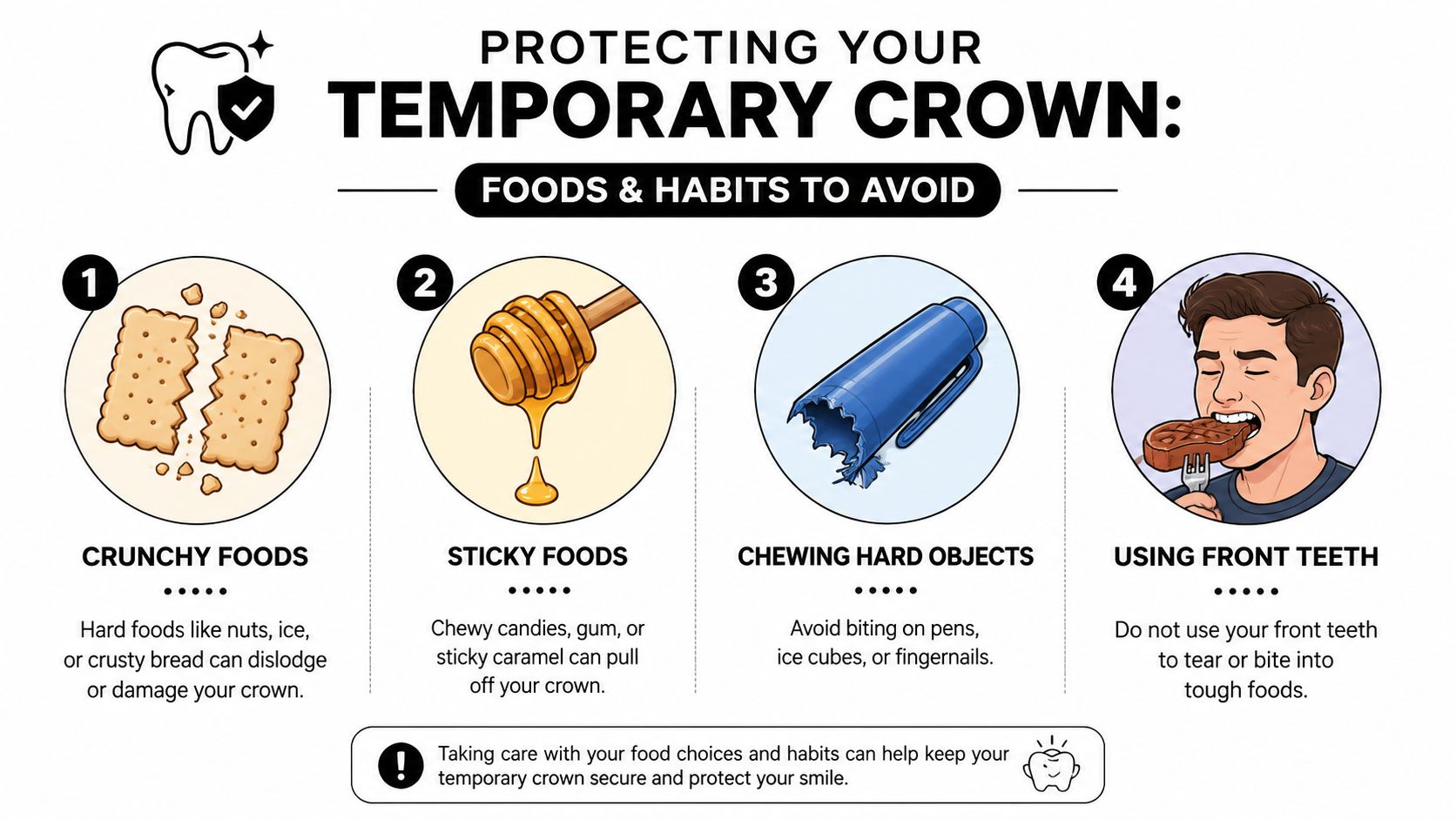
According to Ashley Burns DDS on crown longevity and temporary crown precautions, avoiding sticky foods such as caramel, taffy, and chewing gum, along with crunchy foods like granola, nuts, and corn on the cob, helps keep a temporary restoration in place.
Here's how I explain it chairside:
- Sticky foods pull. Caramel and gum can grab the crown and lift it.
- Crunchy foods crack or pry. Nuts and hard granola create sharp pressure.
- Tough bites twist. Crusty bread or chewy foods can torque the crown sideways.
- Bad habits add repeated force. Chewing ice, pens, or fingernails is rough on temporary work.
Safer choices for the short term
You don't need a dramatic diet overhaul. You just need lower-pressure foods for a little while.
- Softer meals like yogurt, oatmeal, mashed potatoes, or similar easy-to-chew foods put less stress on the crown.
- Cut food into smaller pieces instead of biting aggressively.
- Chew on the other side if that feels more secure.
A temporary crown usually fails from force, not from normal daily use.
Patients in Pico Rivera who follow this part closely are much less likely to need an unscheduled repair visit for a dislodged temporary.
How to Manage Pain and Sensitivity
A prepared tooth is often more reactive than a natural untouched tooth. That's why some sensitivity after crown work is expected. Hot coffee, cold water, and pressure while chewing may feel different for a little while.
What matters is the pattern. Mild sensitivity that settles is one thing. Pain that builds, throbs, or wakes you up is another.
What's usually normal
A temporary crown may leave the tooth a bit more aware of temperature changes or pressure, especially early on. That doesn't automatically suggest infection or failure. The tooth has been shaped, the gums may be slightly irritated, and your bite may still feel unfamiliar.
You can usually make this stage easier by keeping things simple:
- Choose moderate temperatures instead of very hot or very cold foods
- Use a toothpaste made for sensitive teeth if your dentist says it's appropriate
- Chew carefully and avoid loading the area with hard bites
- Keep the tooth clean because inflamed gums can make a crown feel worse
When I'd want you to call
Some symptoms deserve prompt attention from an emergency dentist in Pico Rivera rather than a wait-and-see approach.
Call if you notice:
- Pain that gets stronger instead of calmer
- Swelling in the gums or face
- A bad taste or odor around the tooth
- A bite that feels sharply off
- A crown that feels mobile
Persistent pain isn't something to push through just because the crown is temporary.
Patients sometimes assume discomfort means they should avoid the area altogether. Usually, careful cleaning and close observation are better. The goal is to spot the difference between normal healing and a problem that needs treatment.
What to Do If Your Temporary Crown Comes Loose or Falls Off
You're eating, talking, or brushing, and suddenly the temporary crown shifts or comes out in your hand. That moment feels alarming, but the next step is usually straightforward if you handle it in the right order.
A loose temporary crown is often time-sensitive, not automatically a true emergency. The key is knowing when simple at-home triage is reasonable and when you should stop and get same-day dental care in Pico Rivera.
Right away, use this visual guide:
The immediate steps to take
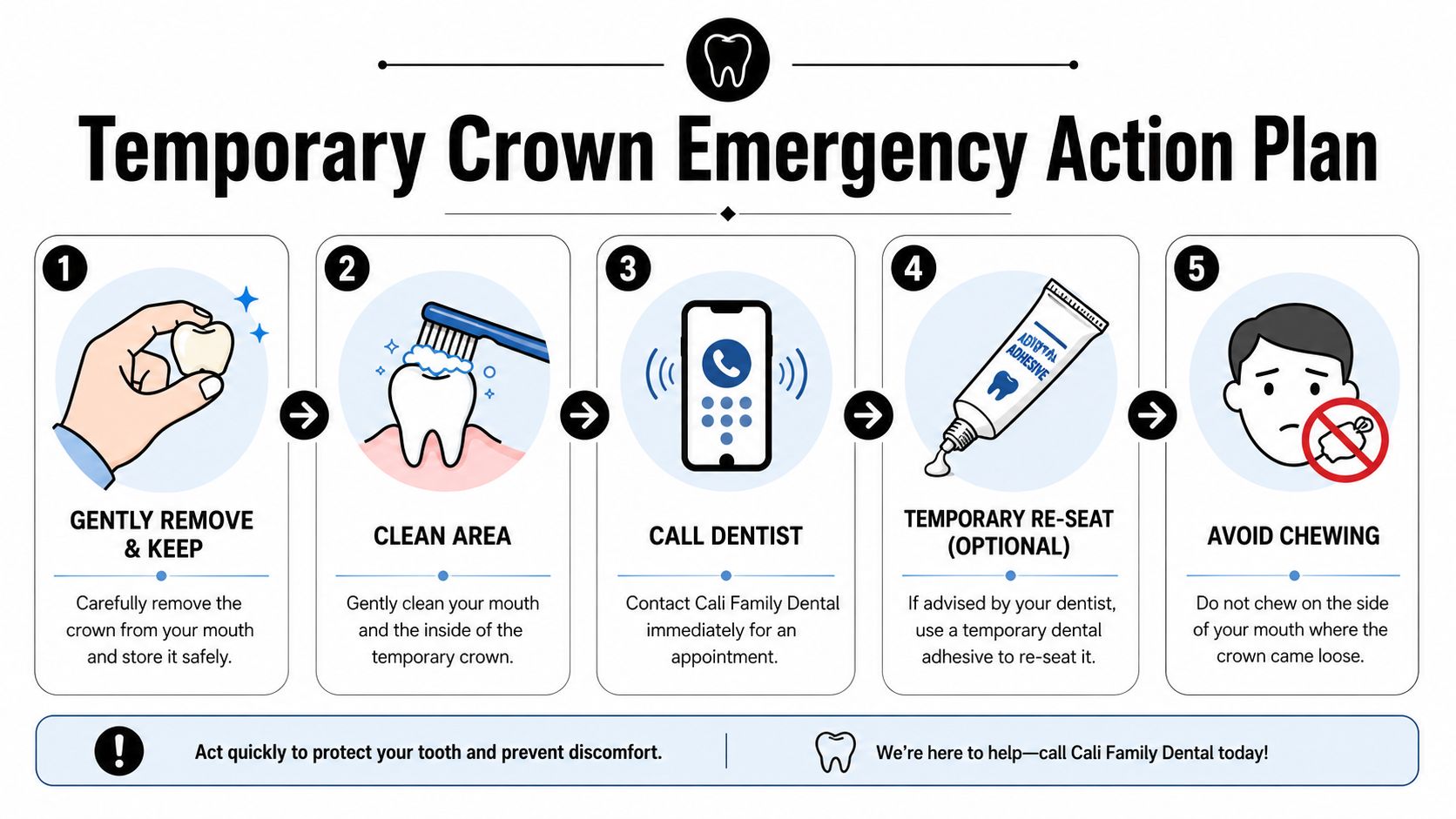
As outlined by Dentist of Torrance's temporary crown instructions, if a temporary crown comes off, the practical sequence is to save the crown, rinse it with water, avoid chewing on that side, and contact a dentist promptly for re-cementation or replacement.
Here's how I'd want you to handle it at home:
Find the crown and keep it clean
If the crown is intact, it may still be usable. Set it somewhere safe so it does not get lost or damaged.
Rinse the crown gently with water
Skip scrubbing, toothpaste, or attempts to trim it. Temporary material can distort more easily than patients expect.
Protect the exposed tooth
Do not chew on that side. If the tooth feels sensitive, avoid hot, cold, or sticky foods until it is checked.
Call promptly
Even if the discomfort is mild, a loose or missing temporary crown should be assessed quickly so the tooth stays protected and the final crown process stays on track.
When a home fix may be reasonable
A home fix may be reasonable only if the crown is intact, it clearly fits one way, it seats gently without pressure, and you still plan to be seen promptly. In that narrow situation, pharmacy temporary dental cement or dental wax can sometimes serve as a short-term stopgap.
That said, I want patients to be careful here. If a crown does not slip back into place easily, forcing it can irritate the tooth, trap debris, or leave the bite off enough to create a new problem.
Try a short-term re-seat only if all of these are true:
- The crown is not cracked or misshapen
- It appears to fit back in one obvious position
- It goes in gently without force
- You can keep the area clean and avoid chewing on it
- You already have a plan to see a dentist soon
Stop if it feels wrong.
Here's a short video that may help you understand the situation more clearly before you call:
When to stop trying and seek same-day care
Some situations call for urgent evaluation rather than trial and error at home.
Seek same-day dental care if:
- The crown will not reseat easily
- The tooth is sharply sensitive to air, pressure, or touch
- The crown is broken
- The tooth underneath looks chipped, cracked, or dark
- Your bite feels very off after the crown loosens
- You have swelling, bleeding that does not settle, or increasing pain
For patients in Pico Rivera, Cali Family Dental treats crown-related urgent dental problems and other restorative needs, including fillings, root canals, tooth extraction, crowns and bridges, and dental implants.
Your Permanent Crown at Cali Family Dental in Pico Rivera
The temporary crown is the bridge between today's protection and the final result you want. Once your permanent crown is ready, the appointment is usually straightforward. The temporary is removed, the tooth is checked, and the final crown is tried in for fit, contact, and bite before it's secured.

What the final appointment usually includes
Most patients want to know whether the permanent crown will feel different. In many cases, yes. It should feel more solid, more precise, and more natural than the temporary.
At the delivery visit, your dentist may:
- Remove the temporary carefully and clean the tooth
- Check the final crown's fit at the edges and between adjacent teeth
- Adjust the bite so chewing feels balanced
- Cement the permanent crown once everything looks right
The process matters because a crown that looks good but bites incorrectly can still create problems. Precision is what turns treatment from “done” into comfortable.
Why the temporary phase affects the final outcome
The temporary period protects the prepared tooth and helps preserve the conditions needed for a smooth final fit. When patients follow instructions during that window, the permanent crown appointment is often simpler and more comfortable.
That final crown can restore chewing strength, protect a weakened tooth, and improve the look of your smile. Depending on your needs, your dentist may also discuss related care such as cleaning and exams, dental X-rays, new patient exams, teeth whitening, cosmetic dentistry, restorative dentistry, or replacement options after tooth extraction such as dental implants near me searches often lead patients to explore.
Good temporary crown care doesn't just prevent emergencies. It helps your permanent crown seat the way it was designed to.
If you're in Pico Rivera, CA and you're dealing with a loose temporary, a broken crown, new discomfort, or you're ready to complete treatment, timely care makes a real difference.
If you need help with a temporary crown, a same-day dental concern, or you're looking for a dentist in Pico Rivera, CA, contact Cali Family Dental to schedule an appointment. Whether you need urgent care, restorative dentistry, cosmetic dentistry, or you've been searching for an emergency dentist, dentist near me, or dental implants near me, the office can help you take the next step with clear guidance and prompt care.