When contemplating veneers vs bonding cost, you're likely in a familiar situation. You look in the mirror, see a chipped tooth, a small gap, uneven edges, or stains that whitening hasn't fixed, and then the questions start. Which option looks better? Which one lasts longer? Which one makes sense financially?
For many people in Pico Rivera, the hardest part isn't deciding that they want to improve their smile. It's figuring out whether the lower upfront cost is the better value, or whether paying more now prevents repeat work later. Cosmetic dentistry can feel confusing when every website throws around broad claims without explaining what you're paying for.
That decision gets easier when you compare the treatments side by side.
| Option | Typical U.S. upfront cost | How it's done | Best fit |
|---|---|---|---|
| Dental bonding | $100 to $600 per tooth | Direct composite resin placed chairside, often in one visit | Small chips, minor gaps, edge reshaping, quick cosmetic touch-ups |
| Porcelain veneers | $900 to $2,500 per tooth | Custom porcelain shells, usually with impressions and lab fabrication over multiple visits | Bigger cosmetic changes in shape, color, symmetry, and overall smile design |
Your Guide to a New Smile from a Cosmetic Dentist in Pico Rivera
A lot of cosmetic consultations start the same way. Someone says, "I don't hate my teeth, but I don't love smiling in photos." That usually means the problem isn't pain. It's self-consciousness about one or two visible flaws that draw attention every time they talk or laugh.
In Pico Rivera, many patients want a solution that feels practical, not flashy. They aren't looking for a dramatic sales pitch. They want straight answers about what will look natural, what will hold up, and what will fit their budget.
The real question behind the price
Patients don't ask about veneers or bonding because they're curious about dental materials. They ask because they want confidence without making an expensive mistake.
That matters. Bonding and veneers can both improve a smile, but they solve different problems in different ways. One is often simpler and more conservative. The other can offer a more complete cosmetic change. The right choice depends on the tooth, your habits, your expectations, and how long you want the result to last before needing repairs or replacement.
Practical rule: If you're choosing based only on the lowest quote, you're only seeing part of the decision.
What Pico Rivera patients usually want to know
During a cosmetic discussion, the same concerns come up again and again:
- Will it look natural so my teeth don't seem too bright or too perfect?
- Will I need more dental work first if I have decay, old fillings, or gum issues?
- Can I afford it now without creating a bigger expense later?
- Is it worth doing one tooth, or does it only make sense as part of a larger smile upgrade?
These are good questions. They lead to better treatment decisions.
Dr. Rafaat brings more than 24 years of experience to these conversations, and that kind of experience matters when a treatment is elective. Cosmetic care isn't just about making teeth look nicer. It's about matching the treatment to the person sitting in the chair, explaining the trade-offs clearly, and helping patients in Pico Rivera move forward without pressure.
Understanding Your Two Main Cosmetic Dentistry Options
Bonding and veneers both improve how teeth look, but they aren't interchangeable. They use different materials, follow different treatment steps, and tend to fit different smile goals.
What dental bonding is
Dental bonding uses a tooth-colored composite resin that the dentist shapes directly on the tooth. The material is placed chairside, adjusted by hand, and polished to blend into the smile.
Because the resin is applied directly, bonding is usually a faster and more conservative option for cosmetic fixes. It's often chosen for a chipped corner, a small space between teeth, slight edge wear, or minor reshaping when the underlying tooth is otherwise healthy.
Patients often like bonding because it feels straightforward. There usually isn't a lab process, and the treatment can often be handled in a single visit.
What porcelain veneers are
Porcelain veneers are thin custom shells that cover the front surface of the tooth. They aren't sculpted directly on the tooth during the appointment in the same way bonding is. Instead, they're typically planned, measured, and custom fabricated before being bonded into place.
Veneers are usually considered when someone wants a broader cosmetic change. That might include multiple teeth with uneven shape, stubborn discoloration, visible wear, or smile asymmetry that can't be corrected well with a small chairside repair.
Veneers tend to work best when the goal isn't just fixing one flaw. It's creating a more uniform overall smile.
The simplest way to think about the difference
A quick comparison helps:
| Feature | Bonding | Veneers |
|---|---|---|
| Material | Composite resin | Porcelain |
| Process | Direct chairside application | Custom-made restoration |
| Visits | Often one visit | Usually multiple visits |
| Scope | Small targeted improvements | More comprehensive cosmetic change |
Neither option is automatically better. Bonding can be the smarter choice when the issue is limited and the tooth structure is healthy. Veneers can make more sense when someone wants consistency across several visible teeth and is ready for a treatment plan with more design control.
The most important first step isn't choosing a product name. It's identifying what you're trying to fix. A single chipped tooth calls for a different solution than a full smile makeover.
Veneers vs Bonding Cost A Detailed Breakdown for Pico Rivera Patients
Cost is where most comparisons start, and for good reason. The upfront numbers are different enough that many patients assume bonding is always the budget choice and veneers are always the luxury choice. However, the situation is more specific than that.
Early in the decision, a visual side-by-side can help:
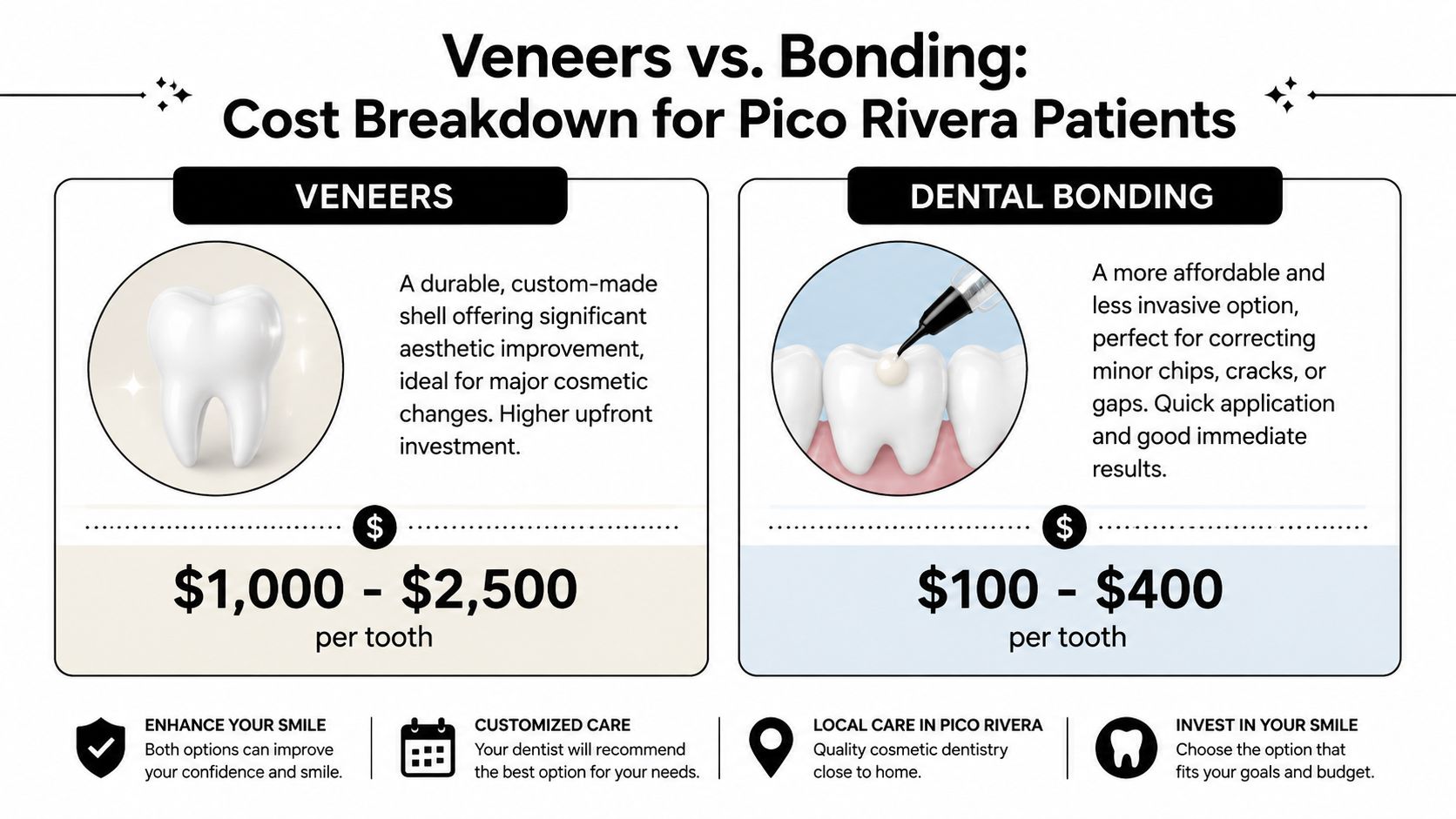
The national price range patients usually see
In the United States, dental bonding is typically priced at about $100 to $600 per tooth, while porcelain veneers commonly run about $900 to $2,500 per tooth, which means veneers often cost roughly 2 to 20 times more upfront depending on the case and market, according to this bonding vs veneers cost guide.
That difference isn't arbitrary. It reflects how each treatment is built.
Bonding is generally a direct repair. The material is placed, shaped, and polished in the dental chair. Veneers usually involve more planning, more precision, and custom fabrication before final placement. You're not just paying for porcelain. You're paying for a different treatment architecture.
Why veneers usually cost more
Several factors push veneer fees higher:
- Custom fabrication: Veneers usually involve outside lab work or custom production.
- More treatment steps: Planning, impressions or scans, try-in steps, and final placement add time.
- Broader cosmetic design: Veneers are often selected when the goal is to improve multiple visible teeth together.
- Material differences: Porcelain is a different restorative material than chairside composite resin.
A quick consultation video can also make the distinction easier to picture before deciding which path fits your goals.
What actually changes your final quote
Two patients asking about veneers vs bonding cost may get very different recommendations even if they dislike the same thing in photos. That's because the fee depends on the clinical details, not just the name of the procedure.
Common variables include:
- How many teeth are involved: One front tooth is a different plan than several teeth in the smile line.
- How much reshaping is needed: Minor cosmetic smoothing is simpler than larger contour changes.
- Whether prep work comes first: Some patients need cleaning, fillings, or other restorative care before cosmetic treatment.
- How closely color and shape must be matched: Front teeth demand more precision than less visible areas.
In Pico Rivera, what matters most is getting clear pricing tied to your actual case. A thoughtful cosmetic consultation should leave you understanding what is being treated, why that approach was chosen, and what your smile investment includes.
Lifespan and Long-Term Value Which Is the Better Investment
Upfront price matters. Long-term value matters just as much. Many patients often change their mind after they understand the full picture.
The key question isn't only, "What does it cost today?" It's, "How often am I likely to pay again?"
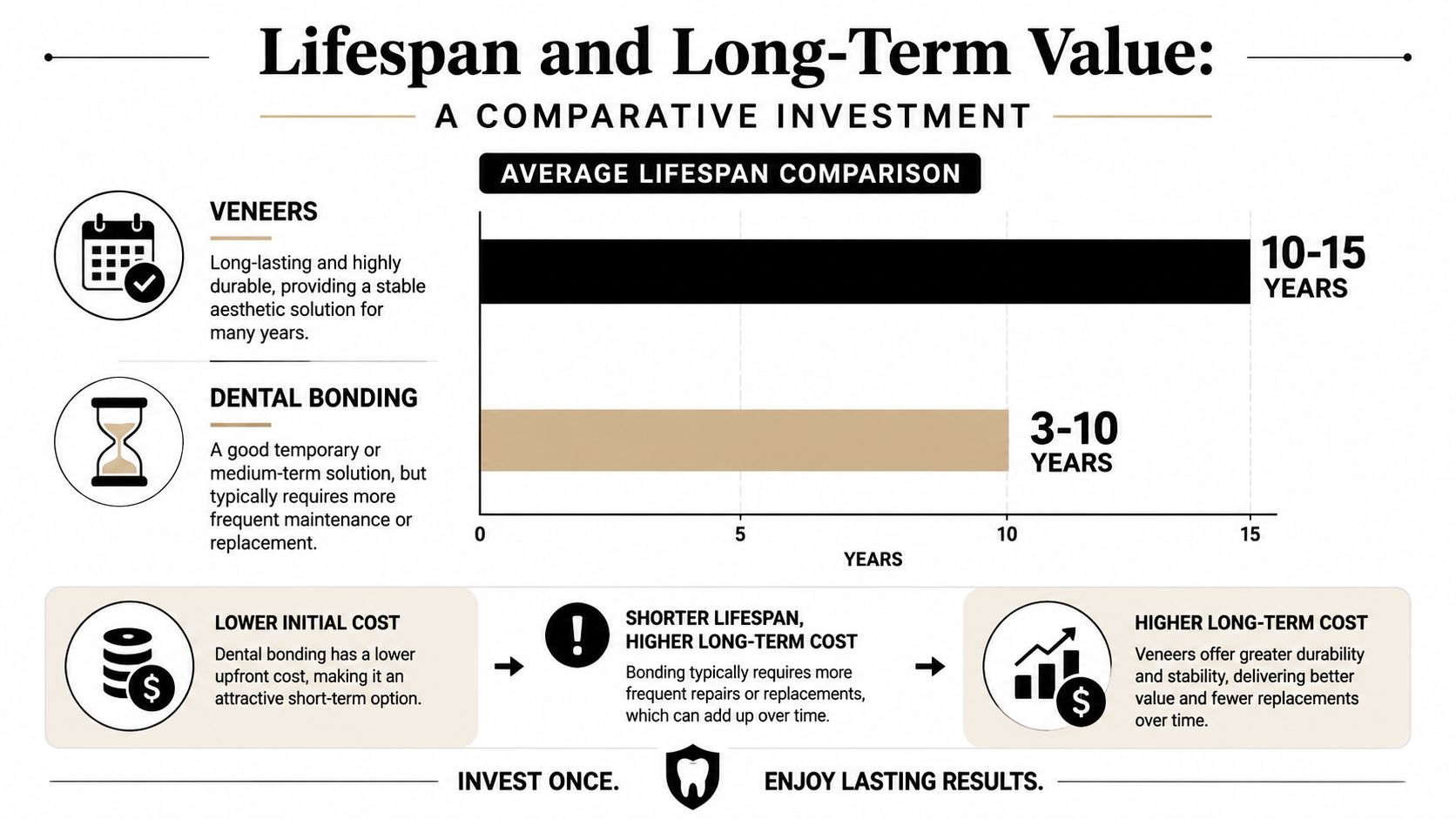
The lifespan difference changes the math
Recent clinical and patient-education sources consistently place composite bonding at about 3 to 10 years of lifespan, while porcelain veneers are commonly cited at 10 to 15 years or longer with proper care. That means a veneer can last roughly 2 to 5 times longer than bonding, based on this durability comparison of bonding and veneers.
That doesn't mean veneers are always the right answer. It does mean the lowest sticker price can be misleading when a restoration may need touch-ups, repairs, or replacement sooner.
A simple cost-per-year way to think about it
Patients often benefit from a different framework. Instead of looking only at the day-one fee, think in terms of how long the result is likely to serve you before significant replacement becomes necessary.
That approach is especially useful when:
- You're treating multiple front teeth, where replacing bonding over time can become repetitive.
- You want a stable look for years, not a short-term cosmetic fix.
- You drink coffee, tea, or red wine often, because surface staining tends to matter more over time.
- You'd rather avoid frequent maintenance visits for cosmetic touch-ups.
The cheaper option at checkout isn't always the cheaper option over the life of your smile.
Where bonding still makes excellent sense
Bonding remains a smart choice in many cases. If you have one small chip, one minor gap, or a single tooth that needs a modest cosmetic improvement, paying for veneers may be unnecessary. A conservative repair can be the better value precisely because the issue is limited.
The long-term value conversation becomes more important when the cosmetic goals are broader. If someone wants a coordinated, durable change across several front teeth, veneers often make more financial sense than they first appear.
Porcelain also tends to resist staining better than composite. That practical difference matters to patients who don't want the appearance to drift over time with normal eating and drinking habits.
Aesthetic Results and Who Is a Good Candidate
The financial decision only works if the treatment can deliver the look you want. Some people are perfect candidates for bonding and don't need anything more. Others want a level of symmetry, brightness, and uniformity that bonding usually can't provide as predictably.
When bonding is usually the better fit
Bonding often works well for focused cosmetic repairs. It shines when the goal is conservative improvement, not a full redesign.
Good bonding situations often include:
- Small chips on front teeth: A chipped edge can often be rebuilt smoothly and quickly.
- Minor spacing: Small gaps may be softened or closed without extensive treatment.
- Subtle reshaping: If one tooth edge is uneven, bonding can help balance the smile.
- One-tooth cosmetic fixes: When the rest of the smile already looks good, bonding can be efficient and practical.
Because the procedure is generally a single-visit, chairside composite resin treatment with no lab fabrication, it appeals to patients who want a relatively simple solution, as described in this porcelain veneers vs cosmetic bonding overview.
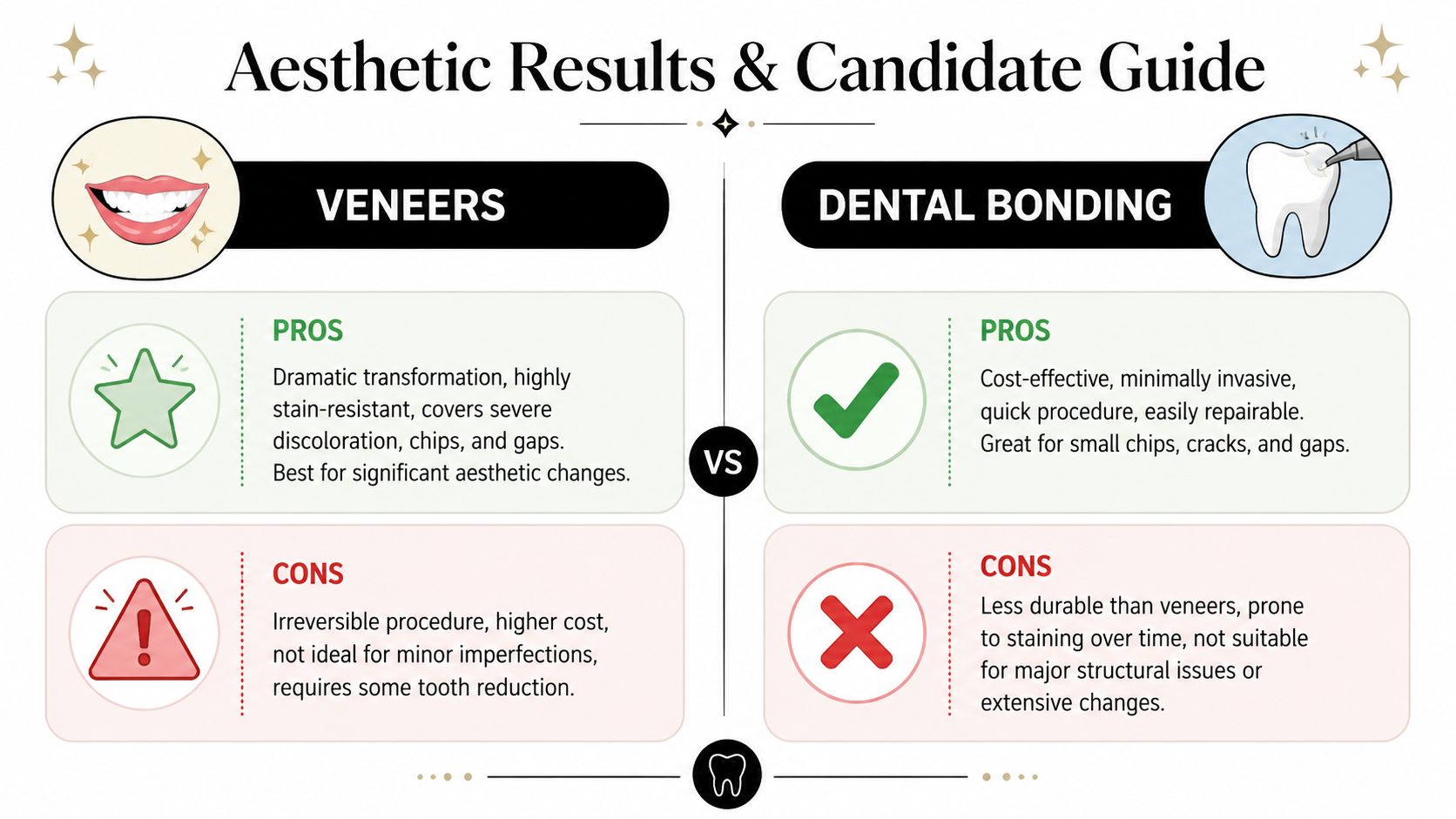
When veneers usually make more sense
Veneers are often the stronger option when the desired result is more extensive. They typically involve multiple visits, impressions, and custom fabrication, which gives the dentist and patient more control over shape, size, and overall smile uniformity.
That can be useful when you're dealing with several visible concerns at once, such as:
| Smile goal | Bonding | Veneers |
|---|---|---|
| Fix one chip | Often a strong fit | Usually more than needed |
| Improve several front teeth together | Possible in select cases | Often the more predictable option |
| Resist staining better over time | Less ideal | Usually stronger fit |
| Create a more uniform smile design | Limited for larger changes | Better suited |
Oral health still comes first
Cosmetic treatment works best on a healthy foundation. If a patient has active decay, gum inflammation, or unstable old restorations, that has to be addressed first. A beautiful veneer or bonding case won't stay beautiful if the surrounding mouth isn't healthy.
A cosmetic plan should start with healthy teeth and gums, then move to shape and color.
That's also why a full exam matters before discussing appearance alone. Some patients who come in asking for a cosmetic dentist near me need a combination of services first, such as cleaning and exams, dental X-rays, fillings, or restorative dentistry before cosmetic changes are the right next step.
Making Your Dream Smile Affordable in Pico Rivera
A lot of Pico Rivera patients sit down in the chair with the same concern: they may want to improve their smile, but they also need the numbers to make sense for their household budget.
That conversation should include more than the starting fee. It should include what insurance may help with, what has to be done first, and what the treatment is likely to cost you over time if repairs or replacements come up sooner.
How insurance usually fits into cosmetic treatment
Dental insurance usually does not pay for treatment that is done only to improve appearance. Veneers and bonding often fall into that category.
Insurance can still lower the total amount you spend if you need basic dental care before cosmetic work begins. An exam, X-rays, cleaning, filling, or other medically necessary treatment may be covered differently from elective smile treatment. For Pico Rivera patients, that matters. Denti-Cal, Medi-Cal, and many PPO plans may help with the health side of treatment, even if they do not cover the cosmetic portion.
That distinction often changes the actual out-of-pocket cost.
Ways to make treatment more manageable
A practical plan usually starts with priorities, not with doing everything at once.
- Treat the tooth that bothers you most first: If one front tooth draws your attention every time you smile, starting there can make a noticeable difference without committing to a larger case.
- Handle health issues before cosmetic work: Gum inflammation, decay, or older dental work that is failing should be addressed first so the cosmetic result has a stable foundation.
- Ask for a phased plan: Some patients do better by spreading treatment across visits instead of trying to complete every cosmetic change at once.
- Review the cost per year, not only the fee today: Bonding may cost less upfront, but if it needs more maintenance or replacement, the long-term value can shift. Veneers usually require a larger initial investment, but for the right patient, that higher fee may be easier to justify over a longer lifespan.
- Discuss payment options early: Monthly payments can make a larger treatment plan more realistic and easier to fit into everyday expenses.
I often tell patients to look at affordability in two parts. First, can you comfortably start treatment? Second, are you choosing the option you will still feel good about paying for a few years from now?
That is especially important for patients trying to balance cosmetic goals with real insurance limits. Someone looking for a local dentist is often not just asking, "How can I improve my smile?" They are also asking, "What will insurance help with, what will it not cover, and what is the smartest use of my money?"
Clear answers make the decision easier. You should know which services support your oral health, which ones are elective, and whether a conservative fix or a longer-lasting option makes better financial sense for your situation.
Start Your Journey with a Pico Rivera Dentist You Can Trust
The best cosmetic consultations don't feel rushed. You should leave understanding your options, not feeling pushed toward the most expensive one.
A good first visit includes a close look at your teeth, your bite, your existing dental work, and your goals. If one tooth bothers you, the plan may stay conservative. If you're hoping for a broader smile upgrade, the conversation becomes more detailed. In either case, technology like digital X-rays, intraoral cameras, and digital scanning helps patients see what the dentist sees and make decisions with more confidence.
The most useful part of the discussion is often the long view. Public guidance often misses the true long-term cost per year of veneers compared with bonding, even though bonding is commonly described as lasting about 3 to 10 years and porcelain veneers about 10 to 15+ years, which means the cheaper option can become more expensive over time, as noted in this long-term value discussion of dental veneers vs dental bonding.
For new patients who want an easy starting point, the office offers a $69 new patient special that includes an exam, digital X-rays, and a routine cleaning. That makes it easier to get answers before committing to cosmetic treatment, and it often reveals whether bonding, veneers, or another service is the right next step.
If you've been comparing veneers vs bonding cost and still feel unsure, that's normal. The right answer depends on your teeth, your goals, and how you weigh short-term savings against long-term value.
If you're ready to talk through your options with a local team, schedule a consultation with Cali Family Dental. Whether you're looking for a cosmetic dentist near me, a dentist in Pico Rivera, CA, or broader dental care that includes restorative dentistry, teeth whitening, emergency dentist visits, tooth extraction, or even dental implants near me, the next step is a clear, no-pressure evaluation of what fits your smile and your budget.