You're biting into lunch, talking with a coworker, or catching your smile in the car mirror after a quick stop in Pico Rivera. Then you notice it. A small chip on a front tooth. A dark spot that might be a cavity. A tooth that suddenly feels sensitive when you drink something cold.
The desire is for a straightforward solution to such problems. Patients want something that looks natural, feels comfortable, and fits real life. That's a big reason patients searching for a dentist near me, an emergency dentist, or a cosmetic dentist near me often ask about tooth-colored fillings and bonding. They want modern care that restores a tooth without making their smile look patched together.
If you've been wondering what is composite resin, the short answer is simple. It's a tooth-colored dental material used to repair decay, rebuild chips, improve shape, and blend restorations into your natural smile. The better answer takes a little more explanation, because composite resin is one of the most useful materials in modern dental care. It helps dentists treat both health problems and appearance concerns in a way that's efficient, conservative, and often completed in one visit.
Your Guide to Modern Dental Restorations in Pico Rivera
A common day in Pico Rivera can turn into a dental concern fast. Someone feels a rough edge on a front tooth after breakfast. Another person ignores mild sensitivity for weeks, then realizes a cavity may be the reason. A parent scheduling a new patient exam also wants to ask about a teen's chipped tooth before school photos. These are everyday problems, and they usually call for a solution that's quick, discreet, and dependable.
That's where modern restorative dentistry has changed the patient experience. Years ago, people often expected visible dental work or more aggressive treatment. Today, tooth-colored materials give dentists a way to repair damage while keeping the smile looking natural. For patients looking for a dentist in Pico Rivera, CA, that matters. You want treatment that works, but you also want to feel comfortable smiling, talking, and eating right away.
A small chip or cavity can feel bigger than it looks because it affects comfort, confidence, and peace of mind all at once.
Composite resin plays a major role in that kind of care. Dentists use it for cavities, minor cracks, cosmetic reshaping, and other small to moderate repairs. Because it can be matched to the shade of your teeth and shaped directly during the appointment, it supports the kind of same-day convenience many patients prefer.
Why patients ask about it so often
People usually aren't asking for “materials.” They're asking for outcomes.
- A natural look means the repair doesn't stand out when you smile.
- A conservative approach means more of the healthy tooth can often stay in place.
- A faster visit means many treatments can be finished without waiting for an outside lab.
- Less disruption means you can return to work, errands, or family plans with fewer interruptions.
If you're also comparing other services such as teeth whitening, restorative dentistry, cleaning and exams, or even treatment after a tooth extraction, understanding composite resin helps you see how many parts of modern dental care now focus on comfort and appearance together.
What Is Dental Composite Resin Made Of
When patients ask what composite resin is, I usually describe it as a high-tech tooth-colored putty that starts soft, then hardens into a durable restoration. That simple picture helps, but the material is more advanced than it sounds.
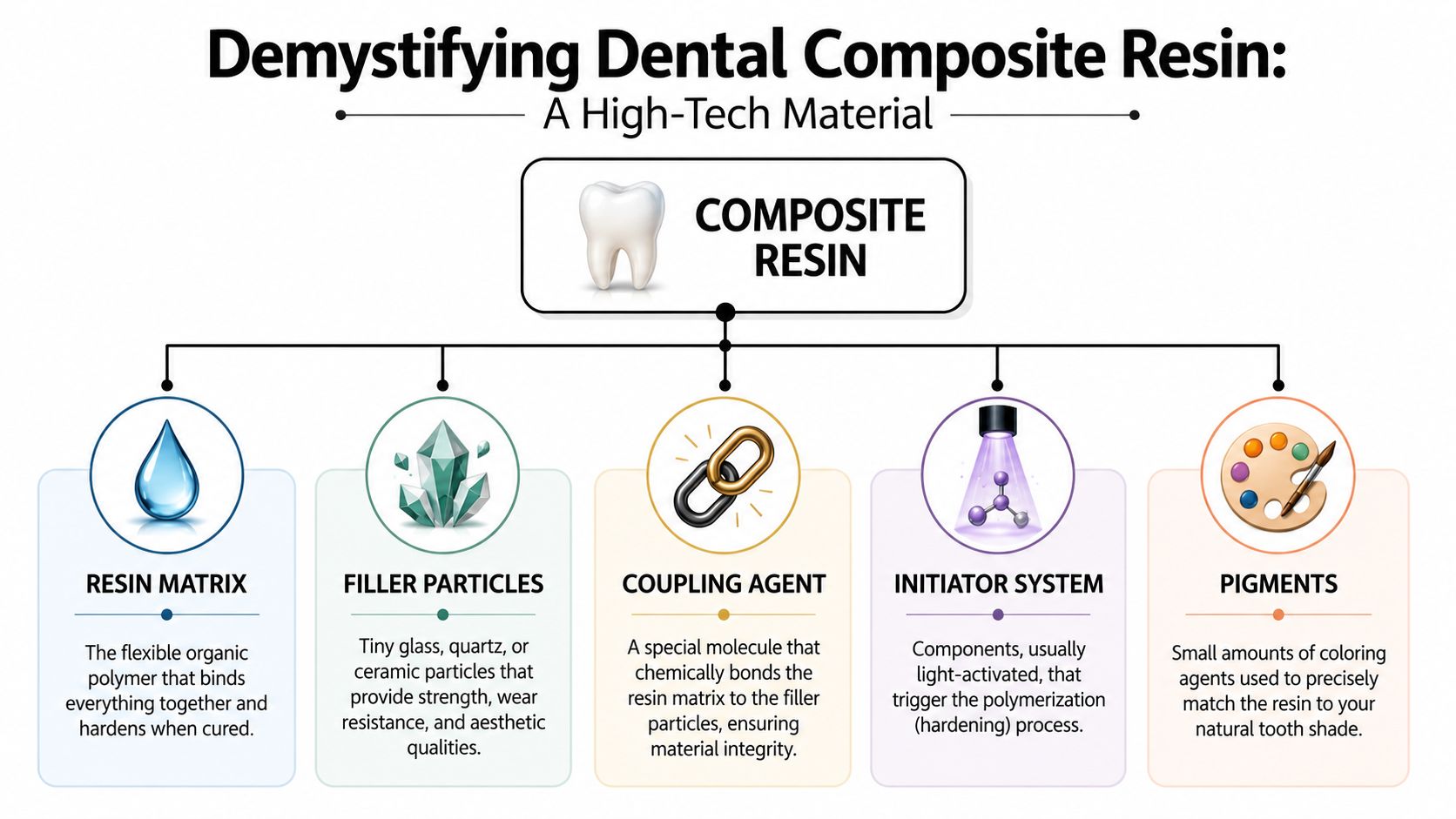
Composite resin is made from several parts that work together. The main body is a resin matrix, which is the moldable part your dentist can shape. Mixed into that are very small filler particles, often made from glass or ceramic-like materials, that help give the restoration strength and a more natural appearance. Other ingredients help those parts bond together, respond to curing light, and match the shade of your tooth.
The parts that matter most
Here's the simplest way to understand it:
- Resin matrix helps the material stay soft and workable during placement.
- Filler particles make it stronger, smoother, and more tooth-like in appearance.
- Pigments help the dentist blend the color with nearby enamel.
- Light-activated ingredients allow the material to harden when a curing light is used.
Each part has a job. If composite resin were only soft plastic, it wouldn't hold up well. If it were only hard particles, it couldn't be shaped precisely. The combination is what makes it useful for both restorative and cosmetic dentistry.
How the blue light fits in
Patients often notice the blue curing light and wonder whether it's just checking the tooth. It's part of how the restoration becomes solid. After the dentist places and shapes the composite resin, the light activates the hardening process. That lets the material set quickly so the dentist can refine the shape, check your bite, and polish the surface during the same visit.
Practical rule: Composite resin is designed to be shaped first and hardened only when the dentist is ready. That control is one reason it works so well for same-day treatment.
This technology is also reassuring because it allows careful placement in small layers. Instead of placing a one-size-fits-all piece into the tooth, the dentist can build the restoration directly where it's needed. That level of control helps when repairing a cavity, rebuilding a worn edge, or smoothing the contour of a tooth that doesn't quite match the others.
For many patients in Pico Rivera, modern dental care reveals its benefits more clearly. Composite resin isn't just a filling material. It's a flexible tool that supports comfort, esthetics, and efficiency in one treatment approach.
How We Use Composite Resin at Cali Family Dental
A lot of Pico Rivera patients come in with a simple question. “Can you fix this today?” Sometimes “this” is a cavity that started feeling sensitive during lunch. Sometimes it is a small chip on a front tooth before a family event, school photo, or work meeting. Composite resin is often the material that lets us answer yes.
At Cali Family Dental, we use composite resin because it gives us control. We can shape it directly on the tooth, match it to the surrounding color, and repair many everyday problems in a way that feels modern, conservative, and efficient for local families who do not want treatment stretched across multiple visits.
Composite fillings for cavities
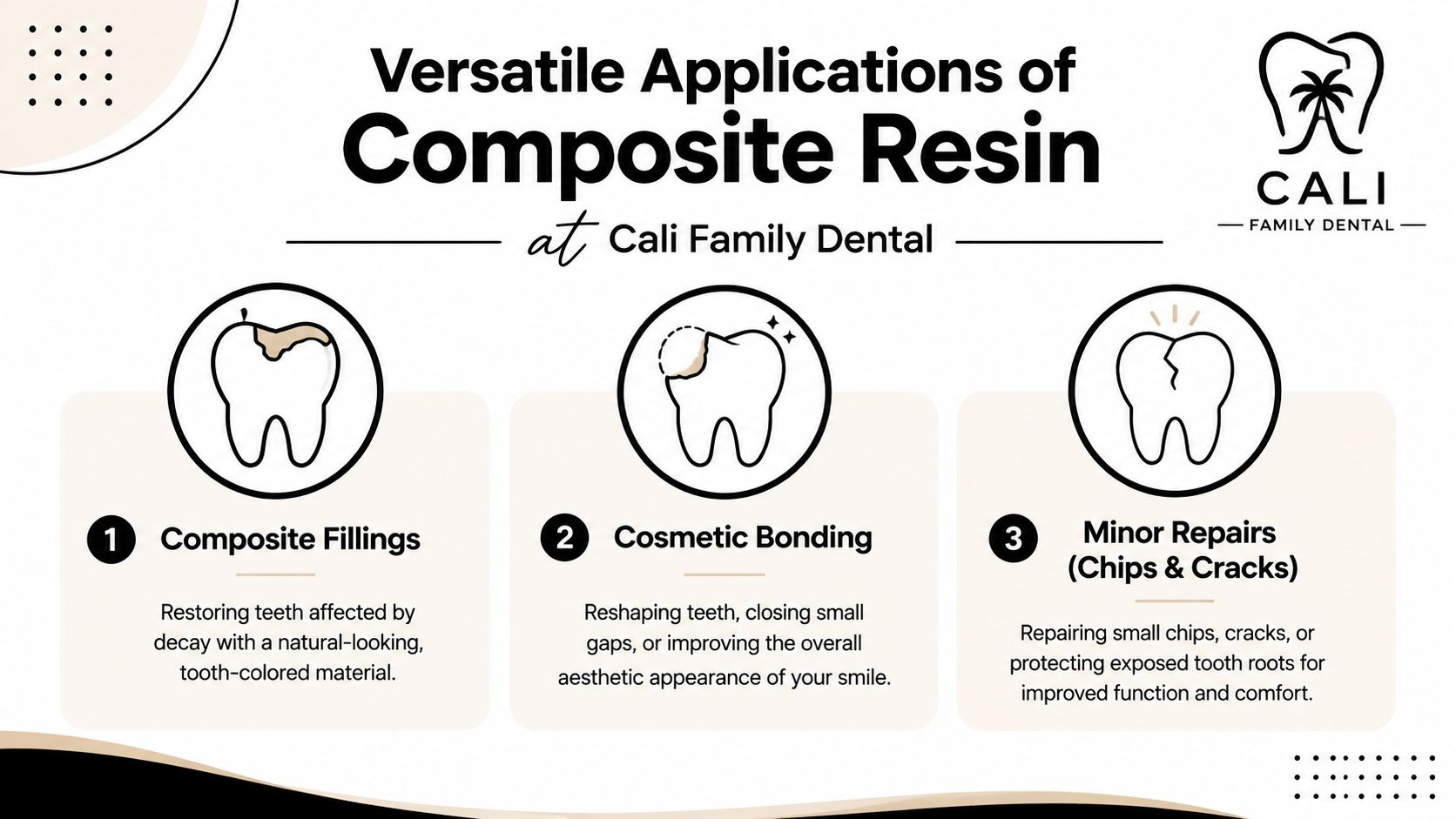
One of the most common uses is treating cavities. After the decayed part of the tooth is cleaned out, composite resin is placed in the area and shaped to rebuild what was lost. The goal is simple. Seal the tooth, restore its form, and help you chew comfortably again.
For patients in Pico Rivera, that often means fewer disruptions to the week. If you came in because cold drinks started bothering one tooth or you noticed a dark spot, a tooth-colored composite filling may solve the problem without the look of older metal fillings.
Cosmetic bonding for chips and small shape changes
Composite resin is also useful for cosmetic bonding. It works like sculpting material for teeth. We can rebuild a chipped corner, smooth an uneven edge, or close a small gap by adding material only where it is needed.
That matters because small changes can have a big effect on how your smile looks. A front tooth does not have to be badly damaged to bother you. Even a tiny chip can catch your eye every time you talk, smile, or see yourself in photos. Bonding offers a conservative way to improve that area without turning it into a larger procedure than it needs to be.
Minor repairs that improve comfort
Some composite repairs are less about appearance and more about day-to-day comfort. If a tooth has a worn area near the gumline, for example, that spot may feel sharp, rough, or sensitive during brushing. Covering and reshaping that area can make the tooth feel normal again.
| Concern | How composite resin helps |
|---|---|
| Small chip | Rebuilds the missing edge and smooths the surface |
| Minor crack area | Protects the tooth and restores shape in select cases |
| Worn spot near the gumline | Covers exposed areas that may feel sensitive |
| Small gap or uneven contour | Improves balance and smile symmetry |
These are often the kinds of changes patients appreciate right away. The tooth looks better, but just as important, it feels better.
How it fits into your overall care
Composite resin is a versatile tool, not a one-size-fits-all answer. Before we recommend it, we still need to examine the tooth closely and decide what will hold up best for your bite, your goals, and the amount of damage present. A small cavity or chip may be an excellent fit for composite. A larger structural problem may need a different restoration.
That broader view matters in a community practice. At Cali Family Dental, composite treatment is part of a full range of preventive, restorative, cosmetic, and emergency care. If composite resin is the right choice, it often allows us to handle the problem in a comfortable, efficient way on the same day. If it is not the right choice, we explain why and help you choose the option that protects your smile for the long term.
The Same Day Composite Restoration Procedure in Pico Rivera
Many patients feel relief once they know the process is usually straightforward. Composite resin treatment is often completed in one visit, which is a major advantage when you're dealing with a cavity, chip, or cosmetic concern and don't want weeks of follow-up appointments.
A typical appointment is designed to be efficient, but not rushed. The dentist still needs time to examine the tooth, confirm the plan, and shape the material carefully so it looks right and feels natural when you bite.
What happens first
The visit usually starts with an exam and, when needed, digital X-rays or close-up images. That helps the dentist see the extent of decay, damage, or wear. If the plan involves a visible part of the smile, shade matching comes early so the restoration blends with the surrounding tooth.
Before the dentist begins, you should know what problem is being treated, what the material will do, and what result to expect. That conversation matters. A cavity repair and a cosmetic edge repair may both use composite resin, but the goals are different.
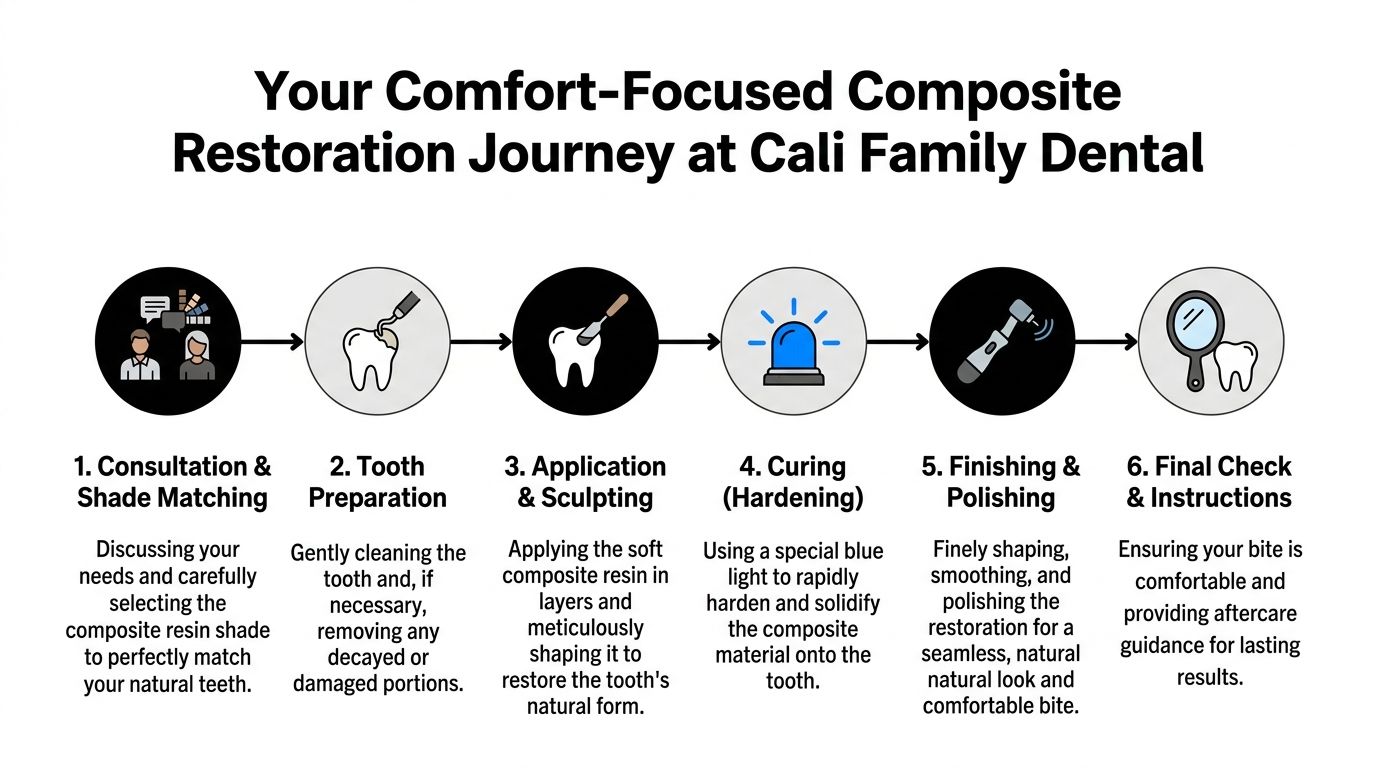
To help you visualize the flow of treatment, this overview breaks it down clearly.
The step-by-step treatment
Consultation and shade matching
The dentist checks the tooth and selects a shade that fits your natural smile.Tooth preparation
If there's decay or damaged structure, that area is gently removed. For some cosmetic bonding cases, only minimal preparation is needed.Application and shaping
The composite is placed in layers and sculpted to rebuild the tooth.Curing with blue light
A special light hardens each layer so the material becomes strong and stable.Finishing and polishing
The dentist smooths the restoration, adjusts the contour, and refines the shine.Final bite check
You bite down to make sure the tooth feels even and comfortable.
This short video gives patients another view of how tooth-colored restoration treatment works in practice.
What patients usually notice afterward
Two things become apparent right away. First, the tooth looks normal again. Second, the repaired area feels smooth instead of rough, sharp, or hollow.
If a restoration looks natural but your bite feels off, tell your dentist. Small adjustments can make a big difference in comfort.
That same-day result is one of the biggest reasons composite resin fits busy life in Pico Rivera. Whether you came in for sensitivity, a chipped tooth, or a smile improvement before an event, the treatment often lets you leave with the issue already addressed.
Benefits and Key Considerations of Composite Resin
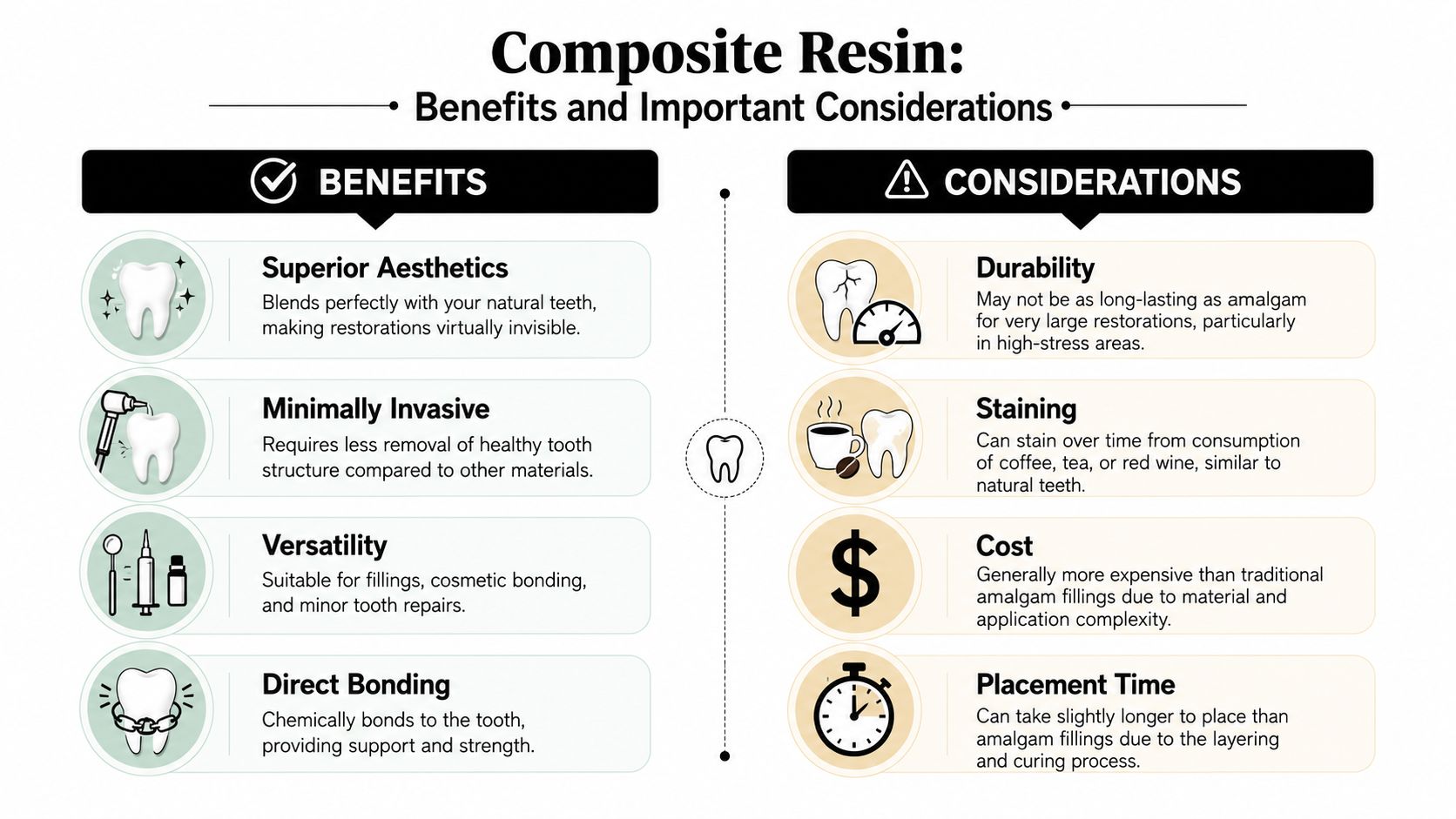
Composite resin is popular for good reasons. It gives dentists a way to repair teeth while preserving a natural appearance, and it often requires less removal of healthy structure than older approaches. For many patients, that combination is exactly what they want from modern dental care.
The appearance benefit is the easiest to understand. Composite resin is tooth-colored, shaped directly on the tooth, and polished to blend with the smile. On front teeth and visible side teeth, that matters a lot. Patients usually don't want dental work that draws attention.
Why many patients choose it
- Natural appearance helps restorations blend into everyday conversation and smiling.
- Conservative treatment often means the dentist can preserve more healthy tooth structure.
- Direct bonding allows the material to attach closely to the tooth.
- Versatility means the same material can help with cavities, chips, worn spots, and small cosmetic changes.
For patients interested in restorative dentistry and cosmetic dentistry, those advantages make composite resin one of the most useful options available.
Important considerations to know
A balanced conversation matters here. Composite resin is excellent in many situations, but it isn't perfect for every tooth and every type of damage.
It can stain over time, much like natural teeth can. Coffee, tea, tobacco, and intensely colored foods may gradually affect the surface. It also requires thoughtful case selection. If a tooth has a very large area of damage or handles heavy biting pressure, a dentist may discuss alternatives such as ceramic restorations or crowns instead.
Good dentistry isn't about forcing one material into every situation. It's about choosing the right material for the job.
Another point patients should know is that maintenance matters. Composite restorations need regular brushing, flossing, and professional checkups just like natural teeth do. If you skip routine visits, small issues can become larger ones before you notice them.
This honest view is helpful because it sets realistic expectations. Composite resin can look excellent and feel comfortable, but the best results happen when the tooth is a good candidate and the patient keeps up with everyday dental care.
Comparing Your Options Composite Amalgam and Ceramic
Patients often want a simple answer to which filling or restoration material is “best.” The more accurate answer is that the right choice depends on the tooth, the amount of damage, the location in the mouth, your smile goals, and how quickly you want treatment completed.
Composite resin sits in the middle of an important conversation because it combines appearance and convenience in a way many people value. But it's easier to understand when you compare it with other common options.
Composite versus amalgam
Amalgam is the traditional silver-colored filling material many adults remember from older dental work. It has been used for a long time, especially in back teeth. The biggest difference patients notice right away is appearance. Composite resin blends with the tooth, while amalgam is visible when you open your mouth.
There's also a treatment-style difference. Composite resin can be shaped closely to the tooth and used in a way that supports a more natural-looking result. For many people looking for a dentist in Pico Rivera, CA, especially those replacing old visible fillings, that esthetic difference matters just as much as function.
| Factor | Composite resin | Amalgam |
|---|---|---|
| Color | Tooth-colored | Silver-colored |
| Cosmetic appeal | Blends with smile | More noticeable |
| Common patient reason for choosing | Natural appearance | Familiar older material |
| Typical discussion point | Conservative, esthetic repair | Traditional back-tooth filling option |
Composite versus ceramic
Ceramic restorations, often made from porcelain-like materials, are commonly used for inlays, onlays, veneers, and crowns. These restorations can be excellent choices, especially when a tooth needs more extensive coverage or strength.
Composite resin, though, offers a different set of advantages. It can often be placed directly in the office during one appointment, which means faster treatment and no temporary waiting period in many cases. That same-day convenience is a real benefit for patients balancing work, school, and family schedules in Pico Rivera.
Which option fits your situation
A simple way to think about it:
- Choose the discussion around composite when you want a tooth-colored repair for a cavity, chip, or modest reshaping.
- Ask about ceramic when the tooth has more extensive structural loss or needs a restoration designed for broader coverage.
- Review older amalgam fillings if you already have them and want to know whether they should stay, be monitored, or be replaced.
A dentist's job isn't to force a trend. It's to match the treatment to the problem. That's especially important if you're also considering other services like crowns, dental implants near me, or care after an emergency visit. The healthiest plan is the one that fits both the tooth and the patient.
Cost Insurance and Caring For Your New Smile
The cost of composite resin treatment depends on the size of the repair, where the tooth is located, and whether the visit involves a simple filling, cosmetic bonding, or a more complex restoration. A tiny chip repair and a larger cavity restoration won't be priced the same because they don't require the same amount of planning, material, or chair time.
For many local families, insurance is part of the decision. The good news is that this kind of care is often discussed as part of routine restorative treatment, especially when a cavity or damaged tooth needs attention. If you've been searching for a dentist near me who can explain coverage clearly, ask about benefits before treatment starts so you know what to expect.
Making treatment more accessible
Cali Family Dental is an insurance-friendly practice in Pico Rivera that accepts Denti-Cal, Medi-Cal, and most PPO plans. Financing options are also available, which can make restorative or cosmetic care easier to manage for families and individuals in the community.
Keeping your restoration in good shape is usually simple:
- Brush gently and thoroughly with a non-abrasive toothpaste.
- Floss every day to protect the edges where the tooth and restoration meet.
- Keep up with cleaning and exams so your dentist can check the fit, polish, and condition over time.
- Mention bite changes early if the tooth feels high or uncomfortable.
- Be mindful of stain-causing habits because composite can pick up discoloration over time.
If you're due for cleaning and exams, dental x-rays, or a new patient exam, that visit is the right time to ask whether an existing filling or bonded area needs maintenance.
Your Composite Resin Questions Answered
Patients in Pico Rivera often ask the same practical question first. Will this look natural and let me get back to my day quickly? In many cases, yes. Composite resin is designed to blend with your tooth color, and because it can often be placed and shaped in one visit, it fits well with the kind of same-day care many families want from a local dental office.
Can you whiten composite fillings or bonding
Composite resin does not respond to whitening gel the way natural enamel does. A good way to picture it is this. Whitening can brighten the tooth around the restoration, but it will not change the shade of the filling or bonded area itself.
If you are considering teeth whitening, bring that up before a new visible restoration is placed. That gives your dentist a chance to match the composite to the smile color you want, which helps everything look more even.
Is composite resin safe
Composite resin is a routine material in modern dentistry and is commonly used for fillings and bonding. It is selected carefully, placed in a controlled setting, and cured with a special light that hardens it into place.
Your health history still matters. If you are pregnant, nursing, or have allergies or other medical concerns, let your dentist know so the timing and material choice can be reviewed with your comfort in mind.
How do I know if bonding or porcelain veneers make more sense
The answer depends on what you want to change. Bonding often works well for small chips, worn corners, little gaps, or minor shape corrections. Veneers are usually considered when you want to change several front teeth at once or need a material that covers more of the visible tooth surface.
A simple way to compare them is to think about the size of the fix. Composite bonding is often the more conservative option for a focused repair, while porcelain veneers are usually part of a broader cosmetic plan. At Cali Family Dental, that conversation can happen in a clear, step-by-step way, so you understand what fits your smile, timeline, and daily routine here in Pico Rivera.
How long do I need to wait before eating
Many patients can eat fairly soon after a composite restoration, especially since the material is hardened during the appointment with a curing light. Even so, the tooth or gums may feel a little tender for a short time, and your bite may need a little time to feel normal again.
Soft foods are usually a smart choice at first if the area feels sensitive. Skip very hard or sticky foods right away if your dentist adjusted the tooth, repaired a chipped edge, or treated a deeper cavity that day.
If you want a natural-looking repair without waiting weeks for treatment, Cali Family Dental offers modern composite care with clear explanations and same-day convenience for Pico Rivera patients who value comfort, efficiency, and a smile that still looks like their own.